
World Bank forecasts poverty reduction in India by 2028
Read more
The times of India
timesofindia.indiatimes.com

World Bank forecasts poverty reduction in India by 2028

The World Bank reported that the level of poverty in India, defined as income below $4.2 per day, will decrease from 14.2% in 2026 to 12.1% by 2028.

Between 2011 and 2023, the share of the population living on less than $4.2 per day decreased from 57.7% to 16.1%, which allowed approximately 496 million people to be lifted out of poverty. Furthermore, extreme poverty (income below $3 per day) fell from 27.1% to 2.6% over the same period.

According to the latest World Bank report on poverty and inequality, this progress was primarily driven by strong consumption growth, increased employment, especially among women, and the expansion of social transfers, including food subsidies. However, as poverty levels decline, it has become more concentrated among households with low education levels, few assets, limited access to stable work, and higher dependency ratios. A significant wage gap persists: in 2023, the median earnings of the top 10% of earners were approximately 13 times higher than those of the bottom 10%.

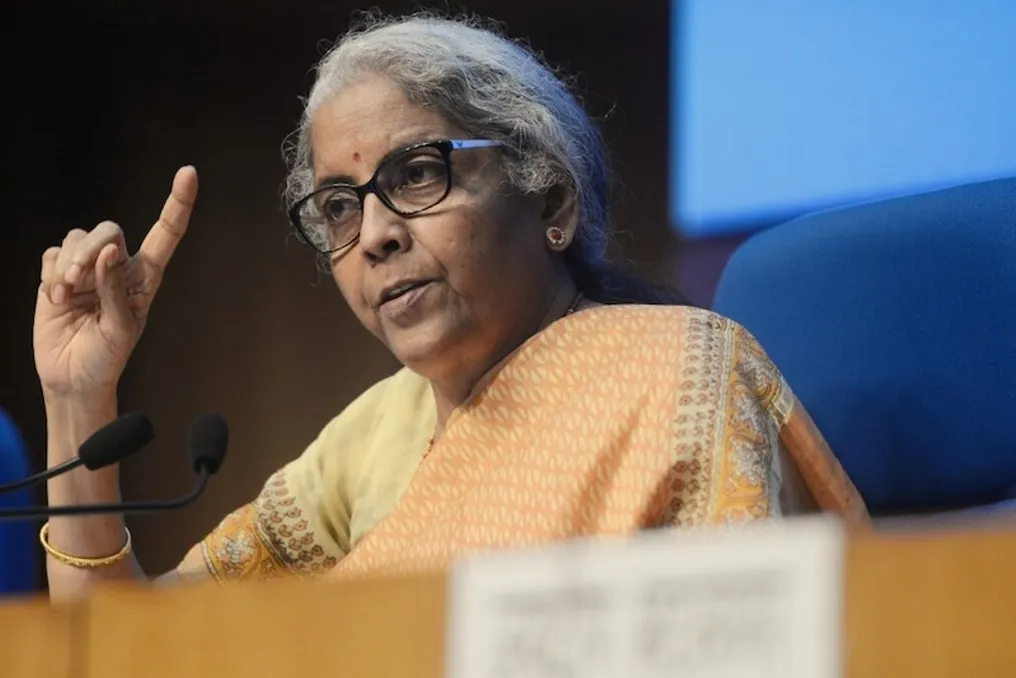
Finance Minister Nirmala Sitharaman welcomed the reduction in the country's poverty rate, noting that the report recognizes India's achievements as a country demonstrating one of the fastest rates of poverty reduction globally. She stated that tangible results are being achieved thanks to the continuous efforts of the government under Prime Minister Narendra Modi, strengthening the foundations for inclusive growth and greater economic opportunities.

Sitharaman added that this contributes to citizens' trust in the NDA government. She emphasized the commitment to further developing this progress through creating productive employment, increasing household incomes, and effectively delivering public services to meet the aspirations of the people.

The World Bank also noted that between 2017 and 2023, employment increased by approximately 134 million people, nearly double the growth in the working-age population. Rural women made the main contribution to this growth by starting paid work, increasing the number of breadwinners in families.

The report states that labor market conditions remain generally stable, with labor force participation and employment figures remaining steady from the first quarter of the 2026 fiscal year to the first quarter of the 2027 fiscal year. Nevertheless, youth unemployment rose from 14.6% to 15.9% between these two quarters, particularly among young rural women. Moreover, real incomes remained largely unchanged, and job growth was concentrated in relatively low-productivity activities.
Similar stories

Government plans to reduce national debt to 50% of GDP by 2030
Read more
www.aajtak.in

Government plans to reduce national debt to 50% of GDP by 2030

Amid growing debt and inflation issues in many countries worldwide, including the USA, the Indian government has set targets to combat debt risks. The central government confirmed its commitment to controlling budget deficits and reducing public debt.

The Union Finance Minister, Nirmala Sitharaman, stated on Monday that the government's goal is to limit the national debt to 50 percent of the country's GDP by 2030. She emphasized that the government is taking continuous steps to reduce the debt, and international organizations have recognized India's debt management methods.

These statements were made by Sitharaman during a press interaction in Tiruchirappalli, Tamil Nadu. Furthermore, she addressed questions regarding inflation, debt growth, per capita income, and opposition protests.

Nirmala Sitharaman reiterated that the government's push to reduce the budget deficit is reflected in annual budgets. It was clearly stated that the national debt must be capped at 50% of GDP by 2030. The minister noted that after the COVID-19 pandemic, many countries faced debt-related challenges.

India is also consistently taking steps to reduce public debt under these conditions. According to the finance minister, India is following a disciplined path in debt management, which has been acknowledged by international organizations. The government will continue to work on reducing debt and the fiscal deficit.

A budget deficit is the difference that arises when the government's total expenditures exceed its revenues, excluding borrowings. To cover this gap, the government has to take loans. While GDP (Gross Domestic Product) reflects the total value of goods and services produced in a country over a specific period, the debt-to-GDP ratio helps understand the extent of the debt burden on a country's economy relative to its size.

Responding to questions about inflation, the finance minister stated that the government has been working to stabilize prices since 2014. For this purpose, a special group of ministers was formed to improve supply chains. Nirmala Sitharaman also mentioned measures such as restrictions on rice exports. The aim of such decisions was to prevent price hikes in the domestic market and ease the situation for consumers. Additionally, the government aimed to ensure farmers received the Minimum Support Price (MSP) for their produce.

According to the finance minister, despite global inflationary pressures and economic strain, the government has tried to minimize the burden on ordinary citizens.

Regarding questions about protests being held over alleged irregularities related to SIR and demands for action against the Chief Election Commissioner (CEC) from opposition parties, the finance minister responded that democracy offers multiple ways to express dissent. These include seeking justice through the courts and holding demonstrations with demands on the streets. Sitharaman pointed out that various groups use both methods, calling court appeals and protests forms of democratic dissent.

The finance minister also announced that the government is taking several measures to increase per capita income in the country. She acknowledged that the COVID-19 pandemic, military actions, challenges related to economic reforms, and fluctuations in fuel and crude oil prices have put pressure on the economy. Nevertheless, she stressed that the government has tried to prevent these difficulties from excessively affecting the common people. Efforts to raise per capita income will continue.

Stock Market Decline: Three Main Reasons, Losses of 700 Billion Rupees, and Popular Stocks Dropped by Up to 17%
Read more
www.aajtak.in

Stock Market Decline: Three Main Reasons, Losses of 700 Billion Rupees, and Popular Stocks Dropped by Up to 17%

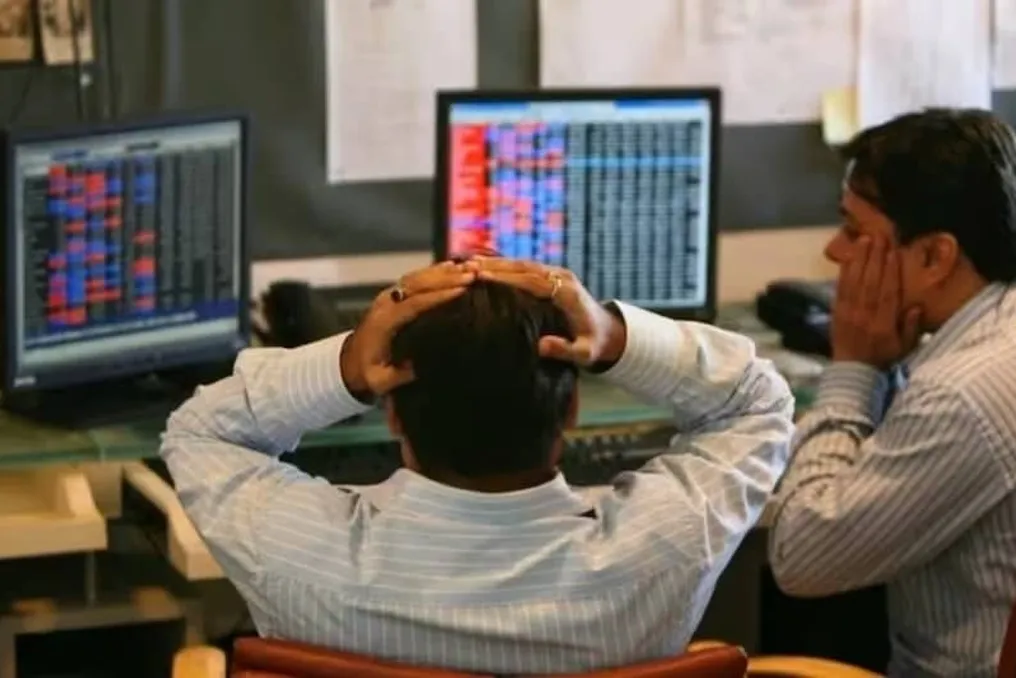
A decline was observed in the stock market on the last trading day and throughout the fourth consecutive session. The Sensex index fell by 1250 points from its daily high, but after the market closed, it showed a significant recovery. Nevertheless, investors in the Indian market incurred losses amounting to about 700 billion rupees.

The market capitalization of the BSE reached 458 billion rupees on Thursday, and by Friday, it decreased by approximately 700 billion rupees to 451 billion rupees. The main reason for this sharp drop was the massive sell-off of stocks in the small and mid-cap segments.

After the sharp fall on Friday, the BSE Sensex recovered, declining by only 125 points and settling at 73,123.83. The Nifty index dropped by 87 points, reaching the level of 22,600. Previously, Nifty had touched the lower level of 22,372, and Sensex had touched 72,452.37.

On Friday, stocks of mid-cap and small-cap companies experienced a serious decline. At the close of trading, the BSE 150 Midcap index fell by 2.10%, closing at 15,143.47, while the BSE 250 Smallcap declined by 2.68%, ending trading at 6,440.65. Shares of Jammu & Kashmir Bank lost more than 16 percent, while Swiggy shares fell by approximately 17%. These two companies became the stocks of the day in the mid-cap and small-cap sectors.

Most stocks in the small and mid-cap segments were in a decline zone of more than 3 percent on Friday, leading to a significant reduction in investor portfolios. Among the top 30 BSE stocks, the largest drop was recorded by Tata Steel, which fell by 3.21 percent. Twenty stocks closed in the red, and the remaining ten closed in the green. Eternal's shares, conversely, closed with a gain of about 4 percent.

The primary reason cited for the decline is the crude oil situation, whose price reached $115 per barrel. Brent Crude Oil rose by 1.33% on Friday, reaching $114.67 per barrel. This rise is attributed to the Houthi attack on Saudi Arabia. Furthermore, foreign investors continue to increase their selling. On October 22, foreign investors sold Indian stocks worth 16,113.89 crore rupees, while DII supported the market by buying stocks worth 14,519.12 crore rupees.

Large-scale selling was observed among both retail investors and foreign participants in the small and mid-cap segments. The results of some companies' reports also influenced the market.

Popular