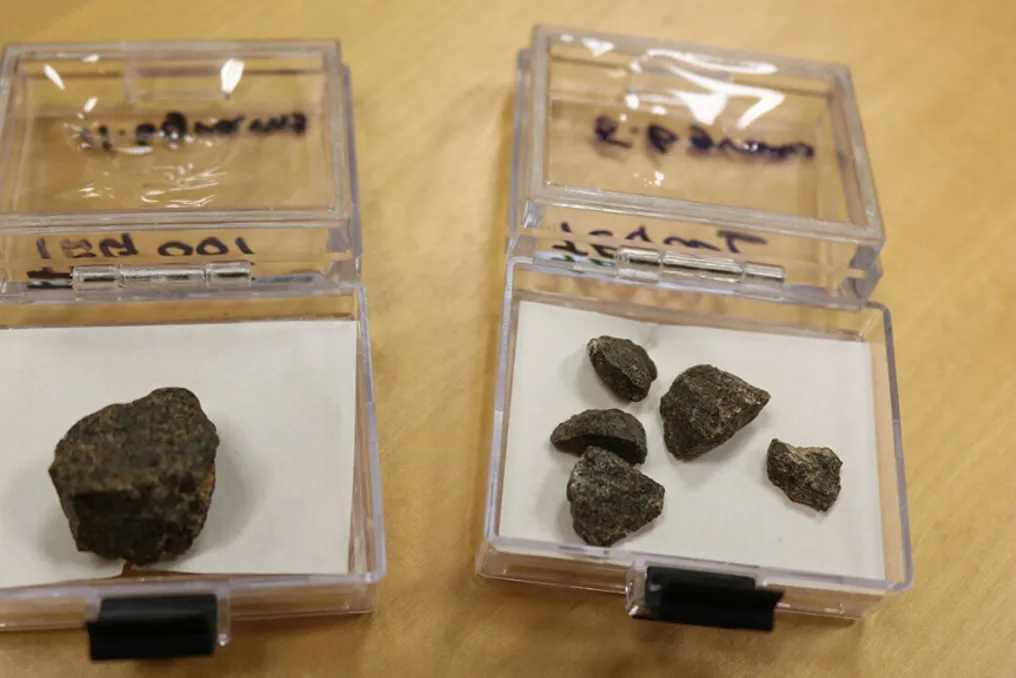
A meteorite at least 4.1 billion years old may help scientists recreate a very early stage of Mars' history. This sample, named Teghaza 001, possesses characteristics indicating that the planet once had a wetter atmosphere and different conditions from those today, possibly with water circulation on the surface.
The discovery was presented in a study published in the scientific journal Science. Researchers from the University of New Mexico (USA) played a vital role in identifying this material, which was found in the Sahara Desert.
Analysis showed that the meteorite is a sample of Martian volcanic rock, dating back at least 4.1 billion years. According to researchers, this is the oldest identified igneous rock from Mars.
The team paid special attention to the unusual mineralogical composition. The sample demonstrates high concentrations of manganese oxide—a compound that may be linked to microbial activity and is studied by robotic probes on Mars as a potential sign of life-friendly conditions.
Scientists also found features in oxygen isotopes and altered minerals that point to interaction with liquids. This suggests that the rock might have been in an environment where water circulated.
The composition of Teghaza 001 indicates climatic conditions vastly different from those existing on the Red Planet today. Currently, Mars is cold and dry, but the meteorite preserves traces of an era when water could circulate on the surface and interact with volcanic systems and rocks.
Researchers attribute this sample to the Pre-Noachian period—the earliest geological epoch of Mars, which occurred approximately between 4.5 and 4.1 billion years ago. This time frame is particularly important for searching for possible signs of extraterrestrial life.
According to Karl Egee, director of the University of New Mexico Institute of Meteorite Science and one of the analysis participants, if any form of primitive life ever existed abundantly on the surface of Mars, this period would be one of the most promising for it. At that time, Mars might have possessed a magnetic field, a denser atmosphere, and surface water. These conditions could have provided better protection from radiation and created a potentially habitable environment.
However, the discovery does not mean that the meteorite contains evidence of life. Instead, it provides information about the conditions that existed on the planet when the probability of habitable environments was higher.
Furthermore, researchers used remote sensing data obtained from Martian orbiters to search for areas with chemical and geological characteristics similar to those of the meteorite. Analyses revealed possible origins in ancient highlands of the southern hemisphere of Mars. Identifying these regions can help guide future exploration missions, including sending robots and potential sample collection operations.
For scientists, Teghaza 001 represents a rare opportunity to directly study materials preserved from the earliest stages of Mars' evolution. The team emphasizes that finding another such sample could be extremely difficult.