
Actor Patrick Stewart dies at 86; he lived with Alzheimer's and Lewy body dementia
Read more
Super Abril
super.abril.com.br

Actor Patrick Stewart dies at 86; he lived with Alzheimer's and Lewy body dementia

Actor Patrick Stewart, known for playing Professor Xavier in the X-Men franchise, passed away on Wednesday, October 28th, at the age of 86. Although family members have not disclosed the exact cause of death, it was revealed that the actor was simultaneously dealing with two neurodegenerative pathologies: Alzheimer's disease and Lewy body dementia.

Both are classified as some of the most prevalent neurodegenerative diseases and are characterized by cognitive deterioration, behavioral problems, and memory loss. However, despite the similarities, each condition has its distinct mechanisms and clinical manifestations.

Alzheimer's disease results from a defect in protein processing in the central nervous system. Abnormal and toxic proteins, notably beta-amyloids and tau, accumulate irregularly in the brain, both inside and outside neurons. This leads to the progressive death of neurons in areas crucial for memory and processing, such as the hippocampus and cortex, compromising cognition and causing changes in behavior. A common initial sign is forgetting recent events, and its origin is multifactorial, involving genetic and hereditary aspects.

Lewy body dementia, on the other hand, also involves protein accumulation, but in a different manner. In this condition, the alpha-synuclein protein deposits inside the neurons and in the cerebral cortex, forming aggregates called Lewy bodies. These deposits also serve as indicators of other illnesses, such as Parkinson's, and are named after the physician Frederic Lewy, who discovered the phenomenon. These deposits can affect various parts of the brain, interfering with communication and neuronal function, potentially leading to cell death in the long term, similar to what occurs in Alzheimer's.

Primary signs of Lewy body dementia include motor changes, such as tremors, muscle rigidity, and slowness, which often lead to confusion with Parkinson's, as happened with Robin Williams. The correct diagnosis was only established after his passing. Other recurring symptoms include sleep disorders, mental confusion, difficulty reasoning, and paranoia. The condition can also cause autonomic dysfunction, affecting involuntary bodily processes such as blood pressure regulation, digestion, and bladder control.

A distinctive symptom is the occurrence of visual hallucinations, which can affect up to 80% of patients. Although memory is affected over time, it is generally not the first symptom presented. While Alzheimer's tends to be more common in women, Lewy body dementia shows a higher incidence in men. Both diseases have no definitive cure, but treatments are available to manage symptoms and improve quality of life, including medications aimed at inhibiting neurotransmitter degradation or increasing cerebral dopamine.

Similar stories

First patient undergoes innovative stem cell treatment for Parkinson's disease in Japan
Read more
iol.co.za

First patient undergoes innovative stem cell treatment for Parkinson's disease in Japan

A Japanese pharmaceutical company announced on Friday that the first patient underwent an innovative stem cell therapy for Parkinson's disease, marking a global debut following conditional approval in the country.

The treatment, developed by Sumitomo Pharma, involves implanting millions of induced pluripotent stem cells (iPS) into the patient's brain. These cells have the potential to differentiate into any type of body cell.

Japanese regulators approved this breakthrough method in March after successful completion of clinical trials. The company stated in a press release on Friday regarding its earnings that the first transplant was performed at Kyoto University Hospital in October, but provided no further details.

Parkinson's disease is a chronic, degenerative neurological disorder that affects the body's motor system, often causing tremors and other movement problems. According to the Parkinson's Foundation, over 10 million people worldwide suffer from this condition.

Currently available therapies only improve symptoms but do not slow down or stop the progression of the disease. iPS cells are created by stimulating mature, already specialized cells to revert to a juvenile state.

As part of the therapy, Sumitomo Pharma converts iPS cells from healthy donors into precursors of dopamine-producing brain cells, which are lacking in people with Parkinson's disease. During the clinical trial, seven patients aged 50 to 69 received implants containing five or ten million cells in both hemispheres of the brain. They were monitored for two years, and no serious adverse effects were found; four patients showed symptom improvement.

Sumitomo Pharma announced on Friday plans to conduct transplants for 20–30 patients by March 2029. Furthermore, the company is conducting clinical trials in the United States. According to local media, full approval of the treatment in Japan will be granted if its safety and efficacy are confirmed over the next seven years.

The announcement made on Friday followed approximately one month after a hospital in Osaka performed the world's first operation using iPS heart muscle sheets, which can promote the formation of new blood vessels and restore heart function. Japan also granted conditional approval for this therapy in March.

Study shows psilocybin reduces inflammation and mitochondrial stress markers in Parkinson's disease patients
Read more
nplus1.ru

Study shows psilocybin reduces inflammation and mitochondrial stress markers in Parkinson's disease patients

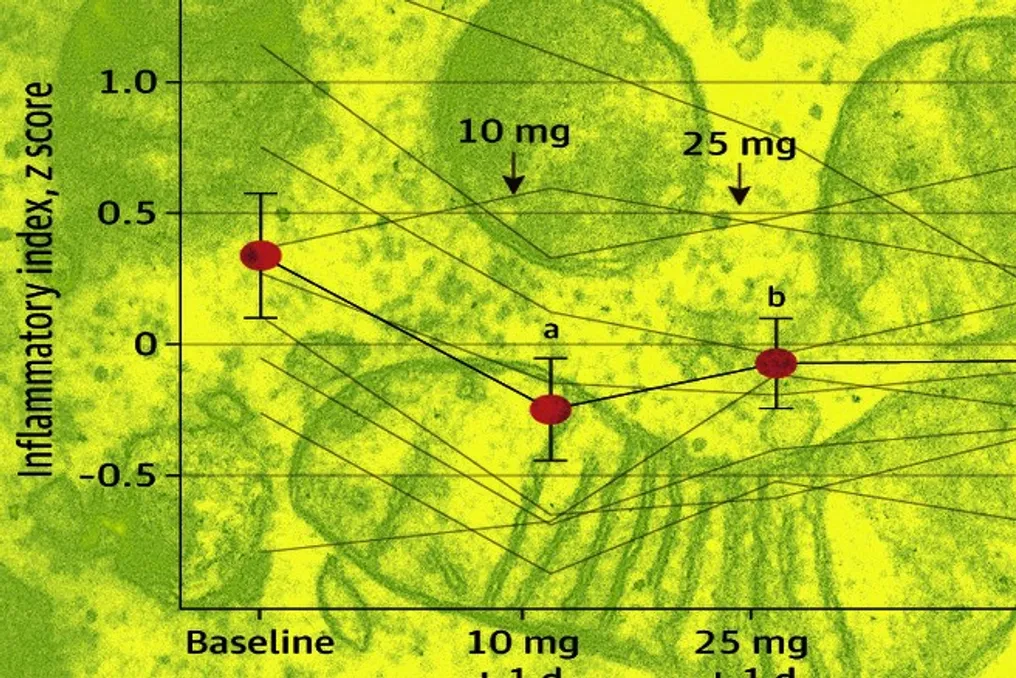
American scientists have completed clinical trials and found that the use of psilocybin leads to a noticeable reduction in inflammation and mitochondrial stress indicators in people suffering from Parkinson's disease. The results of these studies were officially published in the scientific journal JAMA Psychiatry.

Popular