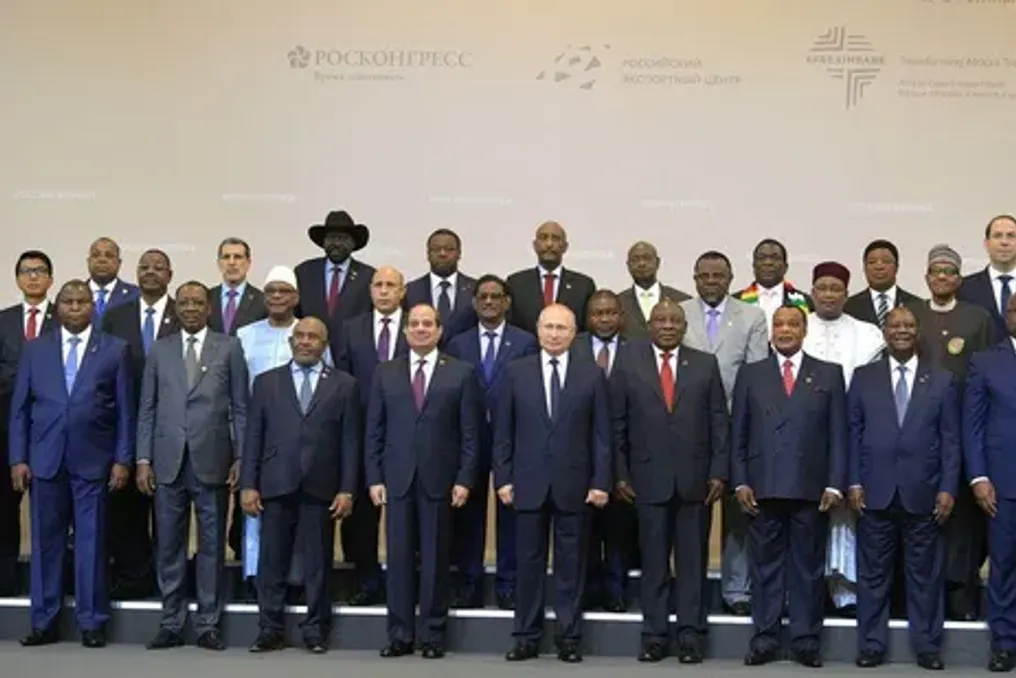
Russia is ready to provide Africa with energy from floating nuclear power plants
Read more
Noticias ao Minuto
noticiasaominuto.com

Russia is ready to provide Africa with energy from floating nuclear power plants

Russia demonstrated at the Russia-Africa summit its readiness to supply electricity to some African countries using floating nuclear power plants at affordable prices, mentioning projects currently under study with four countries on the continent.

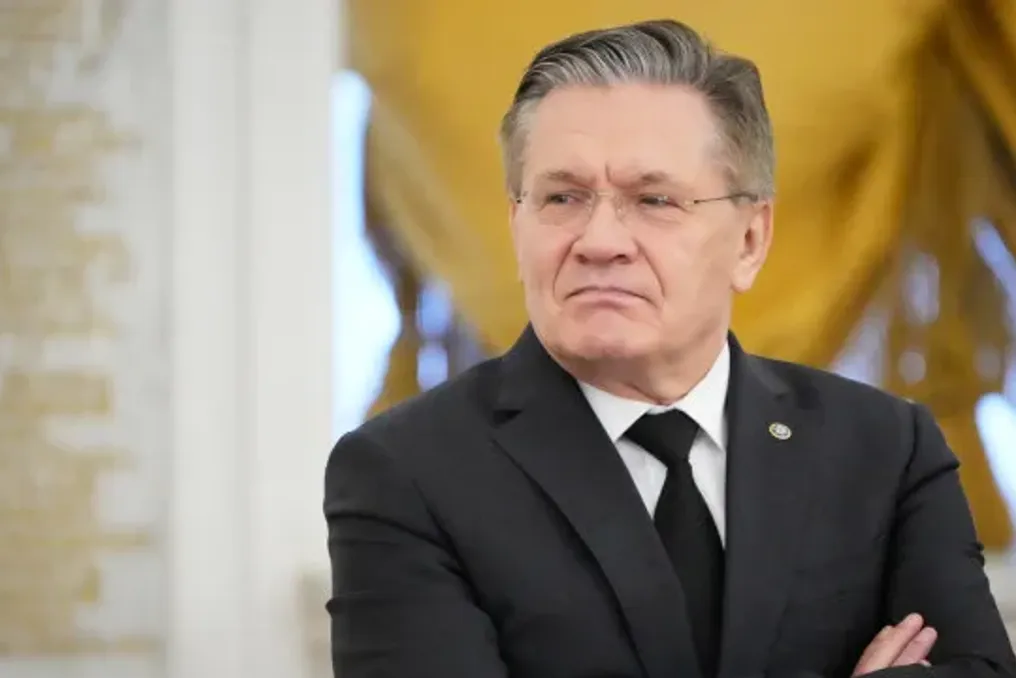
At the third Russia-Africa summit, held in Moscow this week, the head of the Russian Atomic Energy Agency (Rosatom), Alexey Likhachev, told the press about specific projects being discussed with Egypt, Tanzania, Togo, and Namibia.

Likhachev added that the demand for this technology is very high, and nine African countries have already expressed significant interest in it. This technology is being developed in several countries.

Furthermore, Alexey Likhachev announced the launch of a uranium exploration project in Namibia, as well as a lithium mining project in Mali, whose reserves are estimated at over four thousand tons.

Russia is the only country with an operational floating nuclear power plant, which has been located in the isolated Chukotka region since 2020. However, Moscow plans to create a future fleet of such power plants to supply remote areas, such as the Arctic.

Rosatom Director Alexey Likhachev noted that a feature of many African economies is the presence of countries that currently pay very high prices for electricity, despite their financial situation not being ideal. He emphasized that this is where they are ready to provide electricity, starting with floating NPPs.

According to Likhachev, such an initiative could provide energy to 38 out of 54 landlocked African countries, minimizing the influence of external factors on electricity costs.

For several years, Russia has sought to strengthen its presence in Africa, including economic and military cooperation, against the backdrop of tensions with the West. The third Russia-Africa summit took place on Thursday and Friday in Moscow. According to Russian state media, delegations from 48 countries participated in the summit, including 22 represented by heads of state, as well as representatives from Portuguese-speaking countries Mozambique and Equatorial Guinea at the level of heads of state, and Angola, Cabo Verde, and Guinea-Bissau at the ministerial level.

Similar stories

Russia intends to move factories to Africa to bypass international sanctions
Read more
noticiasaominuto.com

Russia intends to move factories to Africa to bypass international sanctions

The President of Russia announced during the Russia-Africa summit interest in relocating some of its production capacities to the African continent. The goal of this step is to circumvent international sanctions, while guaranteeing that all deals will be conducted 'on equal terms.'

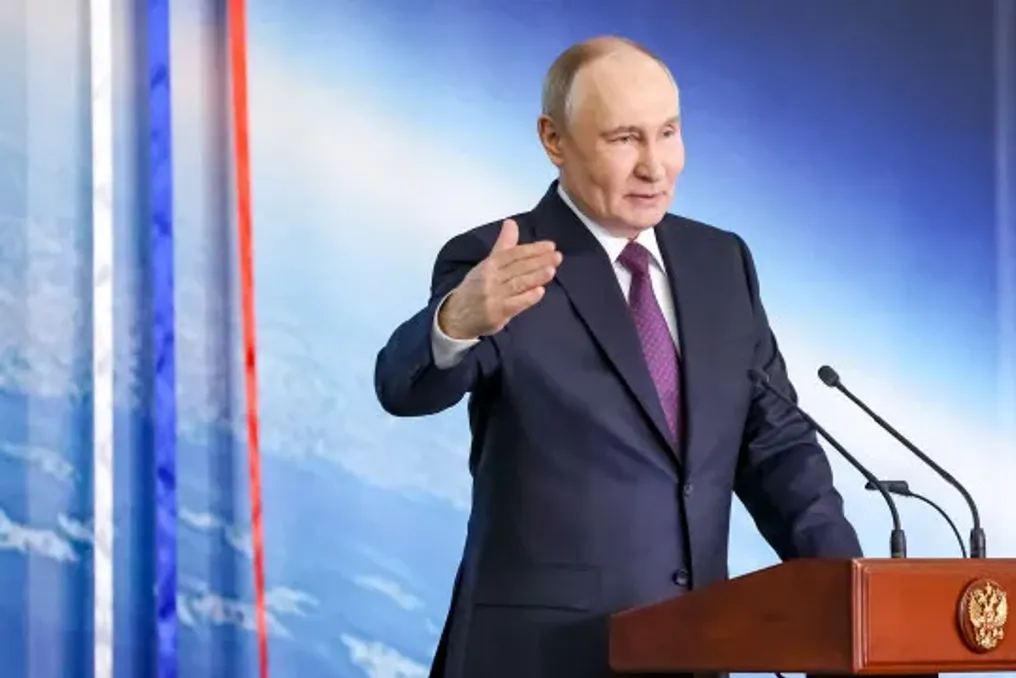
Vladimir Putin stated that this decision aligns with Russia's interests, especially under current conditions when the Russian economy and enterprises are subject to numerous sanctions. He emphasized that companies are interested in moving certain production facilities to African countries, viewing it as a mutual interest.

In his speech, the Russian leader criticized 'Western colonial practices,' noting that Russian businesses operate in Africa on an equal footing. He specified that his business community always approaches cooperation with African partners with honesty, respect, and integrity, not seeking profit in the style of old metropoles, but investing the resulting income in the development of these countries' economies.

Russian companies, he continued, always care for the well-being of their employees and their families, participate in humanitarian programs, and responsibly approach environmental and conservation issues while adhering to internal policies.

The head of state also noted that 85% of trade operations are conducted in rubles. He recalled that Russia has increased exports of fertilizers to African countries and is ready to share its agricultural technologies. According to him, Russia's export of mineral fertilizers last year was estimated at 1.5 million tons, and this year it has already exceeded 2.2 million tons.

Putin believes that Africa should become a 'real market for production and sales, rather than remaining a consumption market.' According to official Russian sources, trade between Russia and about 50 African countries exceeded $27 billion (24 billion euros) in 2025, whereas Moscow's trade with five Central Asian countries amounts to about $50 billion (more than 44 billion euros) over the same period.

The third Russia-Africa summit began on Thursday. The program includes speeches by Mozambican representatives at panels dedicated to cooperation in transport, historical memory, and the fight against neo-colonialism. The summit will feature two plenary sessions, after which an final declaration is expected to be adopted, which will 'define agreed approaches to the development of Russian-African cooperation and deepening international interaction,' as well as a session on artificial intelligence cooperation and an action plan for the Russia-Africa Cooperation Forum for 2027–2029.

According to reports from Russian state media, delegations from 48 countries are participating in the summit, including 22 represented by heads of state. Among them are Portuguese-speaking countries such as Mozambique and Equatorial Guinea, represented by heads of state, as well as Angola, Cape Verde, and Guinea-Bissau at the ministerial level.

Third Russia-Africa Meeting Discusses Potential for Long-Term Cooperation Between Russia and Africa
Read more
iol.co.za

Third Russia-Africa Meeting Discusses Potential for Long-Term Cooperation Between Russia and Africa

The Third Russia-Africa Summit and Economic and Humanitarian Forum opened in Moscow, where the main objective is not signing documents but creating sustainable partnerships. At least 17 heads of African states are expected to participate. The agenda covers issues of security, energy, infrastructure, finance, and humanitarian interaction. A key economic question is whether relationships based on raw materials can transform into a partnership based on production.

The volume of trade between the parties is significant: in 2025, turnover exceeded 27 billion dollars. Russian exports include grain, fertilizers, energy, and metals, while Africa supplies coffee, cocoa, tea, fruits, and certain minerals. Russia supplies fertilizers to 21 African countries. For example, in South Africa, fertilizers account for more than two-thirds of Russian supplies under a deal worth about 908 million dollars. These figures demonstrate demand but also point to limitations: selling sacks and bushels does not lead to factory construction.

African governments are increasingly clearly articulating their demands. They seek greater control over natural resources, longer value chains, and local processing. Continental integration strengthens this position. In 2025, intra-continental trade reached 220 billion dollars, and the Secretary-General of AfCFTA forecasts growth to 250 billion dollars this year. However, such trade constitutes only 15–18 percent of the continent's total trade, whereas in Europe this figure exceeds 60 percent. Infrastructure problems, high logistics costs, and regulatory fragmentation hinder development. Furthermore, Africa is not a single market, and membership in the bloc does not guarantee access to the entire market.

The potential for long-term benefit from the partnership can be realized in agricultural processing and storage. Processing grain and fertilizers into local products such as flour, vegetable oils, animal feed, and cold chains creates local added value. Ethiopia is considered a natural candidate in this area. Energy is the second important sector. Rosatom is building the El-Dabaa power plant with a capacity of 4800 MW in Egypt and has also preliminarily confirmed the potential of a lithium project in Mali and launched a uranium mining project in Tanzania. However, the most tangible increase may come from servicing—technical repair of industrial and energy equipment jointly with local producers, as evidenced by the South African example, because it relies on existing capabilities rather than attempts to start from scratch.

Pharmaceuticals offer another path, provided that Russian manufacturers join joint procurement schemes, consolidating demand across countries. Nevertheless, localization is not a universal solution. Options range from exporting equipment with technical support to local assembly and joint production with regional reach, and each option has its compromises. The supply chain of the Zambian mining industry illustrates the pitfalls: local companies lose out to foreign suppliers due to electricity shortages and lack of long-term capital, not just due to lack of quotas.

The financial aspect presents the most complex problem. The Ministry of Economic Development of Russia offers preferential lending up to 100 million dollars for a project. However, commentators note that Moscow has not yet developed financial mechanisms to support its investments in Africa. The currency difference between revenues in local currency and expenses for equipment in dollars can reduce profits, even if sales are successful. Moreover, Africa accounts for less than 2 percent of global supply chain financing, indicating a need for banks willing to conduct due diligence. Multilateral lenders, such as the New Development Bank and Afreximbank, are considered necessary partners for capital-intensive projects.

The outcome may depend on human capital. About 37,000 African students are currently studying at Russian universities, and Rosatom has trained over 300 specialists for nuclear programs in countries such as Egypt, Ghana, and Nigeria. A South African analyst, Raymond Matlala, argues that the true criterion should be the number of Africans capable of independently managing and expanding these industries, not the number of scholarships awarded. Establishing branches of Russian universities and the planned Russia-Africa network university program could help if the training is linked to real work.

The summit is expected to lead to the development of a new action plan for the period 2027–2029. Russia and the African Union Commission have expressed their intention to adopt this plan to address existing gaps and deepen cooperation. Its value will depend on the ability to turn common priorities into implementable projects with defined clients, funding, and clear risk allocation. The criteria are simple: functioning joint ventures, share of local production, participation of national suppliers, and capacity utilization rate. If these indicators increase, the partnership will move from rhetoric to reality; otherwise, the Moscow meeting will enter a long list of summits remembered only for promises.
Popular