
Mazagon Dock Shipbuilders seeks partners to create shipbuilding clusters in Maharashtra and Andhra Pradesh
Read more
Business Standard
business-standard.com

Mazagon Dock Shipbuilders seeks partners to create shipbuilding clusters in Maharashtra and Andhra Pradesh

The Public Sector Undertaking (PSU) Mazagon Dock Shipbuilders (MDL), which plans to enter commercial shipbuilding, is looking for equity partners for two proposed shipbuilding clusters. These clusters are planned in the cities of Digi in Maharashtra and Dugarajapatnam in Andhra Pradesh, with an estimated investment of 20,000 crore rupees over five to seven years.

The top executive stated that the company signed Memorandums of Understanding (MoUs) worth 30,000 crore rupees with the governments of Maharashtra and Andhra Pradesh within three days. Chairman and Managing Director (CMD) Captain (Retd) Jagmohan told Business Standard that he expects to receive the necessary approvals by December.

Details on the Clusters

Both MoUs provide for the creation of shipbuilding clusters, each capable of achieving an annual output of 1.2 million gross tonnage (GT). Jagmohan specified that the implementation will be phased: the first phase will have a capacity of 500,000 GT. The company aims to attract investments of 20,000 crore rupees over the next five to seven years, with the shipbuilding yard's equity component being financed by the Maritime Investment Fund (MIF).

Initially, MDL will form a joint venture with MIF, managed by SBI Ventures, with each party holding a 50% stake. MIF is an equity fund of 20,000 crore rupees under a larger Maritime Development Fund (MDF) of 25,000 crore rupees, announced by the government as part of a package worth 69,725 crore rupees to revitalize the maritime and shipbuilding sectors. The MDF includes MIF, which provides equity-based financing for maritime projects, and a 5,000 crore rupee interest rate incentive fund, which offers interest support to reduce borrowing costs for shipyards and other relevant marine enterprises. MIF is intended to mobilize private and institutional capital alongside government funding.

Jagmohan also noted that two specialized project companies will be established under the main holding company, whose operations and finances will be isolated. MDL is already in talks with large corporations that regularly use vessels for their business and trade activities, seeking to bring them on board as shareholders. The company envisions a commercial structure similar to Petronet LNG, whose shareholders include state-owned oil companies and GAIL (India).

The proposed investments will be financed through a combination of 70 percent debt and 30 percent equity. Overall, for both clusters, the company expects to require about 6,500 crore rupees in equity. Addressing concerns that MDL has taken on too much by undertaking two large projects, Jagmohan assured that the company possesses the financial soundness and experience to execute them. He emphasized that if the investments are split equally, he would require about 3,000 crore rupees, which is easily covered by existing funds.

MDL is the sole contender for the role of lead investor in both proposed shipbuilding clusters. The next step is attracting the remaining 70 percent of project financing. Jagmohan reported that investors from the US and Germany have already expressed interest, and the company is also discussing collaboration with international marine equipment manufacturers as co-investors. However, he added that MDL will not lower its stake below 26 percent under any circumstances.

In the long term, MDL is considering conducting an Initial Public Offering (IPO) of the shipyard to raise additional capital, but it will consider this option after the yard becomes operational. India aims to become one of the top five global shipbuilding powers by 2047, with a target annual output of around 4.5 million GT. The Maritime Amrit Kaal Vision 2047 includes investments of nearly 80 trillion rupees over the next 21 years, including 54 trillion rupees in shipbuilding.
Similar stories

V&A Waterfront develops new luxury facilities to attract the superyacht market
Read more
iol.co.za

V&A Waterfront develops new luxury facilities to attract the superyacht market

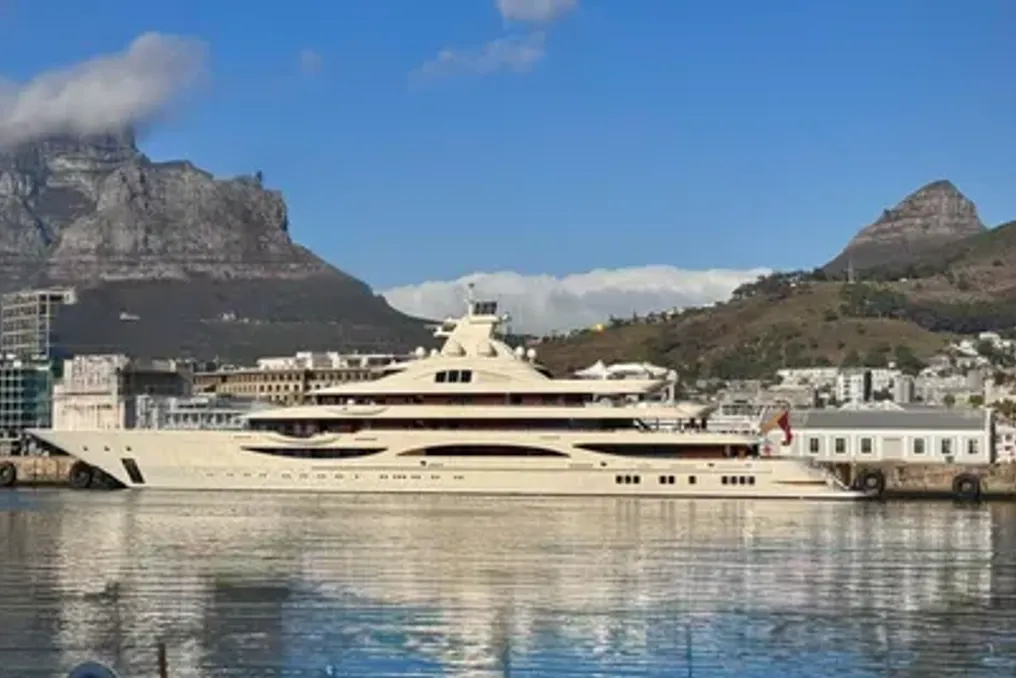
V&A Waterfront is taking steps to attract the global superyacht market by introducing new luxury hospitality and marine infrastructure facilities. The goal is to transform Cape Town into a more significant international destination for yachting.

The plans include the construction of a new EDITION hotel and the development of superyacht facilities on Quay 7. These measures aim to capitalize on the growing number of visits by the world's largest private yachts to South Africa.

Graham Wood, CEO of V&A Waterfront, presented the ambitions of the area at the African Maritime Conference in Cape Town. According to new industry research, 36 superyachts over 24 meters long visited South Africa in 2025, exceeding the figure of 14 such vessels in 2019.

Research by BOATPro, presented at the conference, showed that the average length of visiting yachts in the region reached 60 meters last year, compared to the global average of about 34 meters.

The increase in visits opens up opportunities for Cape Town businesses in the maritime, hospitality, and tourism sectors. Data presented at the conference indicates that a $50 million superyacht can generate between $105,000 and $330,000 in local revenue during a two-week visit.

These funds can support services such as marine engineering, provisioning, transport, accommodation, restaurants, and other specialized services. The V&A Waterfront marina is already among the top five marinas in the region for accommodating superyachts.

In addition to berthing spots, the area offers restaurants, upscale residences, retail outlets, and cultural attractions within walking distance of the vessels, with Table Mountain providing a scenic backdrop. The planned facilities on Quay 7 and the new EDITION hotel are intended to enhance the appeal of the offering for yacht owners, captains, and guests requiring marine services alongside luxury accommodation.

The V&A Waterfront area spans 123 hectares, hosts approximately 25 million visitors annually, and serves over 1,000 tenants. The complex supports a workforce of around 26,000 people, underscoring its contribution to the local economy. The long-term vision includes transforming the adjacent waterfront into a coastal district while simultaneously developing infrastructure to accommodate a greater number of visiting superyachts.

The ambitions extend beyond Cape Town: stakeholders are working to establish South Africa as a connected cruising region offering coastal destinations and experiences extending into the Indian Ocean. The African Superyacht Working Group is transforming into Superyacht Africa—an initiative designed to promote the region internationally and attract yacht owners seeking alternatives to established destinations like the Mediterranean and the Caribbean.

Potential routes include Mauritius and the Seychelles, as well as the South African coast, wildlife experiences, and luxury hospitality offerings. The strategy focuses on creating a recognizable African cruising proposition while improving marine infrastructure and services for arriving vessels.

Western Cape Premier Alan Wind and Cape Town City Committee member for Economic Growth James Vos affirmed their commitment to developing the maritime economy, attracting investment, and removing regulatory and business barriers at the conference. For Cape Town, the opportunity lies in converting growing regional interest into sustainable economic activity in yacht servicing, technical services, hospitality, and tourism. V&A Waterfront's investments are part of these broader efforts to strengthen the city's position in the international superyacht market and create opportunities for local businesses.

Popular