Reliance Industries beats forecasts for September quarter on fuel revenues
Read more
Business Standard
business-standard.com

Reliance Industries beats forecasts for September quarter on fuel revenues

Reliance Industries (RIL), India's largest company by revenue, profit, and market capitalization, reported significant double-digit growth in consolidated and standalone revenue, as well as net profit for the July-September 2026 quarter (Q2FY27). This growth was driven by sharp increases in prices for transport fuel and petrochemical products (petchem). The results surpassed consensus forecasts, and revenue and earnings before interest, depreciation, and taxes (PBIDT) reached record levels.

These financial reports were published two days after the conglomerate's record digital business listing on stock exchanges. Consolidated net profit attributable to shareholders increased by 40.6% year-over-year (Y-o-Y) to a record ₹25,548 crore in Q2FY27, compared to ₹18,165 crore in Q2FY26 and ₹20,946 crore in Q1FY27. Meanwhile, the company's declared net profit grew by 33.8% Y-o-Y to ₹29,550 crore.

For the first six months of the fiscal year 2027 (H1 FY27), declared net profit reached ₹52,746 crore, making RIL the first Indian company to cross the ₹50,000 crore mark in half a year. Furthermore, for the first time in India, RIL's revenue for the first half exceeded ₹6 trillion. Net profit attributable to owners stood at ₹46,494 crore.

Management Commentary

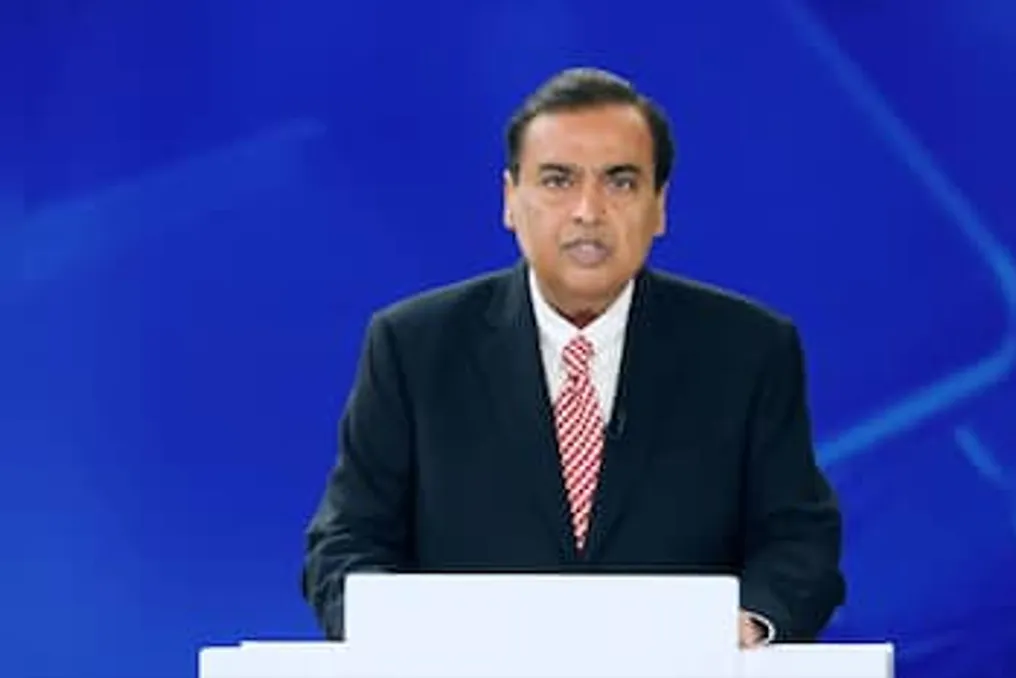
Commenting on the results, Mukesh D Ambani, Chairman and Managing Director of RIL, noted that the current week marked a historic moment in Reliance's value creation process due to the record listing of Jio on Indian stock exchanges. He emphasized that the IPO set many global standards thanks to strong post-listing growth with over 22 times subscription.

He also expressed pride in the revival of the 'shareholder capital cult,' which was initially established by the founder-chairman during Reliance's IPO in 1977. Bloomberg analysts had forecasted a net profit of ₹21,368 crore for the quarter.

RIL's consolidated net sales grew by 29.8% Y-o-Y, reaching an all-time high of ₹3.31 trillion in Q2FY27, compared to ₹2.55 trillion a year earlier and ₹3.09 trillion in Q1FY27. This figure also exceeded the projected value of ₹3.14 trillion.

Ambani explained that despite the challenging operating environment in Q2FY27, the business demonstrated strong performance. He noted that despite volatility in commodity markets and geopolitical tensions affecting global supply chains, the portfolio's domestic orientation, along with operational discipline and the versatility of the integrated business, helped Reliance effectively navigate external instability.

Significant Contribution from O2C Division

The Oil-to-Chemicals (O2C) division, which includes refining and petrochemical production, contributed slightly over 80% of the increase in consolidated gross revenue and earnings before interest and taxes (Ebit) in RIL in Q2FY27 compared to the previous year. Crude oil prices rose by 40% during the quarter amid a crisis in West Asia, and transport fuel prices increased by 50–78% Y-o-Y. The cost of most deep-refining products rose by 25–35% due to increased raw material costs.

RIL's standalone net sales, which primarily reflect O2C's operations, increased by 36.5% Y-o-Y, reaching ₹1.72 trillion in Q2FY27, while standalone net profit grew by 68.2% to ₹15,354 crore.

Earnings before interest, taxes, depreciation, and amortization (Ebitda) for the O2C segment surged by 68% Y-o-Y, amounting to ₹25,203 crore during the quarter. The growth was driven by a spike in transport fuel fractions prices and improved margins on deep-refining products. RIL reported that fuel fractions rose 3–3.7 times Y-o-Y and reached all-time highs. Polyester margins also recovered, reaching a three-year high, supported by changes in paraxylene and purified terephthalic acid prices. However, profit growth was constrained by expenses related to Special Additional Excise Duty (SAED) and missed profits in the Jio-bp business.

The O2C division added ₹71,043 crore to gross revenue in Q2FY27 compared to Q2FY26, while RIL's total gross revenue increased by ₹86,156 crore. In comparison, Jio Platforms, or digital services, contributed 5.7% revenue growth in Q2FY27, and Reliance Retail contributed 1.4%. Similarly, O2C accounted for 80.6% of RIL's consolidated Ebit growth in Q2FY27, while digital services contributed 18%. The contribution of retail declined as its EBIT fell by 18.4% Y-o-Y.

O2C's Ebit grew by ₹9,787 crore Y-o-Y in Q2FY27, compared to RIL's consolidated EBIT increase of ₹12,139 crore. Digital services added ₹2,184 crore to RIL's EBIT for the quarter. O2C's gross revenue grew by 44.2% Y-o-Y, reaching a record ₹2.32 trillion in Q2FY27, compared to ₹1.6 trillion a year earlier. This increase was 14.8% quarter-over-quarter (Q-o-Q) compared to approximately ₹2.02 trillion in Q1FY27. O2C's share in RIL's consolidated gross revenue rose to 57.4% in Q2FY27 from 50.7% a year earlier and 53.6% in Q1FY27. Its share in consolidated Ebit increased to 48.3% from 36.8% and 38.6% respectively.

Retail Faces Revenue Headwinds

Reliance Retail Ventures Ltd (RRVL) reported a 24.3% Y-o-Y decline in net profit, amounting to ₹2,611 crore in Q2FY27. During the quarter, the company recognized a one-time write-off of ₹108 crore following the closure of its 7-Eleven stores. The company also clarified that the festive quarter falls entirely in the third quarter.

Isha Ambani, CEO of RRVL, stated in the earnings report: 'We are building a retail ready for the future, combining our extensive physical network with digital convenience, technology, and a deep understanding of Indian consumers. The new model with fast-growing digital commerce and B2B channels is working and is funded by the profits of the offline business.'

Retail's Ebitda decreased by 11.1% in Q2FY27 to ₹5,886 crore, while financial costs rose by 53.9% Y-o-Y to ₹905 crore. Mukesh Ambani noted that 'Reliance Retail has had a stable quarter, with growth sustained across all formats and channels. Consumer demand remained healthy, supported by our extensive physical and digital network and our constant focus on satisfying the diverse needs of Indian consumers. Our consumer goods business maintained growth momentum, and the FMCG brand portfolio gained new ground among Indian consumers.'

India's largest retailer reported operating revenue of ₹80,220 crore, which is 5.8% higher Y-o-Y, and gross revenue grew by 6.4% to ₹91,716 crore, adjusted for the separation of the consumer brands business.

Stable Performance of Jio Platforms

Jio Platforms, India's largest telecommunications service provider, reported a 13.7% Y-o-Y increase in net profit, reaching ₹8,389 crore in Q2FY27, compared to ₹7,379 crore. Revenue increased by 11.4% Y-o-Y to ₹40,475 crore. Compared to the previous quarter, net profit rose from ₹7,765 crore, and revenue rose from ₹39,173 crore.

Quarterly PBIDT increased by 16.6% Y-o-Y, reaching ₹21,879 crore. The margin expansion of 250 basis points was attributed to revenue growth and operating leverage.


Similar stories

Sales of Tata Punch EV electric vehicles increased by 284% in September
Read more
www.aajtak.in

Sales of Tata Punch EV electric vehicles increased by 284% in September

There is a growth in electric vehicle sales in the Indian market. In September 2026, the passenger car segment recorded sales of 35,256 units. Tata Motors maintains its leading position in this segment, while Mahindra secured second place. Sales in this segment increased compared to the previous year, showing a 62% year-on-year growth.

When compared to last year, when all companies sold 21,757 electric vehicles in September, the figure reached 35,256 units in September 2026. This means that 13,499 more units were sold this year than last year.

According to the Auto Pandit report, the best-selling car in this segment is the Tata Punch EV from Tata Motors. For September, sales of this affordable and most compact electric SUV from Tata amounted to 4,702 units, demonstrating a sales increase of 284% compared to the same period last year.

In September last year, Tata Motors delivered 1,223 Punch EVs. The share of this Tata compact SUV in the total volume of electric vehicle sales was 13.3%. Additionally, sales of the Tata Motors Nexon EV reached 3,926 units, making it the third best-selling car in the segment.

The price of the Tata Punch EV starts from 9.79 lakh rupees including tax. However, the car can also be purchased under the BaaS (Battery as a Service) program, where the car's cost is reduced to 6.59 lakh rupees including tax. In this case, the buyer will have to pay for battery charging at a rate of 2.6 rupees per kilometer.

Punch EV is available with two battery options: 30kWh and 40kWh. The motor with the smaller battery provides 65kW of power, while the motor with the larger battery has a power of 95kW.

Tata Punch EV offers a claimed range of 468 kilometers. The time to charge the car from 20% to 80% is only 26 minutes. The car is equipped with a 360-degree view camera, front ventilated and leather seats, and a 10.25-inch infotainment system.

SK hynix's operating profit increased by 630% due to demand for artificial intelligence chips
Read more
iol.co.za

SK hynix's operating profit increased by 630% due to demand for artificial intelligence chips

The South Korean chip giant SK hynix reported on Wednesday that its operating profit for the third quarter increased by 632% compared to the same period last year. This significant growth is driven by explosive demand for advanced memory chips from the artificial intelligence industry.

The company stated that its operating profit for the period from July to September amounted to 83.33 trillion won ($62.8 billion USD). Meanwhile, the company's net profit for July-September grew by 215.7% compared to last year, reaching 39.77 trillion won, and sales volume reached 104.61 trillion won.

The memory chip manufacturer noted that for six consecutive quarters, starting from the second quarter of last year, the company has demonstrated record revenue and operating profit.

However, despite the high figures, earnings were below market expectations. According to data cited by the South Korean news agency Yonhap, the average analyst estimate for net profit was 59.67 trillion won.

In its statement, the chip producer explained that a favorable cycle has been established, where productivity gains driven by AI and new revenue generation in areas such as software development, customer service, and search contribute to broader AI adoption.

SK hynix is a key supplier of high-speed memory chips to the American technology giant Nvidia and serves as a pillar of South Korea's technology-based economy. The global race to build AI data centers has changed the company's position, even amid concerns about the overvaluation of this sector.

High demand is observed for key chips such as DRAM and NAND storage components, which are used not only in everyday gadgets but are also essential for processing the huge volumes of data handled by generative AI. Analysts note that the rise in DRAM prices amid a global shortage and stronger sales of high-margin High Bandwidth Memory (HBM) stimulated profits, while the AI boom also raised prices and supply volumes for traditional NAND chips.

India's private sector growth in October reached four-month high, according to HSBC survey
Read more
business-standard.com

India's private sector growth in October reached four-month high, according to HSBC survey

According to a private study, the activity of India's private sector expanded in October at the fastest pace in the last four months, driven by an increase in new orders and improved production in the services sector.

The HSBC Flash India Composite Output Index, which tracks the combined output of the manufacturing and services sectors, rose to 56.7 in October from 55.9 in September. This marked the fastest growth rate since June, although the figure remains below the average for 2026.

The Manufacturing Purchasing Managers’ Index (PMI) fell to 54.9 from 55.1 as job creation in factories slowed down. Meanwhile, the Services PMI Business Activity Index grew to 56.2 from 55.2.

A reading above 50 indicates expansion, while a value below 50 suggests contraction. The composite index has remained above the 50 mark for 63 consecutive months.

Output growth accelerated in both sectors: the industrial output index slightly increased to 57.6 from 57.5. The study noted that improved market conditions and higher volumes of new orders contributed to this growth.

The pace of growth in total new deals accelerated, supported by the fastest growth in international orders in six months. Companies reported increased demand from the US, UK, West Asia, and Bangladesh.

Pranjul Bhandari, HSBC's chief economist for India, stated: 'Private sector activity in manufacturing continued to expand, with output and new order growth remaining generally unchanged compared to the previous month. However, the sustained pace of new order growth hides the fastest growth in export orders since June 2025.'

However, hiring slowed down. According to the survey, employment increased only slightly and at the slowest pace this year. Service firms maintained their headcount without change, ending a nine-month streak of job creation, while manufacturers added staff only marginally.

Work-in-progress inventories decreased for the third time in four months. The study highlighted: 'Although the rate of decline was modest, it was one of the strongest in six and a half years, comparable to August 2021. Furthermore, the latest decrease was one of the sharpest since the global financial crisis.'

Raw material cost inflation fell for the seventh consecutive month to its lowest level in nearly a year. The study reported: 'Weakened growth was observed in both the manufacturing and services sectors. Where input prices rose, higher costs for steel and transportation were mentioned.'

Retail price inflation also slowed to its slowest pace since March 2025, linked to the weakening growth in both sectors. Plant-level costs rose at the gentlest pace in almost four years.

Bhandari added that manufacturers responded by increasing raw material and finished goods inventories. He noted that raw material cost inflation declined, and selling price growth weakened to its weakest in almost four years.

This flash PMI provides an early indicator of final PMI figures for manufacturing, services, and the composite index and is based on approximately 90 percent of monthly survey responses.

Popular