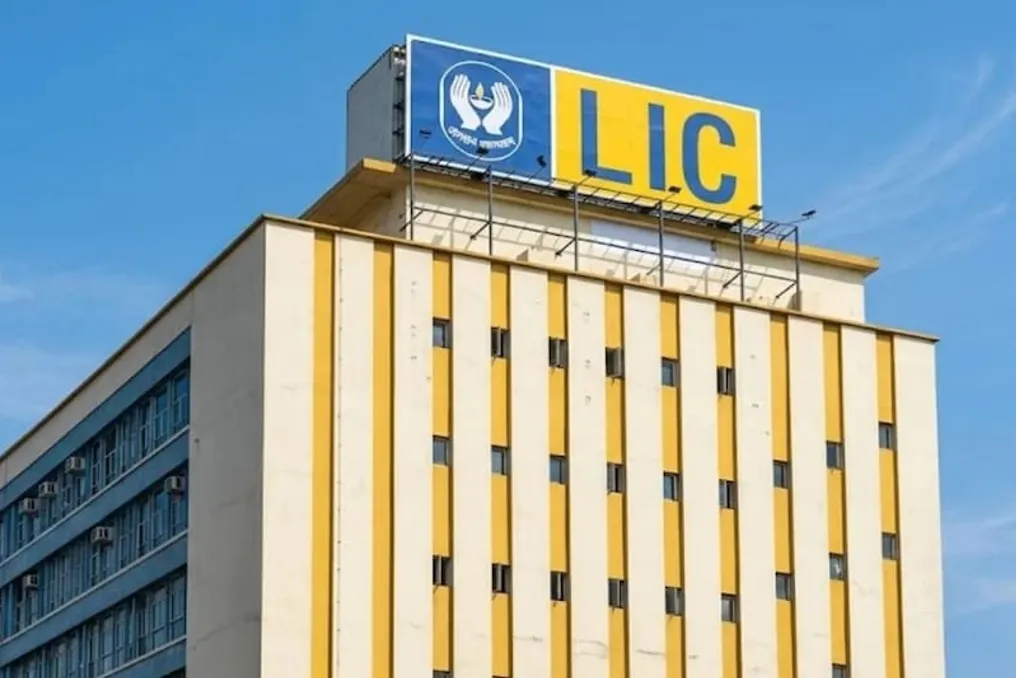
LIC offers monthly income scheme: opportunity to earn 7000 rupees per month even for 10th-grade graduates
Read more
Aaj Tak
www.aajtak.in

LIC offers monthly income scheme: opportunity to earn 7000 rupees per month even for 10th-grade graduates

The Life Insurance Corporation of India (LIC) offers various insurance plans for all segments of the population, including children, the elderly, and women. Among these plans is a special initiative aimed at empowering women, allowing them to earn up to 7000 rupees monthly. This government program is called LIC Bima Sakhi.

The LIC Bima Sakhi program promotes the financial empowerment of women. Since its launch, it has gained popularity, and the number of women joining it is constantly increasing. Through this scheme, rural women gain the opportunity to become insurance agents and earn a livelihood, while also contributing to raising insurance awareness in villages.

The age restrictions for participating in the LIC Bima Sakhi scheme are set between 18 and 70 years. Furthermore, having an education equivalent to completing the 10th grade is sufficient to benefit. Thus, this LIC scheme provides an excellent earning opportunity for those who have completed the 10th grade. A feature of this program is that participants receive not only a commission for policy sales but also a fixed allowance for the first three years.

Under the LIC Bima Sakhi program, women are provided with a fixed allowance for three years. According to the LIC Bima Sakhi rules, in the first year, participants receive an allowance of 7000 rupees per month. In the second year, the amount decreases to 6000 rupees per month, and in the third year, it decreases to 5000 rupees per month.

LIC also provides training for women insurance agents. Participants receive specialized training throughout the first three years while simultaneously receiving an allowance. Women who meet or exceed the target sales figures for insurance policies through Bima Sakhi receive an additional commission. After completing the three-year training, they can work as official LIC agents.

Work under this government program is conducted with complete freedom of action. Priority is given to women residing in rural areas. There is a condition that relatives of active LIC agents and employees cannot participate in this program. It is also required that in the first year of work, the agent must keep at least 65 percent of open policies active.

Candidate women can apply for the LIC Bima Sakhi program online. Registration details and the application form are available on the official LIC website. Necessary documents can be uploaded and the form submitted there. Required documents include a birth certificate, proof of address, and proof of education.

Similar stories

LIC Insurance Company offers Jeevan Umang plan with guaranteed pension of 40,000 rupees up to age 100
Read more
www.aajtak.in

LIC Insurance Company offers Jeevan Umang plan with guaranteed pension of 40,000 rupees up to age 100

LIC offers various plans for people of all ages, including children, the elderly, women, and youth. Among these products are those that guarantee regular income throughout life. One such plan is LIC Jeevan Umang, which provides the recipient with a guaranteed income until the age of one hundred.

By purchasing this plan with an insurance cover of 500,000 rupees, the client can receive an annual income of 40,000 rupees for life.

Like government savings schemes managed by post offices, investing in LIC plans is considered a safe option. Specifically, the LIC Jeevan Umang policy guarantees income receipt until the age of one hundred.

When taking out the LIC Jeevan Umang plan, one can choose the premium payment period, which is 15, 20, 25, or 30 years. The minimum basic insurance amount that can be taken out is 200,000 rupees. This plan provides an annual payout benefit equal to 8% of the basic insurance amount, which is paid to the recipient until age 100. Furthermore, if the policyholder dies before reaching 100 years of age, the heir receives a lump sum that can be received in installments.

To understand the mechanism of receiving lifelong income under the LIC Jeevan Umang plan, consider an example. If a person aged 26 takes out a Jeevan Umang insurance cover of 500,000 rupees and chooses a payment term of 30 years, according to calculations, they will need to pay approximately 4.81 rupees as a premium. The annual premium will be 16,047 rupees, semi-annual 8,112 rupees, quarterly 4,100 rupees, and monthly only 1,367 rupees, which is equivalent to about 45 rupees per day.

After the premium payment period ends, i.e., at age 56, the recipient will start receiving 40,000 rupees annually, corresponding to 8% of the total insurance amount of 500,000 rupees, and this income will continue until age 100.

If the premium amount required to take out a 500,000 rupee cover is divided by the daily base, it becomes clear that to receive a lifelong income of 40,000 rupees per year, the client will have to pay an annual premium of 16,047 rupees, semi-annual 8,112 rupees, quarterly 4,100 rupees, and monthly 1,367 rupees, which is about 45 rupees per day.

In addition to the guarantee of lifelong income, the LIC Jeevan Umang policy provides additional benefits, among which the tax deduction is important for the popularity of this product. When taking out this plan, one can utilize a tax deduction in accordance with section 80C of the income tax.

LIC introduced a scheme allowing for lifelong income after paying premiums over five years
Read more
www.aajtak.in

LIC introduced a scheme allowing for lifelong income after paying premiums over five years

If a person is concerned about expenses after retirement and wishes to receive income throughout their life, the company LIC offers a special program. Under this scheme, premiums can be paid over five years, and then income can be received for life.

This program is called the Jeevan Utsav Policy. This plan is an individual life insurance that is not tied to stock market shares and is non-participating. This means that its benefit does not depend on fluctuations in the stock market. Furthermore, this scheme provides risk coverage for policyholders.

This program allows for premium payments over a period ranging from five to sixteen years. The minimum basic sum insured is 500,000 rupees. For example, if a 30-year-old wants a basic insurance amount of 500,000 rupees and chooses a five-year payment option, the annual premium will be 110,150 rupees.

If he chooses an eight-year period, the annual premium will be 72,600 rupees; for a twelve-year option, it will be 44,275 rupees, and for a sixteen-year option, it will be 30,025 rupees.

Under the regular income option of this policy, the policyholder's annual income will be 10 percent of the basic sum insured. With a basic sum of 500,000 rupees, this will be 50,000 rupees annually. If the premium payment period is five years, the income will start from the eleventh year of the policy and continue for life.

According to the terms of LIC Jeevan Utsav, a guaranteed supplement is provided during the premium payment period. For every year the policy is eligible for payouts, 40 rupees are added to every 1000 rupees of the basic sum insured. With a basic sum of 500,000 rupees, the guaranteed supplement amount reaches 20,000 rupees in each corresponding year.

This plan also offers flexible income, allowing the policyholder to defer receiving income. Interest will be accrued on the deferred amount according to the established rate, which is currently 5.5% per annum.

If the policyholder dies during the policy term, the heir receives payments according to the policy terms. Additionally, a lending service is available under this scheme. The loan amount, interest rate, and repayment period depend on the policy terms.

LIC introduces three new insurance plans: from lifetime pension to cancer coverage
Read more
www.aajtak.in

LIC introduces three new insurance plans: from lifetime pension to cancer coverage

The Life Insurance Corporation of India (LIC) has unveiled three new insurance products designed to meet diverse client needs, such as ensuring regular income after retirement or providing financial protection for families against the costs of serious illnesses.

These new plans will be available for purchase starting October 19, 2026. They include a plan guaranteeing post-retirement income, a medical insurance plan that pays a fixed sum upon hospitalization, and coverage offering financial assistance upon cancer detection.

If a client's goal is to organize a steady income stream after ceasing employment, the LIC's New Jeevan Dhara-II plan may be a suitable option. This is an individual deferred annuity accumulation plan that provides a lifelong annuity payment after the selected period expires.

Key benefits of this plan include a guaranteed annuity rate set at the policy inception. Clients can choose between regular contributions or a lump-sum payment according to their needs. There is also an option to select an annuity for one person or joint holders, as well as an option to increase the annuity by making additional contributions during the specified term.

Additional bonuses may be provided for larger contributions or purchase amounts. Bonuses are also available for active and deceased policyholders, as well as for nominees or beneficiaries.

The minimum age to enroll in this plan is 18 years, and the maximum age is 65/70 years (as of the last birthday), minus the deferral period depending on the chosen annuity option. The minimum vesting age for all annuity options is 30 years, and the maximum is 65/70 years (last birthday), which depends on the chosen annuity option.

In case of hospitalization, expenses beyond treatment, such as room charges, tests, and other services, may arise. In such situations, LIC offers the Health Shield plan, a personal medical insurance program that provides fixed payouts for specific health risks.

This plan includes daily hospital benefits according to the policy rules, as well as a lump-sum payment for major surgery. Furthermore, a lump-sum payment is provided for severe illnesses. During the policy term, contribution stability is maintained, and the absence of claims may lead to increased medical coverage according to prevailing rules.

A premium waiver option is also available for other insured members in the event of the primary insured's death, subject to policy conditions. The possibility of increasing coverage through additional contributions via an optional rider is also provided.

The primary insured can enter this plan between the ages of 18 and 65. Other family members, including children aged 90 days up to 20 years, can also be covered if certain conditions are met. Both the policy term and the premium payment term are 15 years.

Cancer treatment can require long-term expenses, and the illness can negatively impact earnings. To manage these risks, LIC introduced New Cancer Cover. This is a personal medical insurance plan that provides financial aid upon the detection of cancer in its initial or critical stage under the policy. Payments are based on a fixed amount stipulated in the policy, not actual treatment costs.

For this plan, the minimum entry age is 18 years, and the maximum is 65 years. The payout amount depends on the cancer stage: 25% of the stipulated sum is paid upon detection of Stage I cancer, and 100% of this sum is paid upon detection of critical-stage cancer.

Additionally, for severe forms of cancer, a monthly payment of 1% of the stipulated sum is provided for 10 years. In the event of the insured's death, this payment can be received by the nominee according to the terms. The client has the option to choose either a level or an increasing sum assured over time. A premium waiver may also be granted upon detection of the relevant cancer, subject to policy terms.

All three LIC plans are available for purchase starting October 19, 2026. Clients can acquire them in two ways: offline through licensed LIC agents, corporate agents, insurance brokers, and marketing firms, or online via the official LIC website ([www.licindia.in](https://www.licindia.in/)).

Before purchasing a policy, it is crucial to carefully review the benefit conditions, exclusions, waiting periods (if applicable), the claims process, and the policy document itself. Decisions must be made based on personal needs and solvency, not solely on one benefit.

Popular