Event before COP in the Pacific region draws attention to island states' problems
Read more
China Dialogue
chinadialogue.net

Event before COP in the Pacific region draws attention to island states' problems

A recent UN climate change report warns that for small island developing states, 'the habitability collapse has begun.' It notes that storm surges are advancing further inland, agricultural lands are salinizing, and coral reefs are disappearing.

The situation is particularly critical in the Pacific region, where residents have sometimes had to stage protests, such as holding press conferences waist-deep in water, to draw the world's attention.

However, this year's event, which the UN termed Pre-COP—usually a rather dry technical meeting preceding the main climate conference—was transformed into a special event to highlight the dire situation of the region.

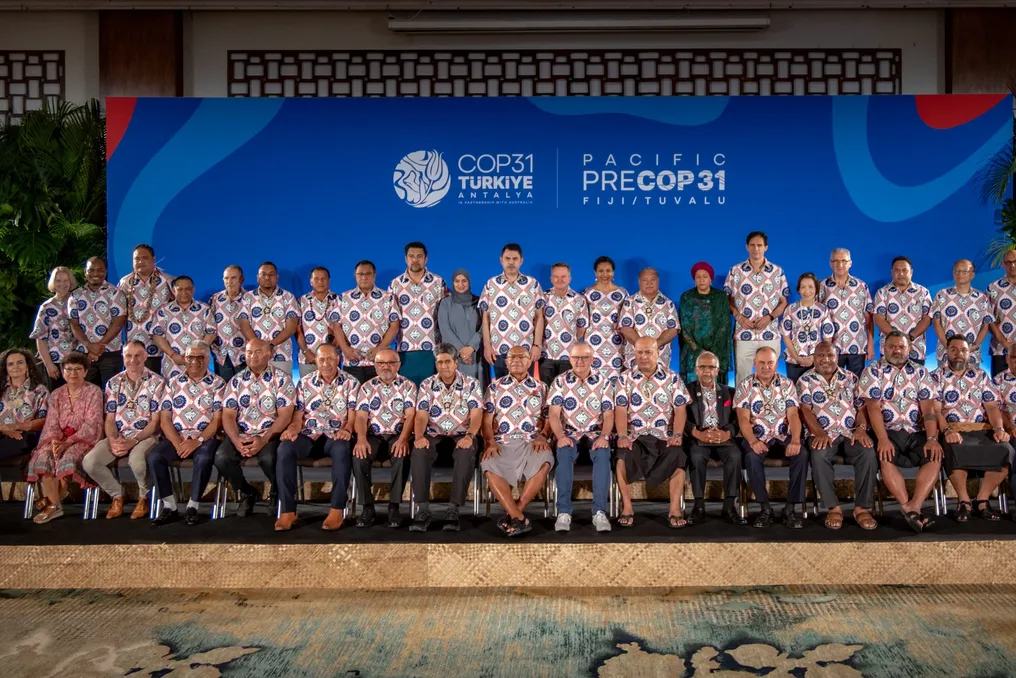
The summit, held in Fiji at the beginning of this month, gathered about 4,000 participants, including national leaders, government officials, indigenous communities, and scientists. The delegation visited the Funafuti Atoll in Tuvalu to see how coastal defenses are being strengthened in response to sea-level rise and intensified storms caused by climate change.

Leaders from 14 governments, predominantly from Pacific island nations, participated, along with representatives from Australia, Timor-Leste, and Mauritius. The European Union's Climate Commissioner, Wopke Hoekstra, as well as heads of the Green Climate Fund and the Asian Development Bank were present.

Media noted the absence of national leaders from countries outside the Pacific region, but Pacific leaders responded by asserting the significance of those present. The Chairman of the Pacific Islands Forum and President of Palau, Surangel Whipps Jr., stated at the event in Australia: 'I recently read that all the big names were absent, so let's talk about size. Pacific nations are custodians of nearly 20% of our Earth's surface... an area larger than Russia, China, the United States, Canada, Brazil, Australia, and India combined.'

Shamini Selvaratnam, Director of International Climate and Clean Energy at the NGO Ocean Conservancy, told Dialogue Earth: 'The story of this Pre-COP, who was in the room and who wasn't, is about whose voices finally got much closer to the center of the room—these are voices we rarely hear elsewhere.'

According to her, the atmosphere was permeated with a sense of 'urgency and determination,' as attendees confronted the reality of the region needing to cope with climate change, especially sea-level rise.

Fiji and the Pacific region used Pre-COP to insist on maintaining the 1.5°C temperature threshold, reforming access to climate finance, and including ocean governance in the official UN negotiation process at the main COP31 meeting in Turkey in November.

A recent UN report warning of 'habitability collapse' suggests that global temperature rise will reach at least 1.8°C even under the most optimistic future projections. Selvaratnam emphasized that Pacific nations clearly stated in Fiji that the 1.5°C goal remains a 'survival threshold, not an abstract negotiating figure.'

A key discussion point was funding for island adaptation. In Selvaratnam's view, the focus was not only on increasing the total volume of available funds but also on directing existing finances to communities more rapidly.

Islands have their own ambitions in renewable energy but complained about the lack of predictable and accessible financing to scale up energy and maritime transport access. Leaders also pointed out that bureaucracy and other obstacles cause them to receive funds too slowly.

Whipps Jr. stated at the summit, citing Climate Home News: 'They give us a tiny piece to cover the gaping hole. The bureaucratic process to get that piece is so slow that while we wait, the water fills the hole. And then, to repair the vessel so we can survive the next storm, they offer loans, debts that weigh down the sinking ship, wrapped in such thick red ribbon that we can barely access it.'

The Pacific Islands Forum, representing 18 nations and territories, established its own fund—the Pacific Resilience Facility—which seeks investments of $500 million USD. During Pre-COP, Fiji donated $10 million to it, bringing the total amount to approximately $190 million. Additionally, the governments of Denmark and the Netherlands announced contributions of $2.3 million and $1 million, respectively.

Rufino Varea, Director of the Pacific Islands Climate Action Network, noted: 'These commitments are welcome and demonstrate growing support for Pacific-led solutions, but they are far from covering the needs.'

Observers also noted progress in moving the status of ocean issues within UN climate negotiations. During Pre-COP, the 'Friends of Ocean and Climate' coalition submitted a joint letter, signed by 105 nations, to the Australian and Turkish presidencies of COP31. The letter stated that ocean issues and ocean solutions must be integrated into all aspects of the UN climate process. The document added: 'The ocean should be understood not as a separate sector or special interest, but as an integral part of achieving climate, economic, and sustainable goals.'

Selvaratnam believes that the ocean was inherent in all discussions in Fiji. 'In the Pacific region, the ocean is not just a chapter in the climate agenda—it is the climate agenda itself. Pre-COP raised these priorities.'

The main outcome of Pre-COP was the Takupaiaea Declaration—a political statement whose translation in Tuvaluan means 'strength in unity.' This document reiterated the Pacific region's priorities, including the need for financing and the central role of the ocean in solving climate problems.

Varea noted: 'Holding these discussions on our shores allowed our communities to shape the conversation on their own terms, amplifying the voices and leadership of the Pacific region at all levels—from political leaders and civil society to religious organizations, traditional leaders, and grassroots communities.'

He added that there was a genuine collective spirit based on the understanding that the region has much to contribute in response to this crisis.

He concludes that the real test will be whether the political momentum generated in Fiji translates into better negotiation outcomes in Turkey. Selvaratnam agrees: 'Visibility is valuable, but the Pacific region already had visibility. Attracting the world's attention to the Pacific region mattered, but what truly matters is whether this priority is achieved at COP31.'
Similar stories

Beaches in eThekwini and Umdoni prepare for holiday season with enhanced safety measures
Read more
iol.co.za

Beaches in eThekwini and Umdoni prepare for holiday season with enhanced safety measures

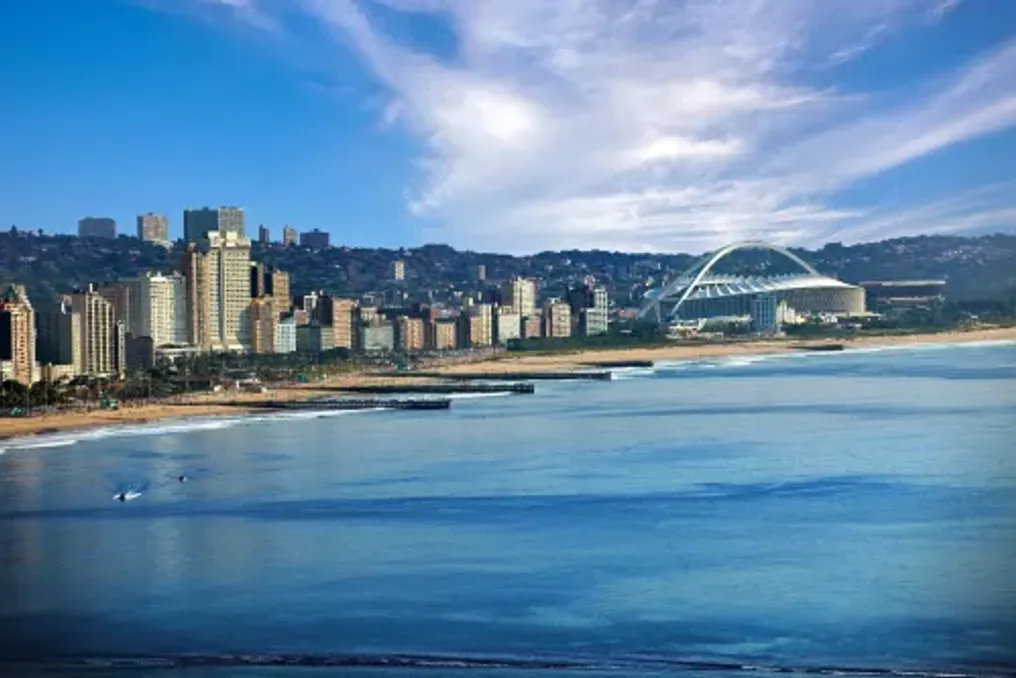
The municipalities of eThekwini and Umdoni are enhancing safety measures, including increasing the number of lifeguards, patrolling beaches, and implementing child protection measures, ahead of the holiday season. Water quality monitoring and operating hours vary depending on the specific beach.

According to eThekwini Municipality data, approximately 400,000 identification bracelets have been purchased to ensure children's safety. The Umdoni Municipality has launched the 'Bobbies on the Beat' program, which utilizes police reservists for regular beach patrols.

Senzelwe Mzila, spokesperson for the eThekwini municipality, told sundaytribune.co.za that the city's scientific team is conducting regular checks to guarantee that swimming areas meet safety standards before the holidays begin. As a large number of visitors is expected during the vacation period, Mzila noted that the city has hired 70 seasonal lifeguards on 10-month contracts to ensure swimmer safety.

He stated that all beaches in the city are safe and ready for the holiday season. Mzila clarified that the published update showed that all 23 monitored beaches in Durban are open for swimming, and testing is conducted every two weeks. However, during the holiday period, the frequency of checks will increase to once a week for thorough water quality control.

The municipality has also prepared 400,000 identification bracelets to implement a child separation program for the upcoming holiday season. According to Mzila, these bracelets will help identify and safely reunite children who get separated from parents or guardians on beaches, pools, and other public recreation areas. Last week, the recruitment process for 43 child caregivers was successfully completed.

The appointed caregivers will assist in implementing the program by supervising, caring for, and protecting children in designated areas during the holiday period. Currently, tents and mats are being procured to ensure suitable facilities for housing lost children and creating a safe, protected, and comfortable environment during the reunification process.

Mzila added that the city has hired 70 seasonal lifeguards on 10-month contracts, starting on September 21, 2026, and ending on July 21, 2027. These seasonal staff will supplement the permanent lifeguard staff and strengthen water safety coverage on beaches, especially during peak periods, including school holidays in April and June of next year, as well as the upcoming holiday season. Scheduled and reactive patrols will be conducted in designated zones where swimming is prohibited to monitor these areas, prevent unsafe swimming practices, and respond to potential water safety risks and incidents.

Mzila also reported that the municipality, in collaboration with the National Sea Rescue Institute (NSRI), has installed warning signs in certain areas, informing the public about the dangers of swimming in non-designated zones. Nevertheless, he mentioned that the city has faced acts of vandalism against these signs, undermining efforts to raise public awareness and ensure the safety of beachgoers. Measures will be taken to enhance the monitoring and protection of this navigational information.

The status of the city's beaches is available on the official website www.durban.gov.za.

Siphelele Sele, a representative of the Umdoni municipality, stated that their area is ready for the holiday season. The municipality has 12 beaches, with Scottburgh Beach being the main tourist attraction. Marine water quality monitoring is conducted on seven beaches by both an independent contractor and the Ugu District Municipality. Discussions are underway to improve coordination between these two bodies to ensure more frequent water sampling during the upcoming peak holiday season.

To enhance beach safety during the peak season, Sele reported that the municipality will deploy an additional 42 lifeguards to its beaches to monitor swimming. Of the twelve Umdoni beaches, six operate year-round, and the remaining six are seasonal. Lifeguard services are provided daily at Scottburgh and Pennington beaches, as well as on weekends and public holidays at Park Ryn, Rocky Bay, and Mtbalume beaches.

Sele also noted that the municipality recently received five 'Blue Flag' beach statuses for Pennington, Umthwahlume, Preston, Rocky Bay, and Bazluy beaches, as well as a pilot site status for Scottburgh beaches. The municipality is currently not issuing identification bracelets to children. In cases of a missing child report, the matter is immediately passed to lifeguards, who use loudspeakers for alerts and assistance in reuniting children with parents or guardians. Numerous beach safety awareness campaigns have been conducted in schools aimed at teaching children proper behavior and water safety skills.

Although standard operating hours are from 8:00 to 17:00, Sele advised that rotating schedules will be implemented at high-traffic beaches to extend supervision coverage from 7:00 to 18:00 if necessary. Furthermore, the municipality has implemented the 'Bobbies on the Beat' program, which engages police reservists for regular beach patrols. Their duties include enhancing public safety and conducting operations to search for and confiscate alcohol at beach access points in accordance with applicable regulations. Sele also reported that Pennington, Bazluy, Rocky Bay, and Preston beaches will receive Blue Flag status starting December 1, 2026.

El Niño phenomenon alters ocean color and poses a threat to marine life
Read more
olhardigital.com.br

El Niño phenomenon alters ocean color and poses a threat to marine life

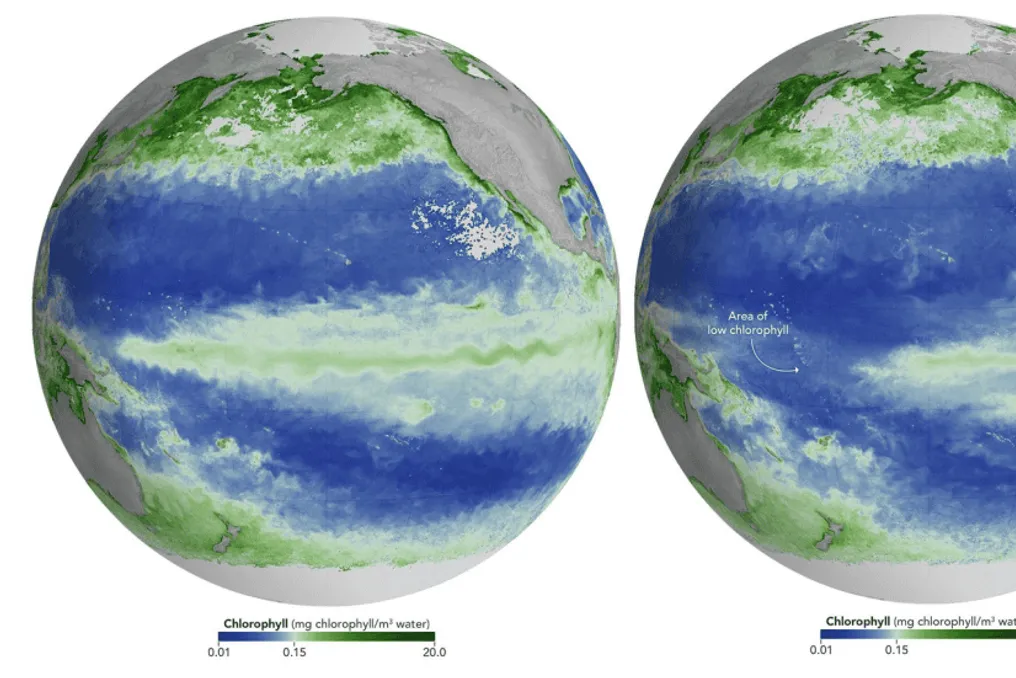
Images captured by NASA reveal that certain areas of the Pacific Ocean transitioned from greenish hues to a deeper blue between 2025 and 2026. This transformation is directly linked to El Niño, a climatic event characterized by the warming of ocean waters, which, according to specialists, is causing a decrease in phytoplankton populations, microscopic organisms vital to marine ecosystems.

The variation was detected by the Ocean Color Instrument, installed on the PACE satellite, which monitors changes in visible light to analyze the distribution of these microorganisms. This current episode may be the most intense El Niño ever documented, presenting tropical Pacific temperatures approximately 4°C above the normal value, as detailed in an article published on the IFLScience website.

Phytoplankton encompasses thousands of species of microscopic beings that perform photosynthesis and produce various pigments, being responsible for part of the chromatic variations of the oceans. Typically, in the equatorial area of the Pacific, green species rich in chlorophyll predominate.

These organisms depend on colder waters with a higher nutrient content. During the El Niño period, the increase in sea surface temperature restricts the ascent of deep waters that bring these nutrients, which harms phytoplankton development.

The data provided by the PACE satellite allows for the observation of this modification: bluer tones generally signal a lower concentration of phytoplankton, while greenish or yellowish areas indicate higher concentrations.

For much of 2025, a band of greenish water extended across the Pacific, covering from Latin America to Southeast Asia. In 2026, under the influence of El Niño, this band lost intensity, notably in the central and western parts of the ocean.

The reduction of these organisms can impact multiple levels of the marine food web. Organisms such as krill, zooplankton, and filter-feeding mollusks feed on phytoplankton and subsequently serve as food for larger species. With the scarcity of organisms at the base of this chain, the food supply decreases for other species, generating consequences that can propagate throughout the entire oceanic system.

Water warming also affects fishing activity. According to the article, vessels operating off the coast of Latin America's Pacific have been returning with incomplete nets, while commercially traded fish, such as tuna and anchovies, migrate to colder waters. This scenario has contributed to the increase in prices of these fishery products.

The effects of this phenomenon transcend the marine environment. Although it begins with water warming in the central and eastern regions of the Pacific, El Niño causes alterations in climate and weather patterns in various parts of the globe.

Matthew Kehrli, chief research scientist for the PACE satellite team at NASA's Goddard Space Flight Center, stated in a release that tracking the results of the data in real time is very satisfying for researchers.

Josh Willis, a scientist from the NASA Jet Propulsion Laboratory's sea level missions project in California, also highlighted the scope of the phenomenon. He stated that El Niño affects practically everyone in some way whenever it occurs.

The text points out that tropical Pacific temperatures are about 4°C above average. A previous episode of similar intensity occurred between 1997 and 1998, when El Niño was associated with 23 thousand deaths and a global economic loss of US$ 5.7 trillion.

Popular