In Uzbekistan, electricity payment restrictions will apply for water supply debt starting in 2027
Read more
Gazeta.uz
gazeta.uz

In Uzbekistan, electricity payment restrictions will apply for water supply debt starting in 2027

Starting in 2027, the system for collecting debts for water supply and sewage services is changing in Uzbekistan. The company 'Uzsuvtaʼminot' has informed about the new conditions regarding the restriction of electricity payment options for citizens with outstanding debts.

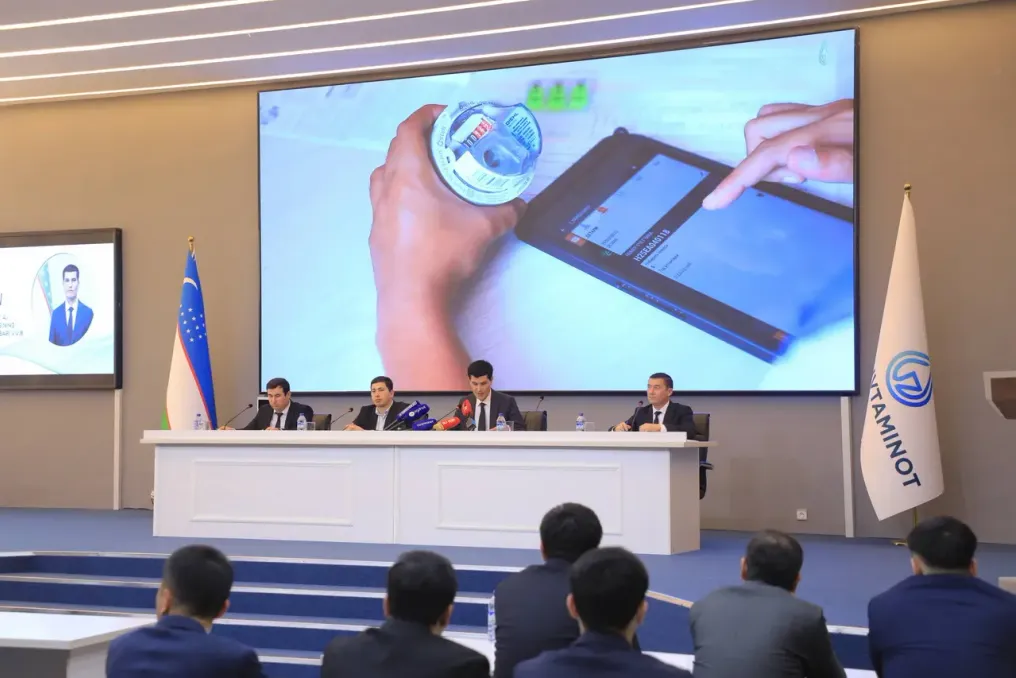
Islom Abdullaev, First Deputy Chairman of the Board of 'Uzsuvtaʼminot', explained at a press conference held on October 30 in Tashkent that if the debt for drinking water supply and sewage is not settled within the established timeframe, the issue of its collection will be considered either through notary or judicial proceedings. Only after the obligations are not fulfilled even after these procedures will it be possible to restrict payments for electricity.

The company also specified that the mere fact of having a water debt does not immediately lead to the suspension of electricity payments.

How the new system will function

According to 'Uzsuvtaʼminot' clarifications, the debt collection process is phased. The first step is sending the consumer an official written notification about the debt. If the debt is not repaid within five working days of receiving this warning, the collection procedure begins.

The subsequent procedure depends on the amount of the debt: if the sum does not exceed 1000 basic calculation units (equivalent to 440 million soms), the collection of undisputed debt is carried out through a notary by issuing an executive record. If the amount exceeds 1000 BCU, the collection takes place through judicial proceedings.

After the notary or judicial procedure is completed, an enforcement document is formed, which is then transferred to the Bureau of Enforcement (BE). If the consumer fails to comply with the requirements of this document within the period allocated for voluntary execution, the acceptance of electricity payments will be automatically blocked. To resume the ability to pay for electricity, the debt for drinking water and sewage must be repaid.

Thus, the mechanism does not provide for a direct disconnection of electricity due to a water debt, but only restricts the ability to top up the electricity bill. However, for users with prepaid meters, the inability to top up the balance may lead to the cessation of energy supply after all previously deposited funds have been used.

Who will not be subject to restrictions

The new regulation is based on Presidential Decree No. UP-140 dated July 24, 2026, which concerns the development of water supply and sewage systems. This document stipulates that as of January 1, 2027, if the requirements of the enforcement document are not met within the established period, the acceptance of the debtor's electricity payments will be automatically restricted. Nevertheless, an exception is made for households included in the Unified Social Register (Social Register), to whom this restriction does not apply.

'Uzsuvtaʼminot' representatives emphasized that citizens are given time to voluntarily repay the debt, and that the restriction of electricity payments is the final stage of the collection process. It should be noted that mechanisms for restricting electricity payments for collecting debts for other utility services are already in effect in Uzbekistan. For example, as of August 1, 2025, a procedure was introduced to restrict electricity payments for those who have a debt for household waste removal, and the restriction is lifted after the debt is paid.

Furthermore, since July 1, 2026, a rule is in effect in Tashkent stating that if there is a debt for mandatory contributions to the maintenance of common property in apartment buildings, electricity payments may be restricted.

Similar stories

Total consumer debt for water supply in Uzbekistan exceeds 542 billion soms
Read more
podrobno.uz

Total consumer debt for water supply in Uzbekistan exceeds 542 billion soms

The total amount of consumer debt for water supply and sewage services in Uzbekistan has reached 542.6 billion soms. According to information presented on October 30, 430 billion soms of this total amount is attributed to the population, and the remaining 111 billion soms is owed by legal entities.

Representatives of JSC "Uzsuvtaʼminot" reported that over nine months of 2026, 23 thousand consumers with unpaid debts were disconnected from the drinking water supply network. Furthermore, in 122 thousand cases, debts totaling 265 billion soms were transferred to judicial bodies.

During inspections, specialists discovered 8.6 thousand violations. Among these, 4.6 thousand cases were related to illegal connections to water networks, the damage from which is estimated at 112 billion soms. At the time of the press conference, 30 billion soms had been recovered from this amount.

JSC "Uzsuvtaʼminot" also shared positive trends: the number of major debtors whose debt exceeds one million soms decreased by 4.4 thousand, and the total amount of their debt decreased by 5.4 billion soms. The number of consumers who have not paid for services for more than a year also decreased by 46.3 thousand, which accounts for 4%.

Nevertheless, an inconsistency is observed in the provided data: the stated total debt amount is 542.6 billion soms, while the sum of debts of the population and legal entities combined equals 541 billion soms, creating a difference of 1.6 billion soms. The editorial office has sent a request to JSC "Uzsuvtaʼminot" to clarify the reasons for this discrepancy.

Uzbekistan to change water tariff approval rules in 2027
Read more
uzdaily.uz

Uzbekistan to change water tariff approval rules in 2027

Starting January 1, 2027, Uzbekistan will transfer the authority for approving drinking water and sewage tariffs to the Interdepartmental Tariff Commission under the Cabinet of Ministers. This will replace separate regional price decisions with a unified system based on economically justified criteria.

These changes were announced at a press conference attended by representatives of JSC "Uzsuvtimnot". The event also discussed the financial status of water supply companies, outstanding consumer debts, and planned reforms in the sector.

Another change is scheduled for April 1, 2027: authorities plan to introduce a single water tariff for state organizations.

Factors Affecting Service Costs

According to JSC "Uzsuvtimnot", the cost of providing water supply and sewage services depends on electricity prices, infrastructure maintenance costs, employee salaries, and debt servicing costs. The increase in electricity tariffs has become a significant factor affecting operating expenses.

The electricity tariff increased from 450 to 900 soms on October 1, 2023, then to 1,000 soms on May 1, 2025, and reached 1,100 soms on June 1, 2026. As a result, electricity costs have risen by 2.4 times over three years.

The average tariff for drinking water for households nationwide is currently 3,765 soms per cubic meter, or 4,217 soms including VAT. The average sewage tariff is 2,008 soms.

As of October 27, revised tariffs were approved for six water supply enterprises. In the Andijan region, the drinking water tariff increased from 1,650 to 2,500 soms per cubic meter, while in the Navoi region, the rate was raised from 3,500 to 4,200 soms. In the Samarkand region, the tariff increased from 2,800 to 3,600 soms per cubic meter. In the Surkhandarya region, the price rose from 5,300 to 6,800 soms, and in the Tashkent region, the tariff increased from 2,600 to 3,100 soms. The tariff for the main water supply enterprise Chimgan-Charvak was adjusted from 1,500 to 1,700 soms.

Consumer Debt Problem

Uzbekistan's water supply sector also faces a significant problem of unpaid consumer debts. According to JSC "Uzsuvtimnot", the total debt owed to enterprises in the system reached 542.6 billion soms as of October 1, 2026. Households are responsible for 430.7 billion soms of this amount, and legal entities for 111.8 billion soms.

The highest level of debt was recorded in Tashkent—92.9 billion soms. The Andijan region follows with 74.1 billion soms, while the Tashkent region had a debt of 61.6 billion soms, and the Fergana region had 57 billion soms.

To collect unpaid bills, water supply companies filed 167,783 applications with notary bodies and courts during 2026. Following their review, 114,305 enforcement acts were issued by notaries and court rulings. Of these, 110,563 enforcement documents were sent to the Enforcement Bureau.

New Payment Collection Mechanism

From 2027, Uzbekistan also plans to implement an updated mechanism for collecting debts related to water supply and sewage services. The procedure will depend on the size of the consumer's debt. Debts not exceeding 1,000 basic calculation units (BCU) will be collected through notarial procedures. Cases with debts above this threshold will be transferred to courts.

If a consumer fails to meet their payment obligations after an enforcement document is issued, legislation provides for the possibility of restricting electricity payments according to established procedures. However, this restriction does not apply to families included in the Unified Social Protection Register. Authorities clarified that restrictions will not be applied immediately upon the occurrence of the debt; consumers will be given time to settle their obligations according to the established order.

The planned reforms are linked to Presidential Decree No. UP-140 dated July 24, 2026, which defines measures to improve tariff regulation, strengthen the financial stability of water supply enterprises, and enhance service quality. The decree provides for shorter periods for tariff revisions when energy costs change, as well as greater transparency in pricing and advance notification to the public about tariff changes. It also provides for directing funds toward the repair and modernization of water supply systems. The transition to centralized tariff regulation should ensure uniformity in the criteria for approving water and sewage prices across Uzbekistan while improving the financial stability of companies in this sector.

Uzbekistan discusses introducing mandatory deposit for plastic bottles and aluminum cans
Read more
gazeta.uz

Uzbekistan discusses introducing mandatory deposit for plastic bottles and aluminum cans

A proposal has been put forward in Uzbekistan to introduce a mandatory deposit system for plastic and glass bottles, as well as for beverage aluminum cans. Iskandar Kutbiddinov, Deputy Chairman of the National Committee on Ecology and Climate Change, announced this initiative on October 20 at a meeting of the Oliy Majlis Legislative Chamber while presenting an updated version of the 'Waste' law.

According to Kutbiddinov, the current system does not create sufficient economic incentives for the population to engage in separate collection of packaging materials. He emphasized that the voluntary approach has not gained widespread adoption, and the recycling rate for such waste remains extremely low—only 6.2%.

How the deposit system will function

The essence of the deposit system is that the product cost includes a deposit for the packaging. The buyer has the option to reclaim this deposit after returning the empty container to a designated collection point. An example from European countries is cited, where plastic and glass bottles can be returned via automatic machines in stores or nearby, allowing the consumer to receive the deposited amount back. The collected containers are then sent for recycling.

Kutbiddinov noted that such a system will help activate separate waste collection, increase the supply of raw materials for recycling, and reduce environmental pollution. He also stressed the need to provide producers and trade organizations with a phased transition period to establish the necessary infrastructure.

The meeting did not specify the exact size of the deposit, who will operate the system, where the containers can be returned, or when the new regulations will come into force. It is also unclear in what form the mandatory deposit system is enshrined in the bill, which was approved by deputies in the first reading.

Practice of paying for bottle returns already exists in Uzbekistan

In September, the Agency for Waste Management and Circular Economy, in collaboration with the Norwegian company TOMRA, launched a pilot project for accepting used packaging through special automated machines—фанdomats. The first devices began operating on September 23 in Tashkent and Surkhandarya region. In the capital, one such fandomat is installed in front of the National Committee on Ecology building at Bunyodkor Street, 7A, in the Chilonzor district.

These machines accept aluminum cans, plastic, and glass bottles. A reward of 150 soms is provided for each unit of packaging, which can be withdrawn to an electronic wallet via the Click payment system or donated to charity. If this pilot project proves effective, it is planned to gradually place fandomats in areas with high concentrations of people in both Tashkent and other regions.

Nevertheless, the existing mechanism differs from the proposed deposit system in that currently citizens receive a reward for returned packaging without paying a deposit when purchasing the beverage. The size of the proposed deposit has not yet been announced.

What else does the new 'Waste' law include

Previously, the mechanism of returning used packaging using deposits was listed among promising innovative projects approved by a presidential decree dated May 31, 2023. In January 2025, the then Ministry of Ecology also proposed gradually expanding the responsibility of producers and importers of plastic products for the collection, sorting, and recycling of waste.

Specifically, the department insisted that producers of non-alcoholic beverages should commit to recycling 50% of the plastic packaging used by 2026, 75% by 2027, and 100% by 2028. Although these targets and deadlines were proposed by the ministry, it was not clarified at the October 20 meeting whether they are reflected in the new version of the bill.

The document presented to the deputies provides for expanding the responsibility of producers and importers for waste generated from certain types of goods and packaging. In some cases, it also proposes introducing a disposal fee. Kutbiddinov explained that this measure is aimed at reducing waste volume, stimulating recycling, and ensuring the participation of producers and importers in covering waste management costs.

According to data provided by the agency representative, 15.1 million tons of household waste were generated in Uzbekistan in 2025, with only 5.2% being sorted. The agency representative also pointed out that a unified system linking separate waste collection at the point of generation with the transfer of this waste to recycling enterprises has not yet been established in the country.

The new edition of the 'Waste' law consists of sixty articles and nine chapters. In addition to regulating packaging recycling, it includes waste classification by hazard level, clarification of the duties of state bodies and operators, new requirements for waste transfer stations and landfills, as well as changes in the financing of this industry. On October 20, the Legislative Chamber approved the bill in the first reading, and for the new rules to come into effect, the document must undergo further legislative procedures.

Popular