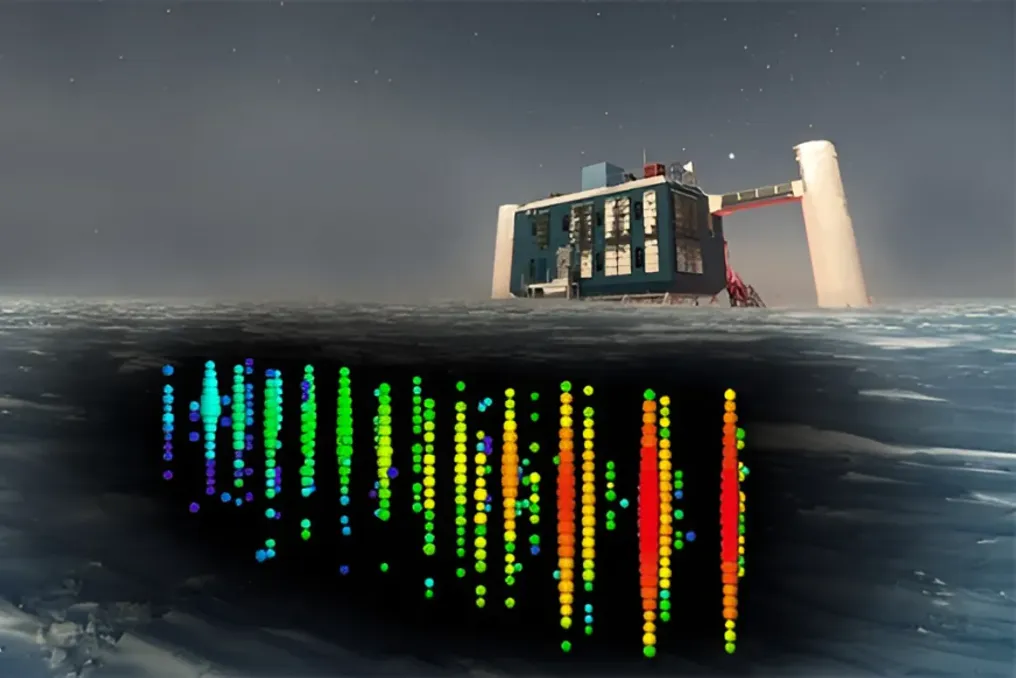
The Science Behind the Neutrino Observatory Awarded the Nobel Prize in Physics
Read more
Olhar Digital
olhardigital.com.br

The Science Behind the Neutrino Observatory Awarded the Nobel Prize in Physics

Francis Halzen, a naturalized American and Belgian citizen, was awarded the 2026 Nobel Prize in Physics for his fundamental work in the development of IceCube. This observatory is located deep within the ice at the South Pole in Antarctica and has the capability to identify high-energy neutrinos, providing new information about the most extreme environments in the Universe.

The topic was discussed on the Space View program this Friday (30), where physicist Alexandre Cherman participated to detail how IceCube aids in investigating the most intense cosmic phenomena and what neutrinos can reveal about them. Cherman, who is an astronomer, holds a PhD in theoretical physics, is a data scientist, educator, speaker, and author of eight books, and is also a co-author of the educational game Cosmic Real Estate, produced by Estrela Cultural. He currently leads the Astronomy department at the Rio de Janeiro City Planetarium Foundation.

The concept of using Antarctic ice as a particle detector dates back to 1988. After more than twenty years of development, IceCube began operating in 2010. Its structure covers about one cubic kilometer of ice and is composed of 5,160 optical sensors distributed across 86 vertical cables extending between 1.45 and 2.45 kilometers in depth.

Neutrinos are subatomic particles that have no electric charge and possess very little mass. Generated in various natural events, they can pass through celestial bodies, such as planets and stars, and even the human body, interacting minimally with matter. It is estimated that approximately one hundred trillion of these neutrinos pass through a person every second.

The detection of these neutrinos occurs when they collide with an atom present in the ice, generating charged particles. These, in turn, emit a brief bluish glow known as Cherenkov radiation. The sensors capture these signals, allowing researchers to calculate the energy and determine the direction of the particle's origin.

Unlike conventional telescopes, which function by capturing light, IceCube focuses on observing particles. Due to the lack of electric charge in neutrinos, their paths are not altered by magnetic fields. This allows them to point towards the location of cosmic accelerators, meaning extreme environments capable of generating particles with energies far exceeding those achieved in terrestrial laboratories.

The discoveries made by the observatory have boosted the field of neutrino astronomy, which complements observations made with light and gravitational waves. IceCube remains operational and is receiving continuous improvements to increase its detection capacity, identify new sources of these particles, and aid in understanding the most extreme phenomena in the Universe.

Marcelo Zurita, president of the Paraíba Astronomy Association – APA, a member of the SAB – Brazilian Astronomical Society, technical director of the Brazilian Meteor Observation Network (Bramon), and national coordinator of Asteroid Day Brazil, presents the program, which is broadcast live every Friday at 9 PM (Brasília time) on the official channels of the outlet on YouTube, Facebook, Instagram, X (formerly Twitter), LinkedIn, and TikTok. The original content was published on Olhar Digital.
Similar stories

Review of the Artemis Accords: Principles, Participants, and Expert Assessment
Read more
gazeta.uz

Review of the Artemis Accords: Principles, Participants, and Expert Assessment

Uzbekistan joined the Artemis Accords on October 19, which concern research on the Moon, Mars, asteroids, and comets, becoming the 77th participating country. These accords define the principles for participation in space exploration.

The Emergence of the Artemis Accords

Issues regarding the regulation of state behavior in space have been discussed at the UN since the late 1950s. In 1959, the Committee on the Peaceful Uses of Outer Space (COPUOS) was established, which developed the 1967 Outer Space Treaty in 1967. This treaty established a fundamental principle: space is accessible for study by all nations, but no one has the right to claim the Moon or other celestial bodies as their own.

The Artemis Accords appeared half a century later and are based on the new US lunar program. In December 2017, US President Donald Trump signed a directive that adjusted the goals of the American space program, returning the Moon to the list of priority areas. In 2019, the program was named Artemis, referencing Greek mythology, where Artemis is the twin sister of Apollo, after whom the lunar program of the 1960s was named.

From the beginning, the new program was planned as a joint project involving private companies and other countries. At the time, NASA Administrator Jim Bridenstine emphasized in 2019 that since many countries were showing interest in the Moon, they would not act alone.

Space Resource Provisions

A significant aspect of the American approach was Donald Trump's order of April 6, 2020, which supported the mining and use of space resources. Although the Outer Space Treaty prohibits national appropriation of celestial bodies, it does not directly regulate the extraction of natural resources. However, the directive stated that US citizens and corporations should have the right to commercial exploration, mining, and use of space resources within the framework of existing legislation. The right to own, sell, and use mined materials was enshrined in US laws back in 2015. Furthermore, the order stated that the US does not consider space 'the global common heritage.'

The State Department was tasked with securing international support for this American concept through bilateral and multilateral agreements. Subsequently, provisions on resources were included in the text of the Artemis Accords. States that signed these accords confirmed that the process of resource extraction itself does not entail the appropriation of a celestial body's territory. Moreover, the extraction and use of resources must comply with the terms of the Outer Space Treaty, including free access, obtaining governmental permission, and monitoring the activities of private firms, as well as preventing harmful contamination.

Nature of the Accords: Political Commitment, Not a Treaty

It is important to note that the Artemis Accords are not an international treaty and do not possess binding legal force. They are classified as a political commitment to follow general principles, many of which contribute to the practical implementation of the norms of the Outer Space Treaty. For them to enter into force, it is sufficient for a state to submit its signature to the US government. The Accords do not contain mechanisms for resolving disputes in case of principle violations; specific interstate interaction is formalized by separate documents.

Mike Gold, one of the authors of the accords, explained that the non-binding format was chosen deliberately. This allowed a large number of countries to quickly join the accords, bypassing the lengthy ratification procedure.

Core Principles of the Accords

The Artemis Accords establish ten principles that participants must follow when studying the Moon, Mars, asteroids, and comets. Activities under these accords must be conducted exclusively for peaceful purposes.

Participant Requirements

Participants commit to transparently disclosing their space policies and plans, as well as providing scientific data to the public. They also use unified technical standards to ensure equipment compatibility across different countries. Additionally, countries undertake to assist astronauts in emergencies, register the launches of space objects, and work to reduce space debris.

Participants also intend to preserve historically significant landing sites on the Moon, including Apollo landing sites. The extraction of space resources is permitted, but it must be done in accordance with the Outer Space Treaty. Temporary safety zones are introduced to prevent mission overlaps between different countries, requiring advance notification to participants about their operational zones and coordination of actions.

Participants and International Context

Thanks to Uzbekistan's accession, the number of participants in the Artemis Accords reached 77. Two leading space powers, China and Russia, have declined to join these accords. In Moscow, the American initiative faced criticism even before its official presentation. In May 2020, when media reports emerged about US plans to mine resources on the Moon, then head of Roscosmos Dmitry Rogozin stated: 'The principle of invasion is the same, whether it is the Moon or Iraq: the creation of a

Scientists discover signs of a 50 km underground tunnel on the Moon in the Marius Hills region
Read more
www.aajtak.in

Scientists discover signs of a 50 km underground tunnel on the Moon in the Marius Hills region

Scientists from the Japanese space agency JAXA have discovered signs of an underground tunnel approximately 50 kilometers long in the Marius Hills region of the Moon. This information was obtained after analyzing radar data collected by the Kaguya orbital spacecraft. Researchers believe that if this tunnel exists, it could potentially be used in the future for human habitation on the Moon.

The Moon lacks an atmosphere and the weather conditions characteristic of Earth. There is a risk from harmful cosmic rays, small meteorites, and sharp temperature fluctuations. An underground tunnel could provide protection against these threats. However, complete information about this tunnel is currently unknown, and it remains to be determined how safe it would be for humans to reside inside.

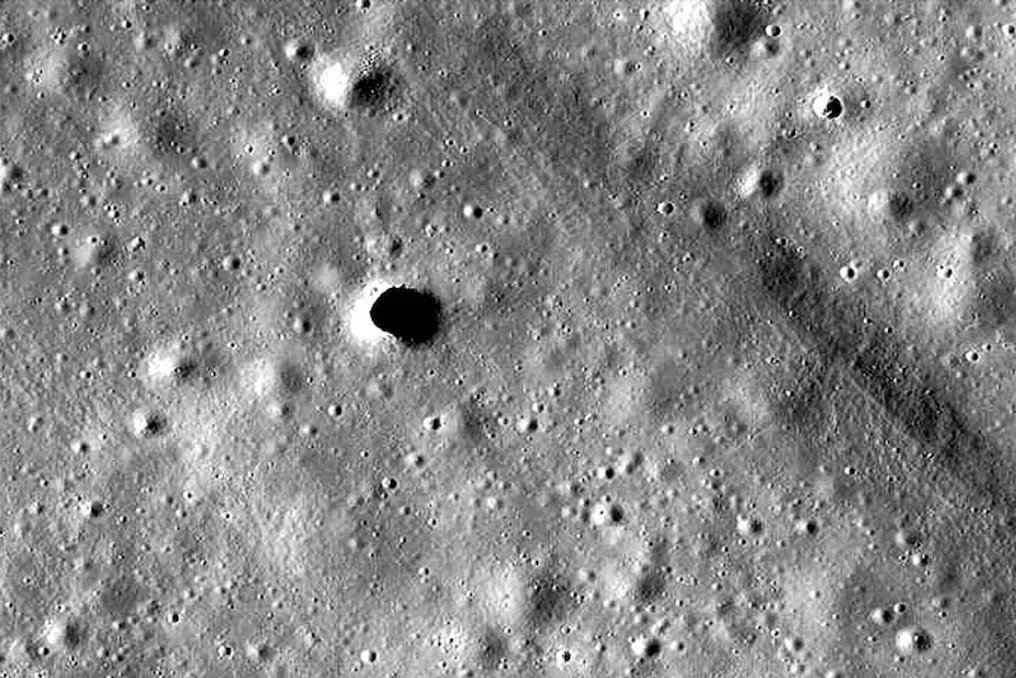
In 2009, the Kaguya orbital spacecraft captured images of the Moon, which showed a large crater in the Marius Hills area named Marius Hills Hall. This crater was estimated to be about 50 meters wide and 50 meters deep. This section of the Moon is visible from Earth. Scientists suspected that this crater might be an opening to a large underground tunnel, leading them to check radar data for large voids beneath the lunar surface.

The Kaguya orbital spacecraft was equipped with the Lunar Radar Sounder (LRS), which directed radar signals toward the Moon's surface. These signals reflected back, helping scientists understand the subsurface structure. In 2017, an article published in the journal Geophysical Research Letters described signals indicating the probability of large underground cavities. Based on this data, the hypothesis of a lava tube approximately 50 kilometers long was proposed. Nevertheless, due to radar limitations, every part of the tunnel could not be inspected, necessitating further research to confirm its full length and structure.

According to scientists, volcanic eruptions occurred on the Moon a very long time ago, spewing out hot lava. When the lava stopped flowing, its outer layer cooled and solidified, while the hotter inner lava continued to move forward, forming a long, tunnel-like space underground. Such structures are called lava tubes. The Marius Hills region contains numerous structures formed by volcanic activity. Scientists hypothesize that this tunnel may be around 3.5 billion years old, and studying it could help better understand the ancient history of the Moon.

A safe zone is critically important for long-term human presence on the Moon. It is difficult to protect against harmful cosmic rays and small meteorites. An underground tunnel could offer protection from these factors and also mitigate the impact of sharp temperature changes. Scientists hope that signs of water or ice might be found in such locations, but there is currently no confirmation of water or ice within this tunnel. Now, scientists must determine the size of the tunnel and the strength of its ceiling and walls. Only then can it be decided whether this location is suitable for human settlement. If future research confirms these assumptions, this tunnel could become a refuge for people on the Moon in the future. For now, this discovery represents an important step in understanding the Moon's subterranean spaces.

Popular