In the context of combating the Covid-19 pandemic, although vaccines and medications have been crucial, the possibility of new emergencies stimulates the continuation of scientific research. An initiative involving researchers from Unesp and USP is exploring the potential of sound waves to destroy microorganisms.
The findings were published in the scientific journal Scientific Reports. While vaccines and drugs act through chemical and biological pathways, the recent investigation focuses on therapies based on physical properties, such as using ultrasound to rupture the structure of respiratory viruses and control viral load.
In in vitro experiments, Brazilian scientists demonstrated that ultrasound waves managed to destabilize both the Covid-19 virus (SARS-CoV-2) and Influenza A (H1N1). This process led to the rupture of the viral envelope, fragmentation of particles, and a decrease in these viruses' ability to infect cells.
The application of these physical techniques in human treatment presents challenges, as many in vitro or environmental disinfection methods require high intensities, making them unsuitable for living tissues. For example, ultraviolet radiation inactivates viruses quickly but also carries a high risk of tissue damage, similar to other forms of non-ionizing radiation.
In preliminary tests, researchers noted that exposure to ultrasound was effective without registering significant changes in the temperature or pH of the samples. This paves the way for a purely physical viral inactivation strategy, which utilizes the mechanical characteristics of the particles, such as their shape, instead of relying on chemical agents or high doses of radiation.
The multidisciplinary team includes specialists in physics, virology, and materials characterization. Members include Professor Odemir M. Bruno from the Physics Institute at USP in São Carlos; Professor Carlos José Leopoldo Constantino and postdoctoral fellow Gilia Cristine Marques Ruiz, both from the Faculty of Science and Technology at Unesp, on the Presidente Prudente campus.
The investigation began during the Covid-19 pandemic, when Bruno's group was developing sensors for viral detection. It was during this period that a theoretical model emerged indicating that viral particles could resonate with certain acoustic waves, which spurred the research starting in 2021.
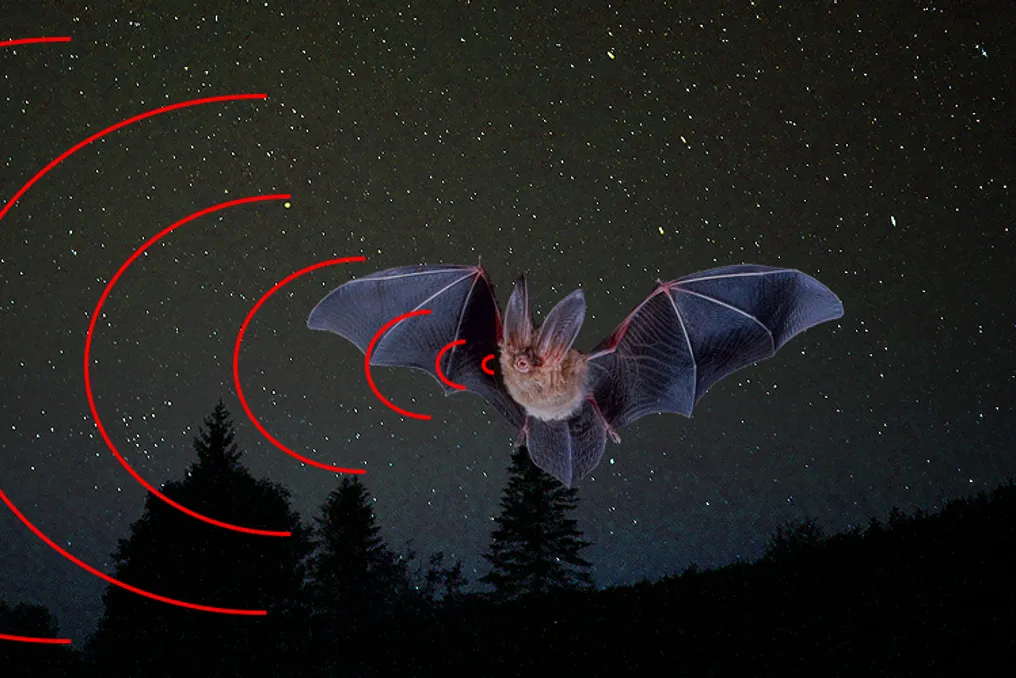
The central concept is resonance. When a sound wave encounters an object capable of vibrating at a corresponding frequency, the transferred energy can accumulate and amplify the oscillation, potentially leading to the collapse of the object. Bruno illustrates this by comparing it to breaking a crystal glass with a violin, emphasizing that the ultrasound approach uses a gentle and harmonic strategy.
The spherical shape of the virus is crucial because it allows the vibration to distribute uniformly throughout the structure, optimizing the resonance effect. As it approaches the particle's natural vibration frequency, ultrasound transfers energy more efficiently, generating repeated deformations in the viral envelope. If the vibration is intense enough, the mechanical stresses overcome the structural resistance, leading to deformation, rupture, and particle fragmentation.
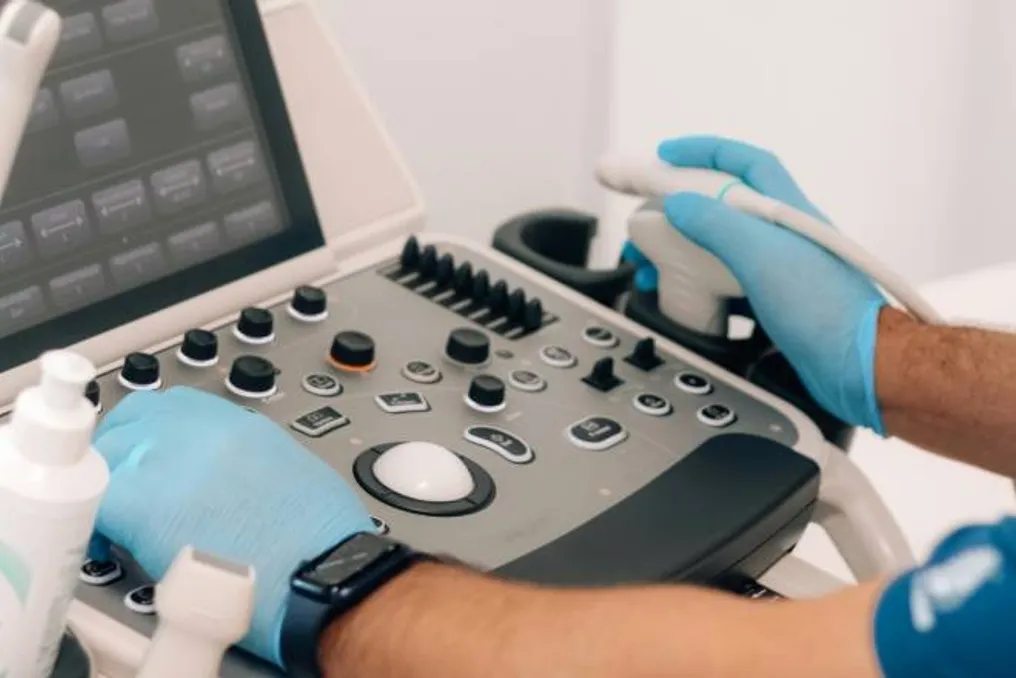
This morphological change results in viral inactivation, causing the virus to lose its ability to replicate and infect. The team employed high-frequency ultrasound, in the range of 3 to 20 megahertz (MHz), using diagnostic imaging equipment. In one specific test, 7.5 MHz was applied for five minutes to analyze structural changes.
To rule out heating or chemical changes, researchers monitored temperature and pH, finding that both remained stable under the resonance conditions. This data is vital because it distinguishes the studied mechanism from cavitation, an ultrasound effect at lower frequencies (kilohertz) that generates heat and shockwaves, useful only in asepsis, but not in therapy.
Bruno compares the ultrasound used to that used in prenatal exams, describing it as harmless. However, he emphasizes that therapeutic application still requires more study and understanding of the phenomenon before advancing to live subject testing.
Techniques such as scanning electron microscopy and atomic force microscopy revealed changes on the surface of SARS-CoV-2: spherical particles began to have irregular contours, smaller diameters, and envelope ruptures. There was also a reduction in the average diameter; while untreated SARS-CoV-2 samples had about 107 nanometers, smaller components appeared after ultrasound.
In the case of H1N1, the effect was even more drastic, with no sign of particles detected in the analyzed size range. At this point, the collaboration of Unesp in Presidente Prudente was fundamental for characterizing nanometric particles, which are difficult to observe with conventional optical microscopy.
Gilia explained that the team used Dynamic Light Scattering (DLS). This method measures the average size of particles dispersed in a liquid by analyzing the fluctuations of light scattered by them. DLS allowed measuring the sizes of virus samples before and after exposure to ultrasound, confirming the fragmentation of SARS-CoV-2 and the absence of H1N1.
Adapting DLS for real viral samples required equipment optimization, algorithm adjustment, and attention to factors such as solvent and thawing.
In addition to physical destruction, scientists evaluated the biological impacts. Treated and untreated SARS-CoV-2 samples were used to infect Vero E6 cells. After 24 hours, analysis of viral replication showed a reduction in infection after ultrasound exposure, with the strongest effect near 7.5 MHz.
The study also included the Gamma and Delta variants. Although ultrasound reduced the infectivity of these variants, they showed greater resistance, and the effectiveness varied depending on the frequency and equipment used.
Bruno points out that the ideal resonance frequency may depend on the physical characteristics of the virus (size, geometry, and mechanical properties), and not directly on its genetic sequence. He states that, in principle, spherical viruses could respond to specific frequency ranges, opening a pathway less dependent on molecular mutations.
However, the differences observed in the Gamma and Delta variants suggest that physical characteristics such as rigidity, envelope thickness, and viscoelastic properties may alter the modes of vibration and, consequently, the efficiency of resonance.