Google will shut down the autonomous AI agent Jules, integrating its learnings into Antigravity
Read more
Tecnoblog
tecnoblog.net

Google will shut down the autonomous AI agent Jules, integrating its learnings into Antigravity

Google will discontinue Jules, its artificial intelligence tool developed to perform programming tasks autonomously. The knowledge acquired with this service will be incorporated into other company offerings, notably Antigravity, a platform focused on software development that utilizes AI agents.

The shutdown process will be gradual. According to the official schedule released, users will have until November 11th to complete any pending tasks. After this date, Jules will operate in read-only mode until December 31st.

This decision reflects Google's efforts to consolidate its initiatives related to software development with AI agents. The Jules team communicated in a post on the X network that the learnings obtained from the product would be transferred to Antigravity.

Antigravity, launched in 2025, is conceived as a development environment designed to interact with various AI agents, enabling the delegation of activities such as code writing and test execution. Previously, Jules was distinguished by its ability to operate autonomously and in the background.

Before the definitive shutdown, users will have the option to export most of the history maintained by Jules to a local directory. This history covers account settings, environment variables, scheduled tasks, linked repositories, memories, scripts, and past sessions. It is important to note that code already submitted to GitHub will not be affected and will remain on the respective platform.

The agent was presented by Google at the end of 2024 as an experiment based on Gemini 2.0 technology. Its functionality consisted of receiving a request, developing a plan, modifying files, running tests in a virtual environment, and preparing changes for developer review. In August 2025, it moved out of the beta phase and began offering paid plans.

The end of Jules echoes what happened in May with Project Mariner, another agent created to perform tasks on the internet. Like Project Mariner, Jules will also be discontinued as an independent service, although part of its technology will be relocated to other Google projects. Thus, the movement of capability concentration occurs again in the field of programming, aiming to centralize functionalities in Antigravity instead of keeping it as an isolated product.

Jules will be deactivated less than two years after its launch. However, Google has not provided information on whether Antigravity will assume Jules' direct function nor detailed an automatic migration process for existing tasks.

Similar stories

Microsoft will end Copilot support on LG Smart TVs by the end of 2026
Read more
tecnoblog.net

Microsoft will end Copilot support on LG Smart TVs by the end of 2026

LG will stop offering Copilot on its smart TVs as the integration with Microsoft's artificial intelligence will be discontinued by the end of 2026. This information was communicated through a notification directed to the webOS system of the brand's devices. The feature had been implemented since 2025 as a native AI, allowing users to get answers and suggestions based on their activities.

According to the message sent to the televisions, the decision to suspend support came from Microsoft and affects both the Copilot chat application and its functionalities within the operating system. Tecnoblog checked the feature on an LG TV and confirmed the end of this integration in models sold in Brazil.

According to the Windows Central portal, which reported the news, this change reflects a strategic shift adopted by the American company. In September, Microsoft announced modifications to its AI services, redirecting its focus to productivity.

Microsoft consolidated the two existing applications, the standard Copilot and Microsoft 365 Copilot. With this unification, the intention is for the service to function less as a mere chat and more as a productivity tool, whether assisting with the Office suite or executing more complex programming tasks.

Due to this strategic reorientation, maintaining the model on LG TVs lost its relevance. It is important to note that Samsung TVs also received Copilot integration, but this application is no longer available on Tizen systems.

The presence of Copilot on LG Smart TVs was brief and marked by controversy. Although the announcement occurred during CES 2025 in January, the integration effectively began in December, using a web application that could not be removed. Additionally, the arrival of this application occurred via a 'forced' download on the manufacturer's TVs.

At the time, many consumers were surprised and expressed dissatisfaction with the inclusion of the application. Even though it was classified as 'native,' the feature essentially functioned with a web version of the AI, without complete integration with the television. More than ten months after the launch, users received the notification about the end of this partnership.

Google Unveils New AI Genie 4 Capable of Creating Interactive Digital Worlds
Read more
www.aajtak.in

Google Unveils New AI Genie 4 Capable of Creating Interactive Digital Worlds

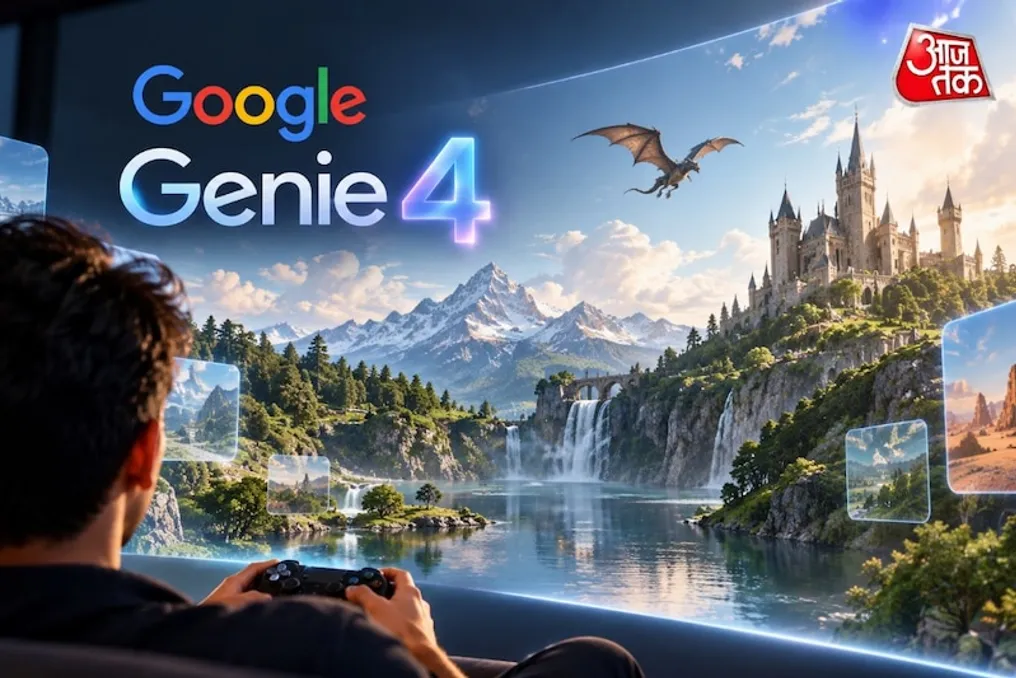
Previously, artificial intelligence was used to generate images, videos, or answer questions. However, Google DeepMind has introduced a new AI model called Genie 4, which allows users to create complete digital worlds from a simple text prompt, where they can move around, change the weather, and add new characters.

Google CEO Sundar Pichai announced this in an X post, noting that it will provide a completely new experience for users. Currently, access to this feature is available via a waiting list, and registration is possible by email.

The main feature of Genie 4 is that it does not just generate static images or finished videos; it is designed to build digital environments where the user can make changes in real time. According to Google, the model boasts improved visualization quality, the ability to simulate realistic activity, and generate sound.

Simply put, Genie 4 should be viewed as an AI that creates a digital environment where you are not just a spectator but can actively interact with and modify its elements. For example, if you want to create a landscape with a lush forest, you can do so by giving a text command. After that, you can navigate through this world using a keyboard.

If you want it to start raining, change the camera angle, or have a new person or object appear, you can also give corresponding commands. Google claims that Genie 4 is capable of transforming a moving world according to user commands. Its goal is not only to create beautiful sights but also to maintain scene continuity and consistency of events.

A significant innovation of Genie 4 is its audio generation method. It can create soundscapes corresponding to the digital world. For instance, in a forest, you might hear the sound of wind between trees, by the sea—the sound of waves, or background music suitable for a specific scene.

The model also demonstrates the ability to facilitate dialogues between characters. This means that the actors in the digital space can speak and react to circumstances rather than remaining static. These capabilities could be particularly useful for gaming and interactive storytelling. Nevertheless, Google acknowledges that the accuracy of audio and the maintenance of information consistency over long periods are still areas for improvement.

The application of Genie 4 is not limited to entertainment. Game developers can use it to create initial models of game worlds, allowing them to test various concepts before full development begins. Filmmakers can also prepare a preliminary digital version of a scene, experimenting with camera angles, lighting, character movements, and dialogues, which aids in planning and understanding the scene.

This type of technology may also find application in journalism and education. For example, an interactive digital environment can be created to explain a historical event or location. Furthermore, Google believes that such simulation technologies can assist in training robots and AI agents by allowing them to be tested in various conditions within a digital environment before deployment in the real world.

While the capabilities of Genie 4 are interesting for game development, it would be incorrect to consider it a tool that instantly creates a finished game from a single command. Large games require a complex combination of plot, control mechanics, rules, character activity, and maintaining world integrity over a long period. According to Google, Genie 4 is in the early stages of research, and some aspects may change during prolonged simulation.

Currently, Genie 4 is not available to all users. Google DeepMind has begun testing the model among a limited number of selected individuals. Access is planned to be expanded later to Google AI Ultra subscribers, as well as to certain partners who have early access to Project Genie, Gemini API, and Google AI Studio.

Google will increase the visibility of links in Gemini's AI-generated summaries
Read more
tecnoblog.net

Google will increase the visibility of links in Gemini's AI-generated summaries

Google has announced changes to its Artificial Intelligence summaries created by Gemini within the search engine. Currently, a simple search displays an AI-generated explanation as the main result, accompanied by some source links. The new strategy aims to give greater prominence to these pages, making them clickable right at the beginning of the answers.

Additionally, a new carousel will be implemented below the AI summary, displaying the most relevant news, along with a section called "dive deeper," which will contain more highlighted links. The overall objective is to optimize the redirection of users to the websites that served as the basis for generating the summary.

It is important to note that Google has faced litigation in the United States due to allegations of commercial harm to news site and digital service owners. Recently, Judge Amit Mehta, based in Washington, acknowledged this issue, although he did not classify it as an antitrust case.

With this update, Google will modify the presentation of search results. Although the AI summary will continue to occupy a significant portion of the first page, it will start including specific excerpts with interactive links. The final box containing the sources used to create the explanation will remain visible.

In journalistic searches, the AI will present, immediately after a brief explanation, a carousel with several related links in larger boxes, which facilitates visualization and encourages clicking for a more detailed understanding. This will then be followed by the "dive deeper" section, which deepens the topic with a list of correlated pages. All of this will occur before the traditional results that existed before Gemini was introduced into searches.

The lawsuits filed against Google stem from the decrease in traffic from search, which reached over 31%, according to recent data. Many portals provide their content for free on the internet but depend on user visits and ad views to maintain operational viability.

With the growth of AIs, a change in public behavior is observed. According to the Search Engine Land portal, 37% of consumers already use artificial intelligence in their searches before making a purchase, for example. In addition to this change in habit, Google's AI summaries represent an additional layer of access to the sites indexed on the results page.

Popular