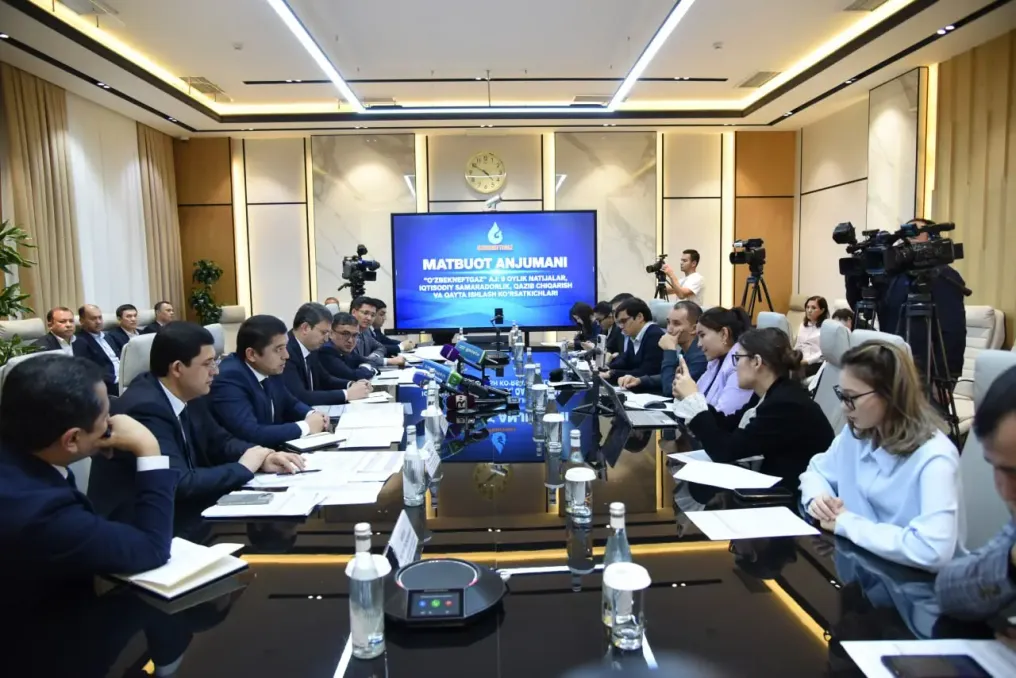
The First Deputy Chairman of the Board of Uzbekneftegaz, Sukhrob Khamraev, stated at a press conference on October 27 that the company had not made proposals to return the Fergana Oil Refinery (FONPZ) to its structure after the deal with Saneg was terminated.
A representative of Uzbekneftegaz clarified that FONPZ left the company's structure back in 2018 when it was transferred to the Agency for Management of State Assets (AUGA). Since then, the plant has been put up for privatization. Khamraev noted that eight years have passed since FONPZ exited Uzbekneftegaz's composition, and, to his knowledge, the enterprise is currently under the control of AUGA. He added that the details of the obligations between the agency and the investor remain unknown.
When asked about the possible return of the plant to Uzbekneftegaz, Khamraev reported that AUGA is considering several scenarios for the future management of the asset. These options include changing the management system, returning it to Uzbekneftegaz, attracting new investors, or privatization. Nevertheless, he emphasized that a final decision on transferring the plant to Uzbekneftegaz has not yet been made.
Regarding the direct question about any proposals from Uzbekneftegaz to return the plant, Sukhrob Khamraev gave a negative answer.
How the Fergana Refinery was returned to the state
Previously, in 2020, the Fergana Refinery was entrusted to Jizzakh Petroleum, which was later renamed Sanoat Energetika Guruhi (Saneg). In May 2022, AUGA announced the sale of the state share of the plant to Saneg for $100 million. According to the terms of this deal, the investor undertook the obligation to invest $380 million in the modernization of the enterprise. This project involved increasing the depth of oil refining, producing modern types of gasoline and diesel fuel, as well as expanding production capacities.
However, in early June 2026, it became known that the Fergana Refinery had fully returned to state ownership. According to data from the Unified State Register of Enterprises and Organizations, AUGA became the sole founder of the plant, holding a 100% stake in the charter capital, which amounts to 124.54 billion soms. It should be noted that in May 2026, the Agency held a 58.5% stake, and Saneg held a 41.5% stake.
Reasons for terminating the contract with the investor
On October 8, AUGA Director Sohibjon Murodov explained the return of the Fergana Refinery to the state due to financial problems encountered by the investor. According to him, difficulties faced by Saneg in implementing other projects negatively affected the company's ability to meet its payment obligations for the acquisition of the plant on time.
Murodov stated: 'The investor experienced financial difficulties in other investment projects, which led to complications in fulfilling payment obligations. As a result, we terminated the contract, and as of today, the asset has been returned to the state.' He also specified that the sales contract contained a clause allowing the seller to unilaterally terminate the agreement if payments were delayed by more than three months. Before making such a decision, the agency sought assistance from international legal consultants and officially notified the investor of the termination.
Precise information regarding the amount Saneg managed to pay for the plant, the size of outstanding debts, and the procedure for financial settlements after the agreement ceased to be valid was not disclosed.
Future fate of the plant
At the press conference on October 8, Sohibjon Murodov reported that at that time, the issue of re-privatization of the Fergana Refinery was not being discussed. Instead, a short-term strategy was developed for the enterprise, and work began on its financial recovery. Furthermore, an international audit is underway at the plant, aimed at determining the actual volume of financial obligations. Based on the results of this inspection, it is planned to determine how the debts will be repaid or restructured.
By the end of 2025, the FONPZ recorded a loss of 538.1 billion soms. In January 2026, as part of financial stabilization measures, the government instructed a working group, including representatives from Enter Engineering, Eriell Group, and Saneg, to prepare proposals for new investors. These investors will be required to take on the completion of several strategic tasks, including the modernization of the Fergana Refinery.
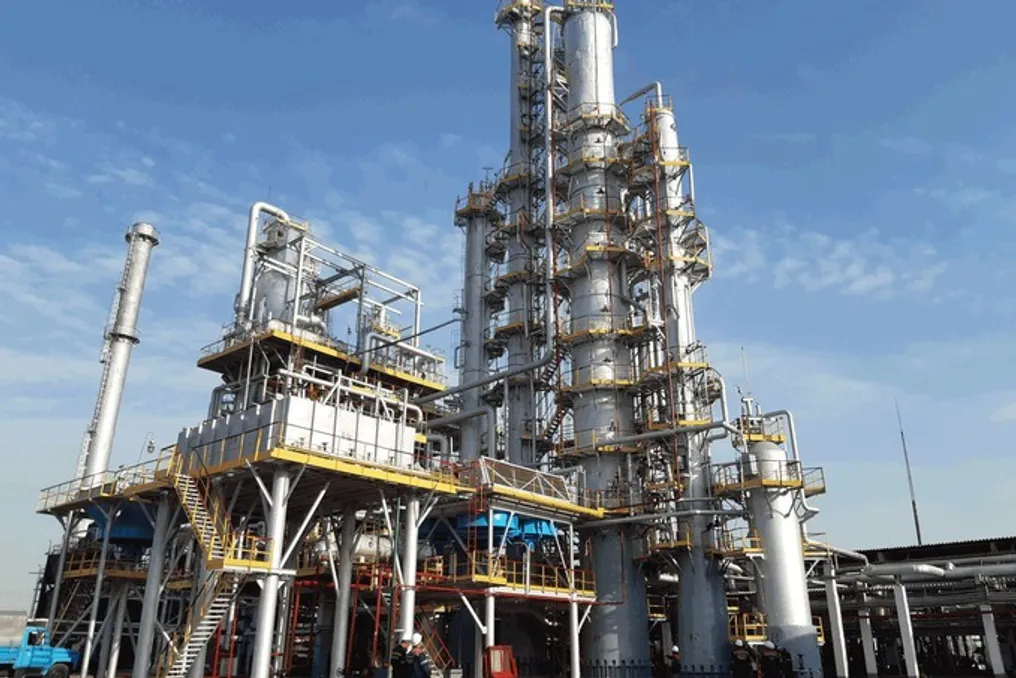
The Fergana Oil Refinery is recognized as one of the largest producers of fuels and lubricants in Central Asia. It produces various petroleum products, such as gasoline, diesel fuel, aviation kerosene, motor and industrial oils, as well as bitumen.
It was also noted that several transactions related to Saneg's assets have become the subject of a criminal case against former Chairman of the Board of Uzbekneftegaz, Bahodirjon Sidikov, and other participants.