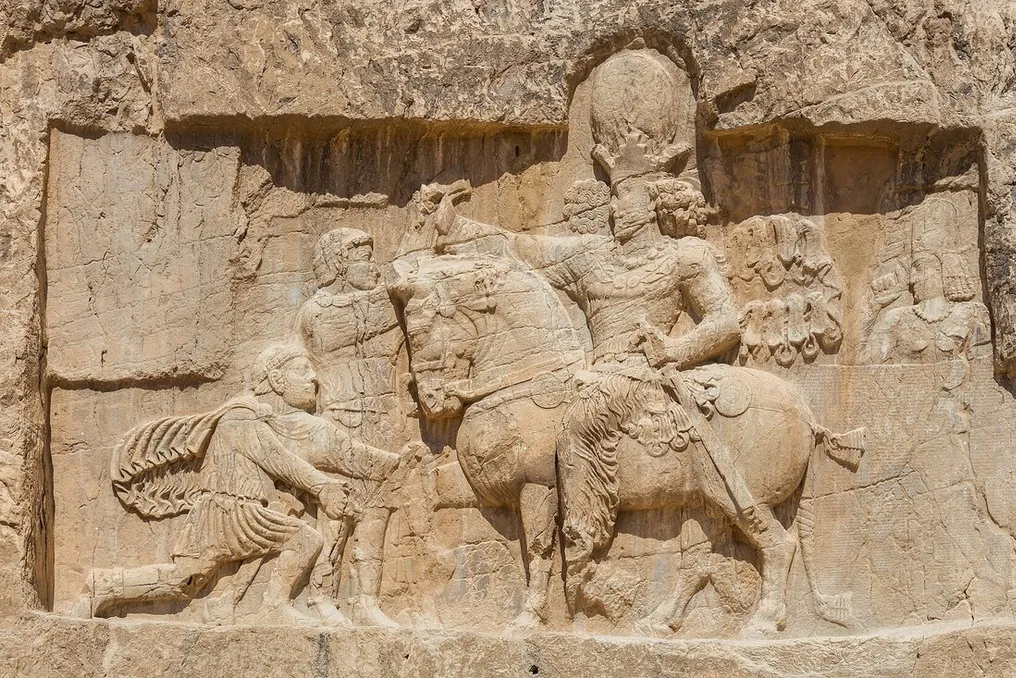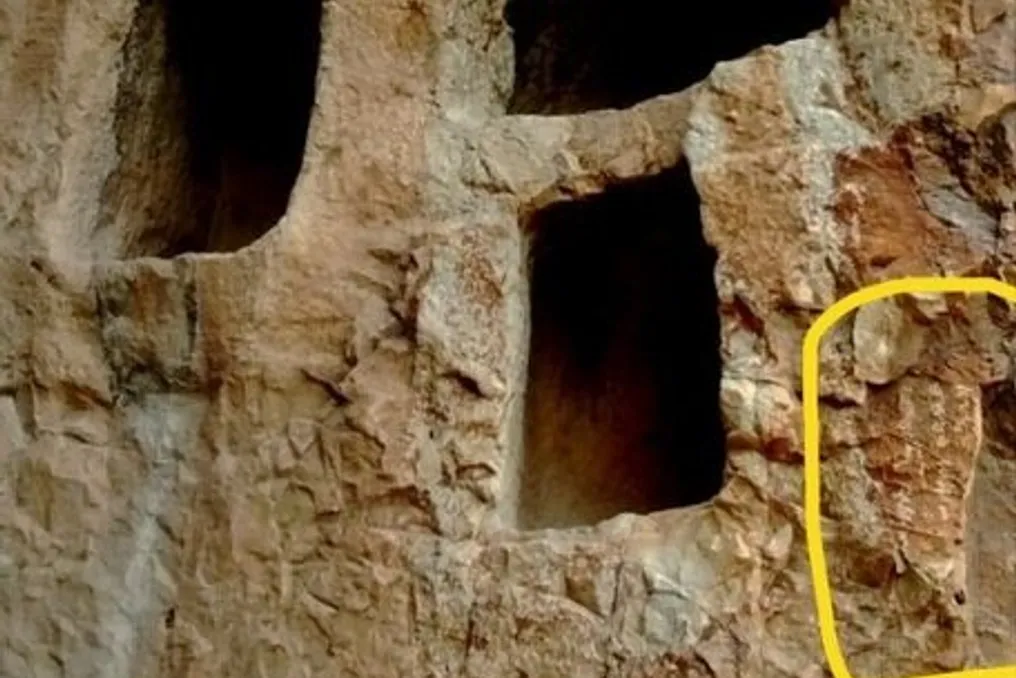
During recent archaeological excavations in Fars province, southern Iran, a new inscription dating back to the Sasanian era was discovered near Naqsh-e Rustam. This finding marks the fifth inscription related to bone urns documented in recent studies of the area.
Archaeologist and historian Abolhassan Atabaki announced this discovery. He reported that the three-line inscription dates to the late Sasanian period (224–651 AD) and was found in an area known as Darre-ye Barre'i, also called Shahzadeh Esmail Rock, approximately 500 meters north of Naqsh-e Rustam, according to the Jamaran agency on Thursday.
According to Atabaki, this inscription is one of five bone inscriptions identified during recent surveys around the ancient archaeological complex. Two of these five inscriptions were found specifically in the Darre-ye Barre'i area.
In turn, historian and researcher Najmeh Ebrahimi noted that six inscriptions from the Pahlavi period related to bone urns had previously been identified and documented at this site. Photographic records of some of these inscriptions are held in the archives of the Smithsonian Institution, including photos taken by German archaeologist Ernst Herzfeld, who documented archaeological remains in the area.
Ebrahimi added that despite some of the previously recorded inscriptions being studied in earlier works, damage to the stones and erosion of the inscriptions have complicated the decipherment of parts of the texts. She also specified that recent surveys allowed for the discovery of two more inscriptions in this area, both of which sustained significant damage. The inscription reported in the latest discovery is one of the recently documented examples.
Naqsh-e Rustam, located near Persepolis in Fars province, is one of Iran's most significant archaeological sites, preserving monuments from various periods of ancient Iranian history.