The countries of the Eurasian Economic Union (EAEU) approved a plan aimed at developing a common gas market by 2030. The meeting discussed issues related to gas trade, oil and petroleum product markets, as well as electricity trade.
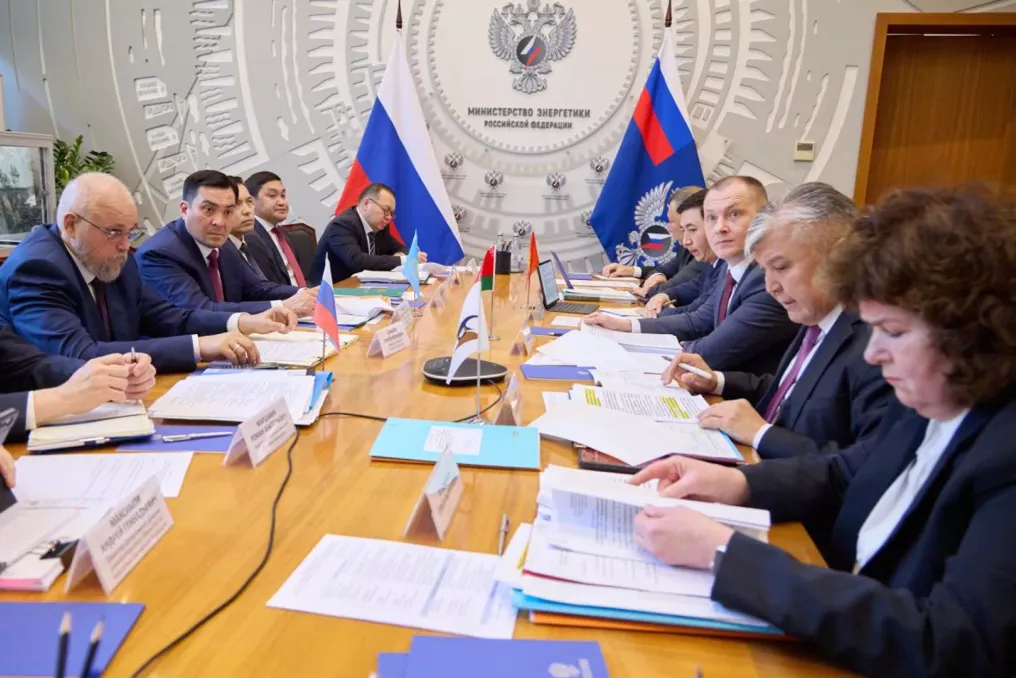
According to a message from the press service of the Eurasian Economic Commission (EEC), the decision was made at a meeting chaired by the EEC Minister of Energy and Infrastructure, Arzibek Kozhoshev. Heads of authorized state bodies in the energy sector participated in the event, including representatives from Armenia, Belarus, Kazakhstan, Kyrgyzstan, and Russia.
Within the EAEU, the common gas market was defined as a system of relations between member states starting January 1, 2025. However, further development of this system requires the improvement of legal and economic mechanisms.
Previously adopted Union programs provided for the development of gas trade, the equal use of gas pipelines, ensuring transparency of transportation tariffs, and improving the competitive environment.
The meeting also considered proposals from member states regarding amendments to the legal framework of the EAEU in accordance with the 2024 decision. Participants also reviewed issues concerning the formation of common oil and petroleum product markets.
Arzibek Kozhoshev noted: 'The main tasks at this stage are to form the necessary legal framework, as well as to develop mechanisms for the stable and mutually beneficial functioning of markets, taking into account the current conditions and the obligations of the member states.'
It is planned that the common oil and petroleum product markets in the EAEU will begin operating on January 1, 2027. Furthermore, a draft agreement on entering the electricity common market has been prepared and sent to the Union bodies for consideration.
The EAEU is an international economic association that has been operating since January 1, 2015. Russia, Armenia, Belarus, Kazakhstan, and Kyrgyzstan are members of the Union. Uzbekistan obtained observer status in the EAEU in 2020. Cuba and Iran also hold observer status.