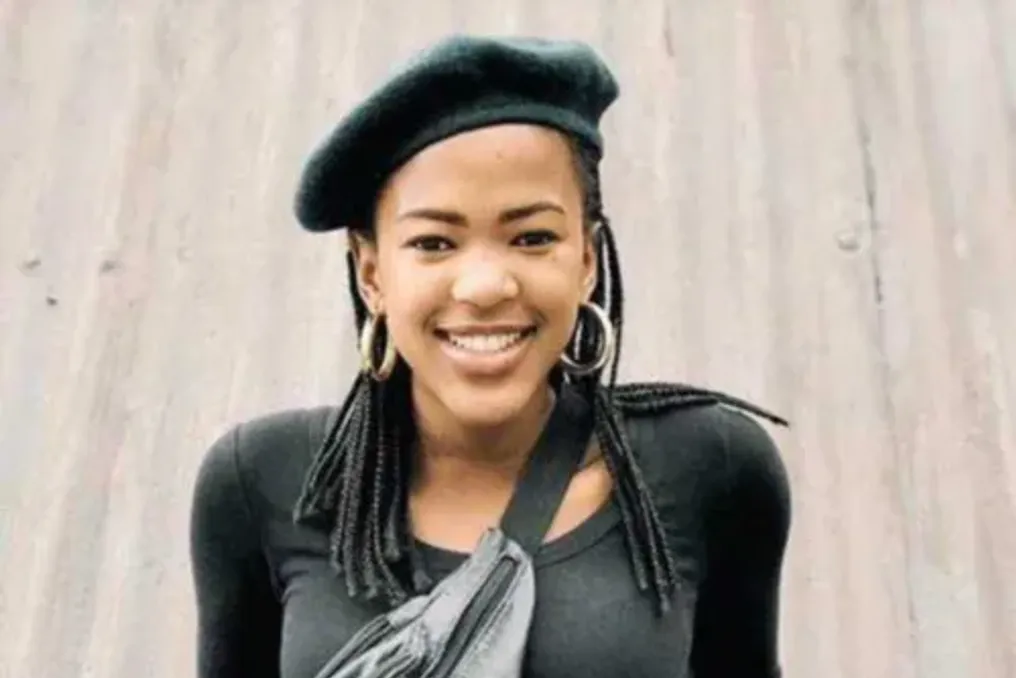
Seven years after the brutal rape and murder of her daughter, Nomangwane Mryuteyana continues to promote the key message of her life: no woman should lose her life simply for living her life.
The mother of Cape Town University student Uyinene Mryuteyana will present this message to an international audience during the One Young World Summit in Cape Town, which will take place from November 3 to 6.
As co-founder of the Uyinene Mryuteyana Foundation, she has dedicated herself to transforming the tragedy of her daughter's death into a platform for education, prevention, and taking effective action against gender-based violence (GBV).
Uyinene was only 19 years old when she was raped and killed in August 2019 after visiting a post office to collect a parcel. Her death shocked all of South Africa, sparked nationwide protests, and intensified calls for better protection of women and girls.
Her death became a defining moment in the country's discussion on gender-based violence, but for her family, the work to ensure that other women do not face a similar fate continued long after the protests subsided.
Through the foundation named after her daughter, Nomangwane has helped develop programs aimed at empowering youth so they can resist violence and contribute to creating safer communities. The foundation's activities include training and education on GBV, advocacy, support for survivors, and developing leadership skills among young people. Furthermore, the foundation manages the Uyinene Mryuteyana Football Club, which works with boys through development and psychoeducation programs to foster responsible and compassionate men.
A Call to Action, Not Just Awareness
Nomangwane's speech comes amid South Africa continuing to face devastating levels of violence against women. The first national survey on the prevalence of GBV by the Council for Scientific and Industrial Research showed that more than one in three women in South Africa, or 35.5%, have experienced physical and/or sexual violence in their lifetime. This corresponds to approximately 7.8 million women, with about 1.5 million such cases recorded in the last year alone.
The latest national study on femicides by the South African Medical Research Council found that three women are killed by intimate partners every day. Between April and June 2026, the police registered 9,195 rape cases, averaging about 100 reported cases per day. In November 2025, the government declared GBVF a national catastrophe.
Recently, a series of murders of women in Ekurhuleni once again brought the crisis to national attention. Following this, President Cyril Ramaphosa announced measures, including a nationwide audit of unsafe public places and a review of unresolved GBV cases.
Against this backdrop, Nomangwane will call on leaders and communities to move beyond public statements and expressions of outrage, to consider what can be done to prevent violence before another woman is killed. She stated: 'South Africa does not need more awareness about gender-based violence. We know what happens to women and girls in our homes, communities, and public spaces. What we need now is action from institutions, communities, leaders, and individuals before the death of another woman becomes the reason for our attention.'
Carrying Uyinene's Legacy Beyond Borders
At the summit, Nomangwane will participate in a plenary discussion on the issue of GBV, which is one of five key topics shaping the delegates' discussions. A global One Young World survey showed that 62% of young leaders worldwide believe that women live under constant threat of GBV. In South Africa, this figure rises to 91%.
This crisis extends far beyond the country. Recent estimates by the World Health Organization show that nearly one in three women globally, approximately 840 million women and girls, have experienced physical and/or sexual violence from an intimate partner or sexual violence from someone else in their lifetime.
Nomangwane's contribution will focus on what meaningful prevention looks like, how public outrage can lead to long-term institutional and social change, and why leaders must act before another tragedy forces the country to confront a crisis. She will also explore how youth can help create communities where women and girls feel safer.
The CEO of One Young World, Ella Robertson Mackay, noted that Nomangwane's work reflects the conversations the organization hoped to have in Cape Town. She said: 'Nomangwane brings something vital to the conversation we want to have in Cape Town: not just acknowledging the scale of GBV, but asking what each of us is willing to do about it. Her work demonstrates why prevention, education, and youth must be part of that answer. We are deeply moved by her bringing this call to action to the One Young World Summit.'
One Young World is a global network uniting over 19,000 young leaders from 196 countries. Its annual summit brings together emerging leaders with prominent figures from the political, social, humanitarian, and business sectors. The event will take place less than three weeks before the start of South Africa's annual '16 Days of Activism Against Violence Against Women and Children' campaign, which runs from November 25 to December 10.