Navoi Region is Becoming a Popular Tourist Destination Thanks to Unique Natural and Historical Sites
Read more
Nuz.uz
nuz.uz

Navoi Region is Becoming a Popular Tourist Destination Thanks to Unique Natural and Historical Sites

The Navoi Region is gradually revealing a completely different facet of Uzbekistan to travelers—one that is unique, mysterious, and highly diverse. This region offers an introduction to ancient petroglyphs, a turquoise lake in the desert, caravanserais of the Great Silk Road, and hospitable ethnic villages.

Uzbekistan as a whole is a country where every trip enriches knowledge about a new history, combining Eastern hospitality with age-old traditions. Ancient cities preserve the memory of great civilizations, while natural landscapes amaze with their diversity. Millions of foreign guests visit the country annually, interested in educational, health, sports, and gastronomic tourism.

The tourist map of Uzbekistan is not limited only to Samarkand, Bukhara, and Khiva; every region possesses its own treasures awaiting discovery by the general public. One such region is the Navoi Region, located in the center of the country. Although this region is the largest by area and is known primarily for its industry and contribution to the economy, there is another world hidden behind the industrial facade.

This world includes the vast expanses of the Kyzylkum, ancient rock carvings, historical monuments of the Great Silk Road, the picturesque Aidarkul lake, and small settlements where the traditional way of life is still maintained. Here, one can take a walk in the desert, see traces of ancient civilizations, stay in a national yurt, taste local cuisine, and get acquainted with the culture of the local people. The Navoi Region is transforming into a destination that offers not just an excursion, but a deep immersion into the history, nature, and traditions of the region.

There are places where history is not presented in museum exhibits but is literally carved into stone. Such a place is the Sarmyshsai gorge, located in the Navbahor district of the Navoi Region. Sarmyshsai is famous for numerous petroglyphs, i.e., rock drawings left by ancient inhabitants. These images are of high value to historians and archaeologists as they provide insight into the world thousands of years ago: the occupations of people, their food sources, and the region's animal life.

On the rocks, images of various animals are preserved, including bulls, bison, wild horses, mountain goats, argali, camels, as well as predators such as lions, leopards, and cheetahs. Some compositions are dedicated to hunting, daily life, economic activities, and the rituals of ancient inhabitants. According to available information, about ten thousand rock carvings have been discovered in this area, covering dozens of subjects and thematic images. Most of the drawings were created using stone and metal tools, and over time, their surface has acquired a characteristic dark patina.

Of particular interest are the images of animals that no longer exist in the local nature, allowing one to trace the changes in the region's fauna in the past. In addition to petroglyphs, there are inscriptions in Arabic on the rocks, indicating the significance of this territory in later historical periods. Today, Sarmyshsai is recognized as a state museum-reserve and is considered an important archaeological site and a promising tourist zone.

Malik Khamidovich Mamedov, head of the Sarmyshsai State Museum-Reserve, spoke about the development of the area and the measures taken for visitors. He reported that the reserve was established according to Decree No. 440 of the Cabinet of Ministers of the Republic of Uzbekistan from 2019. After its creation, the main focus was on ensuring conditions for local and foreign tourists. Previously, the road to the gorge was in poor condition, which created difficulties for arrivals. With the support of the republic's leadership, the region, and the Agency for Cultural Heritage, more than twenty kilometers of asphalt road have been repaired. Benches have now been installed in the area, and pedestrian paths of about three kilometers have been developed. Work is underway to install binoculars so that visitors can view the rock carvings without climbing difficult mountain sections. Tourists from Italy, Spain, England, Canada, and other countries visit the reserve, and the management strives to ensure comfort for everyone, especially for elderly guests who find it difficult to move in the mountains.

The total area of the reserve is approximately five thousand hectares, with the most densely petroglyph-covered section stretching along the gorge for about two and a half kilometers. Malik Mamedov emphasized that the stones preserve drawings of ancestors depicting animals, hunting and agricultural tools, crafts, flora elements, and people themselves, and each drawing serves as a testament to the lives of ancient generations. Future plans include the development of tourist infrastructure, including the creation of a 32-hectare tourist center, the development of a master plan, and strengthening measures to preserve cultural heritage.

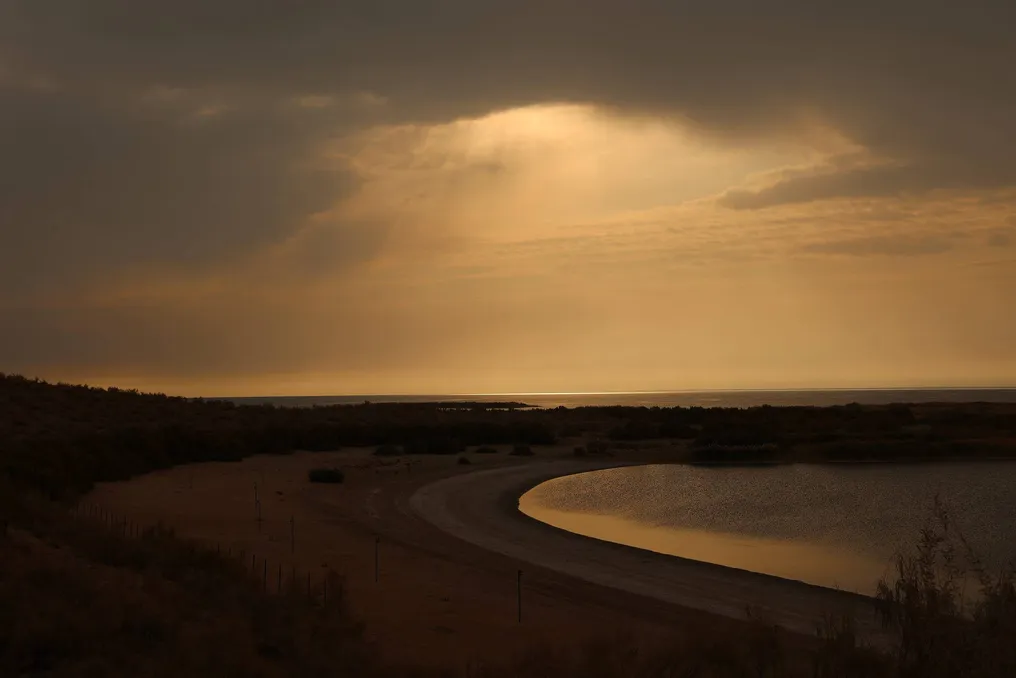
After studying the ancient rock carvings, the route can continue to one of the most unusual natural places in Uzbekistan—the Aidarkul lake. It is often called a turquoise sea located in the middle of the desert. The sight of the vast water surface surrounded by the sandy expanses of the Kyzylkum makes a strong impression, changing the perception of the desert: instead of endless sands, a lake with beaches, birds, and rich underwater life opens up before the traveler.

Aidarkul is one of the largest lakes in Uzbekistan, located on the border of the Navoi and Jizzakh regions, and is part of the Aidar-Arnasay lake system. Its formation history is unique: in its modern form, the lake appeared in 1969 after a powerful flood on the Syr Darya River. Part of the water was diverted into the Arnasay lowlands to prevent the overflow of the Chardarin Reservoir, which led to the formation of a large body of water among arid desert landscapes.

Over time, Aidarkul has become an important part of the local ecosystem. Its shores serve as a stopping and habitat place for many migratory and waterfowl, such as pelicans, herons, swans, and ducks, as well as rare species listed in the Red Book. The lake is also rich in fish: carp, pikeperch, catfish, bream, and lele inhabit its waters, attracting both leisure enthusiasts and fishermen.

The main advantage of this place is its special atmosphere. Tourists can spend time on the sandy shore, swim in the warm season, watch birds, or simply enjoy the silence broken only by the wind. Trips through the desert, acquaintance with nature, and accommodation in traditional yurt camps are organized for visitors, as well as camel rides. Relaxation here is becoming increasingly comfortable: some camps are equipped with air-conditioned yurts and all necessary amenities.

Historical and natural attractions are only part of the region's tourism potential. Currently, the Navoi Region is actively working on developing infrastructure, creating new routes, and attracting investment in the tourism sector. The region aims to increase tourist flow to six million people within the next two years, including attracting up to one million foreign guests.

The scale of development is reflected in statistics: since the beginning of 2026, over three million tourists have visited the region, of which 551 thousand are foreign citizens. Over the last five years, the number of foreign tourists has increased 21 times, and domestic tourists by 2.5 times. Over nine years, 355 hotels and guesthouses have been built in the region, leading to a 20-fold increase in the hotel fund. Currently, 373 accommodation facilities with a total capacity of 9,348 places and 106 tourism organizations are operating.

By the end of 2027, it is planned to open another 120 accommodation facilities, as well as create about 30 new tour operators and travel agencies. One of the key projects will be the 'Ancient Karmana' tourist center with an investment cost of 100 billion soms. This project involves the reconstruction of Karmana Street, spanning 2.4 kilometers, in an ethnic style and the integration of historical monuments, a market, and recreation areas into a single tourist route. The Kosim Shaykh complex will occupy a special place in this route, some structures of which date back to the 16th century.

The Karman district also preserves evidence of the Silk Road era, such as Rabat-i Malik—an architectural monument from the 11th century, built during the reign of Shams al-Mulk Nasir of the Karakhanid dynasty. Initially, this complex served as a fortified residence for rulers and later turned into a caravanserai.

Similar stories

Center for Islamic Civilization in Tashkent Demonstrates Shared Historical Ties Between Iran and Uzbekistan
Read more
www.tehrantimes.com

Center for Islamic Civilization in Tashkent Demonstrates Shared Historical Ties Between Iran and Uzbekistan

During his visit to Tashkent, an Iranian journalist noted that the vast Center for Islamic Civilization was viewed from two perspectives: as a visitor discovering the depth of Uzbekistan's cultural heritage, and as an Iranian guest seeking familiar traces of a civilization that never recognized modern political borders.

These traces were found in manuscripts, works of art, and the names of scholars whose activities connected Central Asia with Iran and the wider Islamic world. This raised the question of how a country can preserve its own national history while also showing that its greatest cultural achievements were often shared with other cultures.

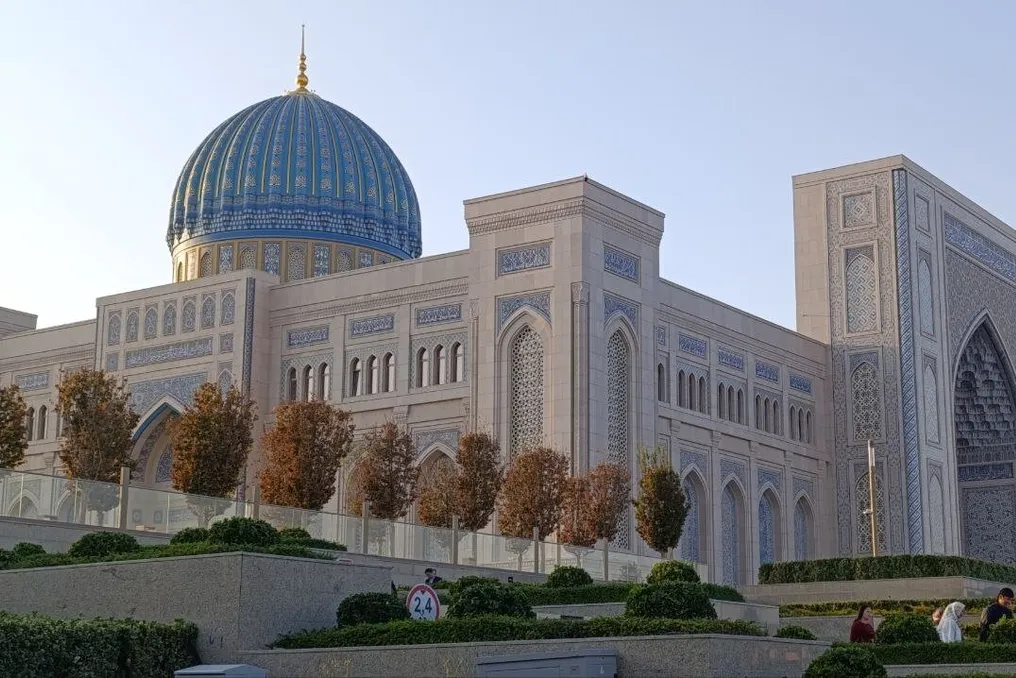
The Center for Islamic Civilization offers an ambitious answer to this question. The complex, which officially opened in March 2026, is located next to the historic Khast Imam ensemble, one of Tashkent's most important religious and cultural sites.

The guide during the visit, Mr. Ozod Kuvondikov, head of the Information Service of the Committee of Uzbekistan on Interethnic Relations, demonstrated high professionalism, patience, and deep knowledge of the places he showed, while speaking fluent English.

Architectural Narrative

Even from a distance, the center is difficult to ignore due to its four monumental entrance portals, each approximately 34 meters high. These portals draw inspiration from the architectural traditions of various regions of Uzbekistan. The eastern entrance resembles the Ulugh Beg Madrasah in Registan Square in Samarkand, the western portal reflects the religious architecture of Bukhara, while the northern and southern entrances include references to other historical regions and cities such as Khiva, Shahrisabz, Karakalpakstan, Kokand, Tashkent, and Termez.

Together, these entrances form a kind of architectural map of the country, suggesting that Uzbekistan's heritage cannot be reduced to a single city, dynasty, or style; it developed through numerous regional traditions, each contributing its own forms, colors, and artistic vocabulary.

A central dome rises above the complex, exceeding 60 meters in height. The building occupies an impressive interior area—over 40,000 square meters—providing space for exhibition galleries, research centers, a library, educational zones, and conference halls. Official descriptions classify this complex as one of the country's largest recent cultural projects.

Inside, the scale is even more apparent: wide halls lead into exhibition spaces, and the bright surfaces and monumental proportions of the building allow visitors to pause rather than rush from one exhibit to another.

However, the most interesting feature of the center is not just its size, but the way the building strives to transform history into a continuous narrative. Instead of presenting the past as a series of disconnected treasures, the main exhibition follows a chronological route. It begins with ancient civilizations of Central Asia, moves to the pre-Islamic heritage of the region, then covers the period of scientific and cultural flourishing between the 8th and 13th centuries, and concludes with a display of artistic and political achievements from the 14th–16th centuries. The final section is dedicated to modern Uzbekistan and its vision of new cultural revival.

This structure emphasizes an important point: the history of Islamic civilization in Central Asia did not begin with the advent of Islam nor end with the decline of any specific dynasty; it emerged from earlier societies and continued for centuries of exchange, adaptation, and intellectual labor.

Hall of Fame: Scholars Beyond Borders

One of the first spaces to attract attention is the Hall of Fame, where huge mosaic panels vividly depict some of the most influential thinkers in Islamic history. Among the figures presented are Avicenna, known in the Islamic intellectual tradition as Ibn Sina; Al-Khwarizmi, whose works laid the foundations of algebra; Al-Biruni, a scholar whose research covered mathematics, astronomy, geography, and other fields; and Al-Farabi, a philosopher often called the Second Teacher after Aristotle.

The portraits are assembled from thousands of small tiles. From a distance, they form monumental images, and upon closer inspection, the patience and precision required to create such a complex composition become visible. This effect is both artistic and symbolic: each scholar is presented as an individual whose ideas helped shape a much broader intellectual world.

A Glimpse into the Ancient World

The center's historical journey goes much deeper than the Islamic period. In galleries dedicated to pre-Islamic heritage, archaeological artifacts present Central Asia as a place of human settlement, artistic production, and cultural contact spanning thousands of years. Among the numerous items described in the exhibition are stone tools and arrowheads associated with the Obi-Rahmat site, dating back approximately 80,000 years. Gold jewelry and other finds related to ancient Bactria—a historical region encompassing parts of modern Uzbekistan, Afghanistan, and Tajikistan—are also displayed.

A special exhibit is the sculpted head known as the Kushan Prince's Head, dated to the 1st or 2nd century CE and found at Dalverzins-Tepe in southern Uzbekistan. Its features and preserved details provide insight into the artistic culture that developed under the Kushan Empire, whose territory connected parts of Central and South Asia.

Nearby is a sculpture of a deer, dating back to the 1st millennium BCE, which recalls the symbolic significance of animals in ancient artistic traditions. Its presence gives the gallery a different character compared to the exhibits of manuscripts and religious objects in other parts of the building. Here, visitors encounter societies whose beliefs and artistic languages formed long before the advent of Islam.

These artifacts challenge the idea that the history of Uzbekistan can only be understood through the lens of the modern Uzbek state's history. The territory was home to numerous peoples, languages, religions, and political systems. Sogdian, Bactrian, Khorezmian, Persian, Turkic, and other cultural traditions were part of a broader historical landscape. For the Iranian visitor, this part of the exhibition seems particularly close, as ancient Bactria and surrounding regions were connected to the Iranian cultural world through language, religion, trade, and political contact. These connections were not simple or unchanging, but they constituted an important part of the history of the lands that today make up modern Iran and its neighbors.

When Technology Brings History Closer

The chronological galleries are supported by various digital installations. Multilingual screens provide information about the exhibits, and digital reconstructions place historical buildings and cities in their former surroundings. Interactive displays allow visitors to explore historical periods in ways that would be difficult to achieve with only plaques and display cases.

Some of the most engaging features use artificial intelligence to animate portraits of scholars and present their discoveries in a more personal format. Instead of simply reading a brief biography, visitors can meet a digital representation of a historical figure explaining aspects of their work. Such displays make a complex topic more accessible, especially for younger visitors or those unfamiliar with the history of Islamic science. Mathematics, philosophy, and astronomy can seem distant if presented only with dates and technical terms; the digital guide helps turn them into stories of human curiosity, disagreement, and discovery.

One of the most effective installations is the interactive Silk Road map. This historical trade network is often depicted in books as a series of lines connecting distant cities. Here, its routes become visible paths of movement and exchange, helping visitors understand how merchants, religious teachers, diplomats, artists, and ideas traveled between regions. The Silk Road was never a single road with a fixed route; it was a changing network of land and other connections linking East Asia, Central Asia, the Middle East, and Europe over many centuries. Its significance lay not only in the goods transported along it but also in the knowledge and artistic practices that accompanied them. This is why it is sometimes called the Silk Roads, rather than the Silk Road.

Looking at the map, the author pondered how often the history of our region is divided into national chapters, even when historical evidence points to constant interaction. The roads connecting Samarkand, Bukhara, and Khiva also linked them to cities further south and west, including cities of historical Iran.

Other interactive elements make the experience more playful. Visitors can try virtual archery or study an installation demonstrating how bellows supply air to a traditional tandoor oven. In the gallery dedicated to modern Uzbekistan, Humo AI acts as a digital assistant, answering questions about the center and the country's history. These activities may seem far removed from ancient manuscripts, but they serve a useful purpose by prompting visitors to ask questions. A museum is not just a place for contemplating the past; it is also a place for discovering how people lived, worked, cooked, and understood their world.

Quran Hall and the Long Journey of a Manuscript

The most solemn place in the center is the Holy Quran Hall, covering about 1,200 square meters and serving as the symbolic heart of the complex. The room is monumental: the walls are lined with pink marble, and an extremely large crystal chandelier hangs overhead. Silk carpets bearing verses from the Quran add another layer of artistry to the setting.

Nevertheless, the central object is the manuscript, not the surrounding architecture. This manuscript, known as the Uthmanic Quran, Quran of Uthman, or Samarkand Kufic Quran, is traditionally associated with the third Caliph Uthman ibn Affan and dates back to the 7th century. It is among the most famous early Quranic manuscripts and was included in the UNESCO World Heritage List in 1997.

According to a widely circulated account, the manuscript was brought to Samarkand during the reign of Amir Timur in the late 14th century. It remained there for centuries before being transported to St. Petersburg during the Russian Tsarist rule in the 19th century. After further relocation during the revolution, it returned to Tashkent in 1924. Visitors are advised to keep a respectful distance from the manuscript, and photography of the original is restricted. Copies and multimedia displays help explain its history, script, and significance. These restrictions are understandable: the fragile manuscript must be protected from excessive light, touch, and other risks.

Standing in the hall, the author was struck by the contrast between the vast space and the modest physical form of the object at its center. The chandelier, marble, and carpets create a sense of grandeur, but the manuscript itself consists of pages inscribed with lines. Its importance lies in the religious significance attributed to it, the history it has endured, and the generations that have considered it a treasure.

Artifacts Crossing Cultural Borders

In other parts of the center, the collection expands the narrative through religious objects, archaeological finds, manuscripts, textiles, and works of art. Some items come from Uzbek museums, others were acquired at international auctions or through cooperation with foreign institutions. In cases where the originals remain abroad, ...

Main directions of Uzbek citizens' trips abroad in the first half of 2026
Read more
podrobno.uz

Main directions of Uzbek citizens' trips abroad in the first half of 2026

In the first nine months of 2026, citizens of Uzbekistan made about 6 million trips abroad for tourism purposes. According to information from the National Committee on Statistics, 5.9 million such departures were recorded during the period from January to September 2026. This figure demonstrates an increase of 132.7 thousand people compared to the previous year.

The largest number of Uzbeks traveled to Kyrgyzstan, which received 2.7 million visitors. Kazakhstan was in second place, with 1.06 million people traveling there. Tajikistan took third place in the ranking, accumulating 983.7 thousand trips.

Compared to these leaders, Russia became a less popular destination, receiving 281.6 thousand tourists during the reporting period. Turkey occupies fifth place in the list of most sought-after countries, having visited 239.3 thousand citizens of Uzbekistan.

Furthermore, there remains high demand for destinations intended for both religious and tourist purposes. More than 209 thousand travelers from Uzbekistan visited Saudi Arabia, and nearly 64.8 thousand people went to the United Arab Emirates.

China, Egypt, and Vietnam were among the ten most popular countries, receiving 58.5 thousand, 45.6 thousand, and 36.3 thousand citizens of Uzbekistan, respectively. It is worth noting that since the beginning of the year, Uzbekistan itself attracted 10.3 million foreign tourists, which is 20.4% higher than the figures for the same period in 2025; only 1.2 million people chose to visit the country in September.

Popular