In the heart of Western Paraná, specifically in Toledo, Vinícola Dezem, one of the region's most traditional wineries, offers visitors an immersion between wines and family memories. While the afternoon sun casts shadows on the iron-red soil and the wind blows gently through the trellis rows, guide Danilo Dezem leads groups through vineyards cultivated with Merlot, Cabernet, and Taná grapes.
Although the landscape resembles European wineries, this place is deeply connected to the property's history. Danilo, the founder's son, transforms every technical detail into a narrative about the winery's journey. Visitors perceive a uniqueness in the environment, motivated by the business's initial purpose.
Danilo explains that despite being a profitable company, Dezem's focus has never been profit; its primary objective has always been to promote family reunion and rescue Italian traditions, such as harvesting, pruning, and collaborative work.
A dream that started in the attic
The genesis of the winery predates the bottling of the first bottle. The patriarch, Amélio Dezem, who worked as a shopkeeper, businessman, and entrepreneur in various fields, harbored a childhood desire to own a winery. In his youth, he spent afternoons in the attic with his grandfather, a cooper who repaired wooden barrels as a pastime.
In this attic, amidst the aroma of damp wood and the taste of freshly produced wine, Amélio listened to stories about the family's arrival in Brazil and about grape harvests in Italy, thus nurturing the longing to recreate that memory.
Years later, after consolidating his businesses and starting his family, Amélio decided to convert a soybean field into a space dedicated to wine and conviviality. The structure of Vinícola Dezem was built from scratch and inaugurated in 2004, accumulating over two decades of history.
Danilo recalls his father's words: 'My father said that wine was the most beautiful way to bring people together. He came every day, even when he was sick, just to see how the plants or the barrels were doing.' One of the most moving aspects of the winery is the underground cellar, which houses a tribute to Amélio. In it remains the original painting made by him and his wife on the floor, which was preserved during the renovation.
Wine between science and art
In the technical section of the tour, the public learns that each glass reflects a meticulous and artisanal process. Danilo informs that the property has approximately 3.5 hectares of vineyards, resulting in an estimated annual production of about 35 thousand bottles. The planting method used is trellising, which allows the vines to grow vertically, optimizing ventilation and sun exposure.
He clarifies that although they produce in smaller volumes, the grapes are sweeter and more alcoholic, allowing the wine to reach between 13% and 14% natural alcohol, without the need for cane sugar addition.
The 58 oak barrels, sourced from France and the United States, each with a capacity of 220 liters, add another layer to the experience. The French barrels impart notes of coffee and tobacco, while the American ones bring touches of vanilla and dark chocolate. Danilo describes the difference: 'The French is more intense, the American is calmer. It's as if one has the soul of espresso, and the other, of dessert.'
The fermentation process is also explained in a didactic manner: yeast converts sugar into alcohol, and the sweeter the grape, the more alcoholic the wine will be, ensuring that each vintage is unique. The oak barrels are essential for the aging of the winery's wines.
Tasting is feeling the history
Upon concluding the tour, the group heads to the tasting room, where sparkling wines clink on the counter, and conversations revolve around aromas and sensations. One visitor reported smelling 'smoke,' another identified 'oak,' and a third mentioned 'plum.' Danilo reacts with a smile, accustomed to receiving various descriptions.
During the tasting, he also advises on pairing, suggesting acidic wines to accompany fatty dishes and light wines for more delicate meals, comparing it to 'a dance between the dish and the glass.'
The visit may end, but the fascination persists. The sound of conversations mixes with the movement of the courtyard, and many participants stay to take photos in the vineyards, schedule a picnic, or a romantic dinner. Danilo states that the goal is for people to create good memories at the location, as some come to propose, take photoshoots, or celebrate birthdays.
The legacy that remains
Currently, Vinícola Dezem has established itself as a notable enotourism destination in Western Paraná. Visits occur on weekends, attracting varied groups, from couples to groups of thirty people.
In addition to guided tours, the family promotes special events and keeps the space available for private experiences. However, the central purpose remains unchanged: bringing the family together and preserving Amélio's memory. Danilo concludes: 'My father built Dezem so we could meet. And that is what it continues to be: a meeting point.'
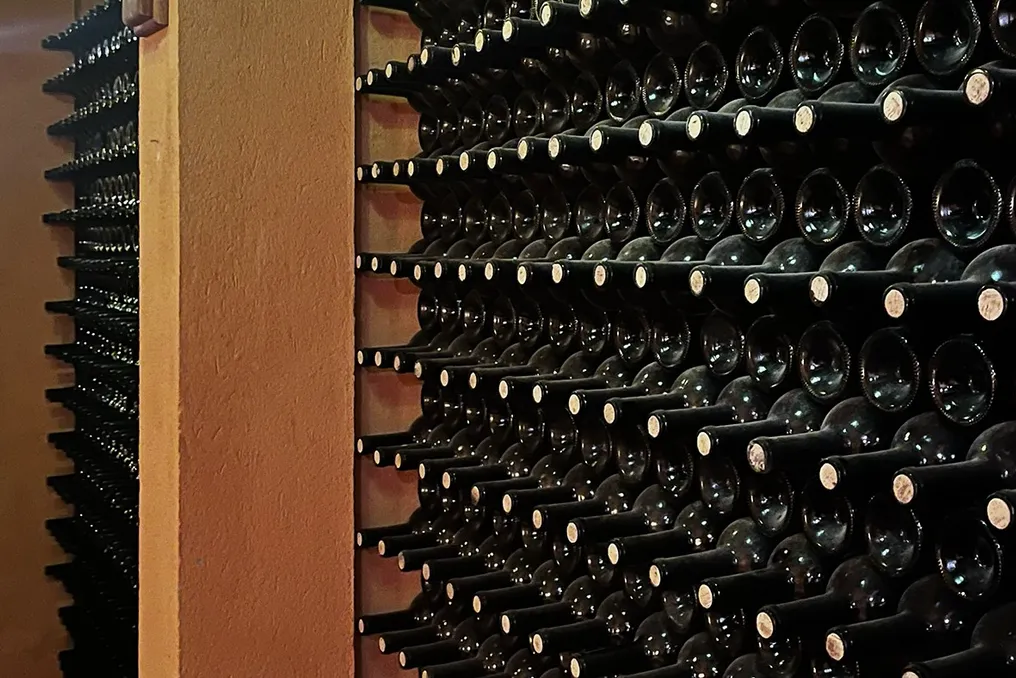
In the cellars, among the silent barrels and the maturing bottles, there is more than just wine; there is time, memory, and dedication. A heritage savored in glasses, but residing in the heart.