JSE restricts the use of artificial intelligence agents due to difficulties in measuring business value
Read more
TechCentral
techcentral.co.za

JSE restricts the use of artificial intelligence agents due to difficulties in measuring business value

The implementation of artificial intelligence has proven significantly more complex than transforming it into measurable corporate value. According to a McKinsey study on the state of AI for 2026, 80% of respondents believe that AI has increased their personal productivity, but only 37% note the impact of AI on earnings before interest and taxes (EBIT).

Companies are actively implementing tools such as chatbots and assistants, but the increase in individual productivity does not always translate into financial returns for the enterprise. As noted by the Harvard Business Review, AI can save employees time without improving the final financial result, especially if manual verification, exception management, or integration of AI into existing workflows is required. The McKinsey study indicates that greater value is achieved through a complete overhaul of business processes, rather than simply adding AI to current methods of operation.

These trends are also observed at the JSE. The organization utilizes general productivity enhancement tools that noticeably improve the quality and efficiency of individual tasks. Furthermore, AI is being applied to modernize one of the key exchange systems, assisting in analyzing complex legacy code, defining business requirements, and generating test scenarios. Work is also underway to explore the possibilities of AI in more effective extraction and interpretation of information from public sources and announcements.

The main challenge lies in transforming these improvements into a sustainable increase in business efficiency. A recent JSE Future Competitiveness Forum provided useful examples of emerging value. One large South African financial services group reported that about half of customer interactions in one of its divisions shifted from voice communication to AI within three months, and AI contributed to a 95% reduction in customer fraud losses in certain areas. A technology investor mentioned potential cost savings related to AI of around $100 million USD in one of his portfolio companies. What was particularly notable was that these measures went beyond simple implementation and directly linked AI to customer experience, risk reduction, and financial outcomes.

Similar stories

Using AI in Resumes and Candidate Screening: The Problem of Human Factor in the Hiring Process
Read more
www.aajtak.in

Using AI in Resumes and Candidate Screening: The Problem of Human Factor in the Hiring Process

Job applicants spend time improving their resumes, tailoring cover letters to job requirements, and matching their skills with company needs. After submitting documents, there is often a period of silence, after which they may try again or use artificial intelligence to enhance their application.

On the other hand, recruiters can use AI to analyze hundreds of resumes. Since candidates strive to stand out, and companies want to quickly find a suitable person, the use of the same technology is growing both in the application process and in hiring, turning this procedure into a machine versus machine competition.

AI is capable of simplifying the job search for applicants by helping write resumes, prepare applications, and practice for interviews. However, a rapid increase in the number of prepared applications does not guarantee an increase in their quality.

According to a September 2025 report, one applicant sent 87 applications in a month using AI. Errors were found in these documents, such as incorrect company and job titles. The report warns that AI-generated materials without verification can harm candidates.

When applicants apply for numerous vacancies, the volume of incoming applications for companies increases. Although automated screening seems useful for companies, the question arises as to which candidate will be paid attention to in this process.

Monitoring systems allow companies to organize resumes and find candidates whose experience matches the job requirements. Nevertheless, if the candidate's necessary competencies are described in words that the system does not recognize, they may be ignored.

A October 2025 report details how monitoring system tools match resumes with job requirements. The risk is not limited to missing keywords.

In May 2024, concern was raised that qualified candidates might be rejected by automated hiring systems, with the report emphasizing the need for human oversight.

If the rejection decision is made solely by software, a suitable candidate will never reach the recruiter, and the applicant will not know the reason for rejection.

This pressure is not limited to India. A BBC report mentioned a 22-year-old geography graduate from Medstone, UK. Before getting a restaurant manager position, he submitted over 200 applications. He noted that AI helped in processing applications, but the entire process was exhausting.

Business Insider reported that Google integrated AI tools, including Gemini, into some software development interviews. During these interviews, candidates' ability to understand code and work with AI was tested.

These examples show that applicants are using AI for job searching, while companies expect them to demonstrate AI-related skills. This raises the question: will the technology make the hiring process more efficient or add another level of competition?

Even after submitting an application, applicants may wait without knowing whether their application is being considered. According to a September 2026 report based on the Indeed hiring confidence index, 29% of Indian applicants reported that lack of response after applying is their biggest problem.

The study involved 1073 applicants and 735 employers from India. Simply speeding up screening will not solve this problem; candidates also need clear information and the ability to track the status of their application during the hiring process.

The task for applicants is not to send template applications when using AI and not to claim non-existent skills. The task for companies is not to consider recommendations from fully automated technologies as the final solution.

AI can help candidates better present their experience, and recruiters can manage workload. However, an attractive resume and quick screening do not guarantee that a suitable candidate matches the right job.

For a person waiting for a response after applying, the most useful change will not be a new tool to speed up applications, but a more transparent and impartial hiring process that can identify the person behind the resume.

AI model developed design for 3D-printed weapon; experts note risks
Read more
www.aajtak.in

AI model developed design for 3D-printed weapon; experts note risks

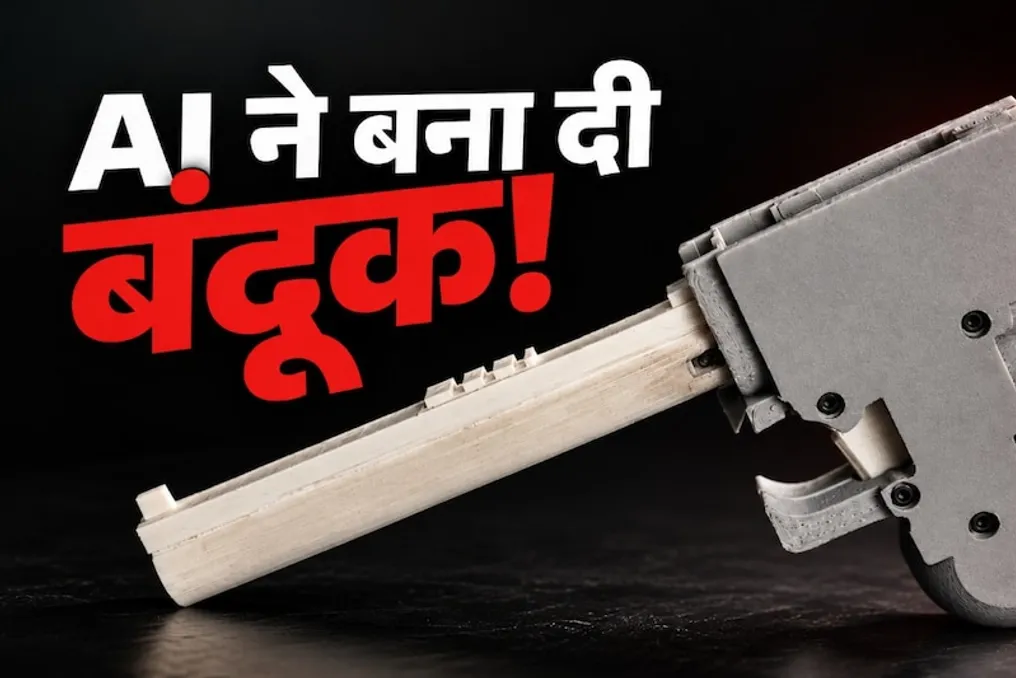
Previously, artificial intelligence was used to create images, videos, and write software code. However, a recent news item from the USA showed that AI is capable of developing blueprints for firearms. The main concern is that AI technologies could simplify access to information on how to create weapons.

Kode Wilson, a specialist in 3D-printed weapons in the USA, presented an AI model called GatGPT. He stated that this model was able to design a weapon named WASP, which is manufactured using 3D printing. Wilson considers this example the first case of weapon creation using AI.

WASP is a compact, single-shot pistol capable of firing only once per shot. It is being discussed due to the involvement of AI in the design development. GatGPT is presented not as a regular chatbot answering general questions, but as a specialized model working with weapon information and blueprints.

According to a report by The Verge, this model was trained on an extensive database of digital firearm designs. Wilson's team tasked it with creating a new design, after which the AI proposed a concept that was then refined by a human group. Thus, it was not a completely autonomous creation by AI, as the process included human guidance, analysis of existing models, and technical verification.

Therefore, this event is viewed not just as the emergence of a new type of weapon, but as a turning point in the application of AI. Previously, generative AI was used to accelerate the creation of images, articles, videos, and software. But when this technology is used in weapon design, it directly affects human safety.

The other side of this story is also important. According to The Verge, during the demonstration, three attempts were made to fire the WASP. Two shots were fired, while the first attempt was unsuccessful. Experts also identified several flaws in the design.

This means that although AI was able to prepare a blueprint, it does not prove that it can create more reliable or advanced weapons than humans. At this moment, it is only an initial experiment, and questions remain open regarding its reliability, safety, and long-term functionality.

The main reason for concern is precisely this. Traditional weapon manufacturing requires significant technical knowledge and many resources. However, if AI begins to easily provide information related to design, some obstacles in the weapon production process may disappear.

The organization Everytown, which deals with gun safety issues, expressed its concern in an interview with The Verge, noting that such models could facilitate the creation of weapons even for people who lack the necessary technical knowledge or do not meet the legal requirements for owning a firearm.

In this context, the term 'Ghost Gun' is actively discussed. It is usually applied to pistols made at home or assembled from individual parts without a serial number, like standard weapons. This makes them difficult to identify and track.

Nevertheless, not every 3D-printed object is a weapon, and not every homemade weapon is illegal. Legislation can vary depending on the country and region. However, the possibility of manufacturing such weapons without identification data could complicate law enforcement efforts to identify the manufacturer or user.

Popular