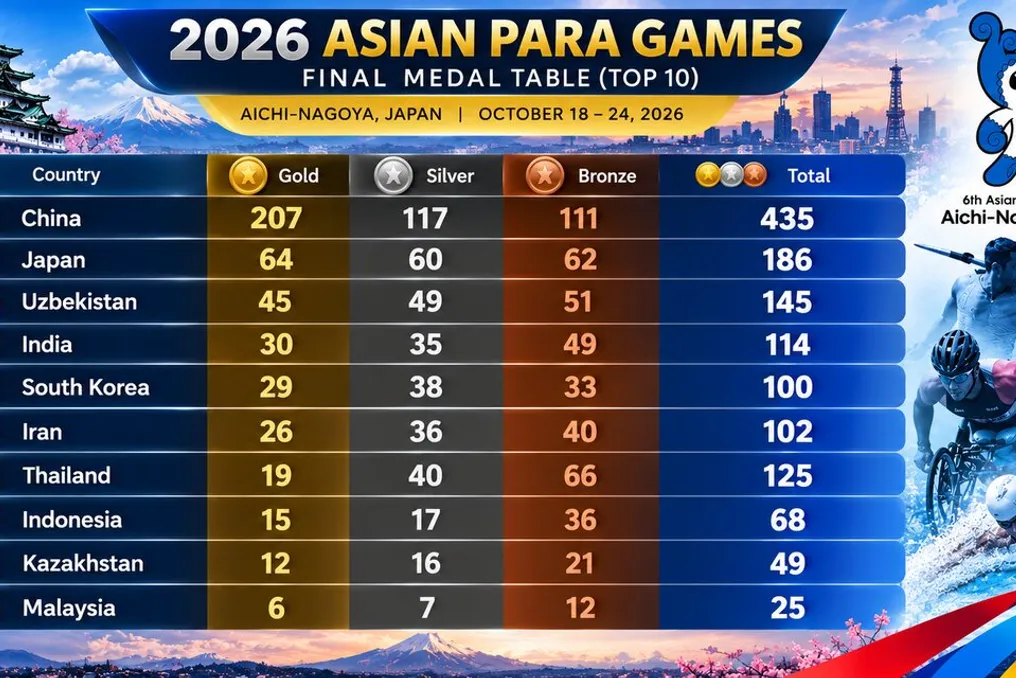
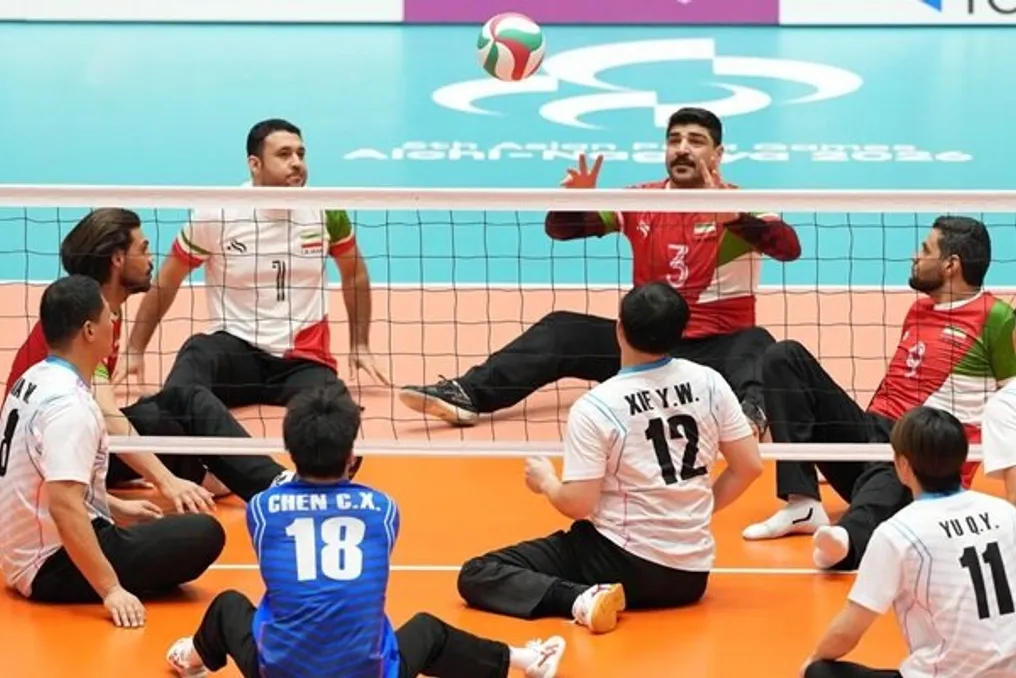
Iran concluded its campaign at the 2026 Asian Para Games in Nagoya, finishing in sixth place. This represents a drop of four positions compared to the silver medal finish the country achieved at the previous tournament in Hangzhou, China, in 2023.
The Iranian delegation won 102 medals, including 26 gold, 36 silver, and 40 bronze. This is significantly fewer than the 131 medals secured in Hangzhou, where they won 44 gold, 46 silver, and 41 bronze.
Despite the overall decline in ranking, several Iranian athletes demonstrated outstanding results, confirming the country's continued strength in para-athletics and swimming.
Among the most successful participants was Sina Zeigaminejad, who became one of Iran's leading gold medalists in para-sailing. He won three gold medals, highlighting his exceptional consistency and establishing him as a key figure in Iran's medal-winning campaign.
Another notable athlete is Elham Salehi, who earned two gold medals in para-athletics. Her achievements provided significant support for the Iranian delegation and highlighted the important contribution of female athletes to the country's success.
Alireza Zare also delivered an impressive performance, winning two gold medals in para-athletics. His accomplishments included a record-breaking run in the men's T35 200-meter event, where he finished with a time of 24.83 seconds, securing the title.
Although these individual victories offered encouraging signs, Iran's overall results reflected a noticeable dip compared to Hangzhou. The delegation won 18 fewer gold medals and 29 fewer medals overall, despite participating with a smaller team.
Meanwhile, China reaffirmed its dominance in Asian para-sports, confidently taking first place in the medal table with an impressive 435 medals, including 207 gold, 117 silver, and 111 bronze.
Host Japan secured second place, winning 64 gold, 60 silver, and 62 bronze medals. Uzbekistan finished third, collecting 45 gold, 49 silver, and 51 bronze medals.
India placed fourth with 30 gold medals, followed by South Korea with 29 gold, leaving Iran in sixth place with 26 gold medals.
China's impressive performance demonstrated its significant depth across many disciplines and reinforced its status as the leading power in continental para-sports.
For Iran, the games in Nagoya presented a mixed picture: a combination of individual brilliance and collective disappointment. While champions like Zeigaminejad, Salehi, and Zare delivered unforgettable performances, the drop of four places in the rankings underscored the need for more meticulous preparation, investment in new talent, and improvement in competitive depth.
The challenge facing Iranian para-sports now is to leverage these individual achievements and reclaim a spot among Asia's leading delegations in future international competitions.