Dr. Jusha Sarin discusses how to achieve 'Korean glass skin' in India
Read more
Aaj Tak
www.aajtak.in

Dr. Jusha Sarin discusses how to achieve 'Korean glass skin' in India

In the age of social media, where anti-aging products are widely advertised and the effect of 'Korean glass skin' is showcased, the question arises about the necessity of using expensive products. The importance of using sunscreen even indoors is also raised. At the Health Wealth Summit forum, Dr. Jusha Batia Sarin, founder of Sarin Skin Solutions, provided scientifically grounded and practical answers to these and other questions concerning skincare, combating signs of aging, and lifestyle.

Sunscreen is the best anti-aging therapy

Discussing common misconceptions about aging, Dr. Jusha noted that stopping the aging process is impossible, but achieving 'healthy aging' is possible. She emphasized that 85% of skin aging processes are caused by ultraviolet radiation exposure (UV damage). Therefore, using sunscreen is the most significant anti-aging measure that can be started from the age of 15.

Regarding the use of sunscreens indoors, the doctor advised using them if a person has pigmentation problems (such as melasma) to protect against heat and visible light coming from home or the kitchen.

Is it possible to achieve 'Korean glass skin' in India?

Explaining the 'glass skin' trend, the doctor clarified that the term 'glass' refers to the surface's ability to reflect light. In Korea, where the climate is very cold, a ten-step routine is required to maintain moisture. However, since India is a humid country, such a multi-step routine is not necessary. She added that regardless of skin tone (according to the Fitzpatrick scale), if the skin texture is smooth and even, light will be reflected, and the skin will look radiant, which can be called either Indian or Korean type.

Chronic stress is the main enemy of the skin

Dr. Jusha pointed out that both mental and physical stress has a direct negative impact on skin condition. Stress leads to the constant release of the hormone cortisol, whose receptors are located in the skin. This chronic stress promotes increased melanin production, causing dullness, and also destroys DNA through oxidation, provoking premature wrinkles.

The truth about Botox and fillers

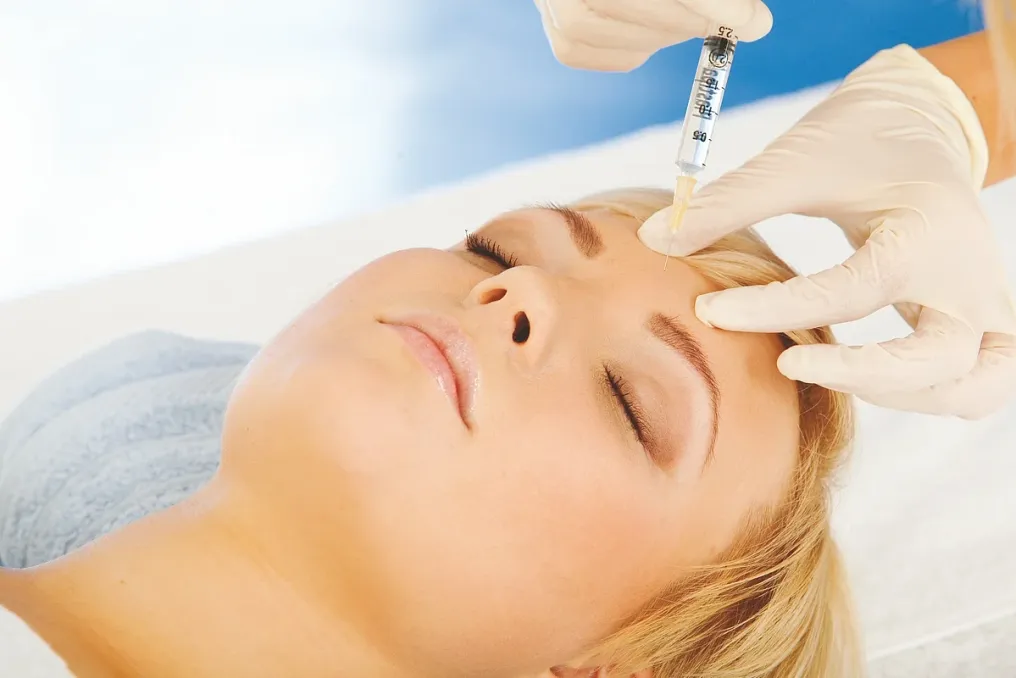
Concerning Botox, which often causes concern, the doctor clarified that it is not a dangerous substance, but a myorelaxant that relaxes overly active muscles, and its effect lasts from four to six months. As for dermal fillers, they are used to restore lost volume or fill depressions (hollowness) on the face, not for forced lifting. She strongly recommended undergoing such procedures only under the supervision of a qualified dermatologist.

Social media trends: light therapy, microneedling, and Gua Sha

Red light therapy: It helps restore the skin and reduce inflammation, but it is not a panacea. Microneedling: The doctor named this technique the best way to stimulate collagen because it makes the skin naturally produce collagen by creating small micro-injuries, making the skin more elastic and firm. Gua Sha and Z rollers: These tools are intended for lymphatic drainage, which helps reduce facial and eye area swelling.

Golden rules for healthy skin

Before purchasing expensive serums, one should first improve their basic lifestyle. Quality sleep at night allows skin cells and DNA to regenerate and detoxify. Instead of facial exercises, full-body strength training (weightlifting) is recommended to improve blood circulation. The diet should be rich in citrus fruits, berries, nuts, and vitamins C and E, while avoiding sugar and white flour products (complex carbohydrates).


Similar stories

Experts discuss rules for choosing a pathology laboratory and the importance of personalized testing
Read more
www.aajtak.in

Experts discuss rules for choosing a pathology laboratory and the importance of personalized testing

In the modern world, where preventive medicine extends far beyond standard blood tests to include genetic testing, advanced imaging, and artificial intelligence (AI), people often fall into misconceptions. Many are influenced by attractive advertising and undergo test packages that they do not actually need.

Three renowned specialists participated in a session at the Health Wealth Summit: Dr. Navin Dang, founder and director of Dr. Dang's Lab; Dr. Harsh Mahajan, Managing Director of Mahajan Imaging; and Dr. Arvind Lal, Executive Chairman of Lal PathLabs. These experts openly shared their views on the nuances of preventive medicine, selecting correct diagnostic tests, and personalized health screening.

Dr. Navin Dang emphasized that accurate diagnosis is the foundation of any proper treatment. He advised against choosing a laboratory solely based on low prices or tempting packages. When making a choice, one should pay attention to the presence of qualified doctors, such as pathologists and microbiologists, the lab's accreditation, and the possibility of receiving medical consultation regarding the results.

He warned that the slightest error at the diagnostic level can completely distort the direction of patient treatment, so correct identification is of paramount importance.

Dr. Harsh Mahajan explained that there are two types of medical tests: 'preventive screening' for asymptomatic individuals and 'diagnostic testing' for those who are ill. He cautioned against falling for packages named 'Silver,' 'Gold,' or 'Platinum.' Often, the number of tests in advertisements is artificially inflated by counting individual components of a single analysis.

According to Dr. Mahajan, the needs of a 20-year-old young person differ from those of a 40- or 50-year-old person. Therefore, the selection of tests must be based on age, family history, and chronic diseases. He noted that testing is necessary, but its correctness and relevance are more critical.

Dr. Arvind Lal stated that one cannot consider oneself healthy based only on appearance or feeling well. Diseases such as diabetes and high blood pressure can remain unnoticed for a long time. He recommended regularly checking blood sugar levels, cholesterol, blood pressure, and kidney function, especially for those with similar ailments in their family.

Speaking about nutrition, he advised avoiding excessive amounts of sugar, salt, fried food, vegetable fats, and excess ghee. He also insisted on a daily walk of 30–45 minutes. Dr. Lal humorously noted that the cost of a thyroid test is now even lower than a cinema ticket, so necessary checks should not be postponed due to financial considerations.

Dr. Navin Dang reported that diagnostic testing is moving towards predictive medicine. HbA1c and HOMA-IR tests are very useful for determining the state of insulin resistance and diabetes. Additionally, tTG tests are conducted to assess gut microbiome and celiac disease.

Dr. Harsh Mahajan added that if there is a family history of cancer, genetic testing and full-body MRI can help identify early risks. However, proper consultation is extremely necessary before such examinations. Dr. Lal cited the example of Angelina Jolie, who underwent preventive surgery after identifying a genetic risk for the BRCA1 mutation, clarifying that having a genetic risk does not guarantee the development of the disease.

Dr. Lal noted that a serological test conducted in rural areas for typhoid diagnosis may yield a negative result in early stages, so it cannot be considered a substitute for a blood culture. Dr. Navin Dang warned that incorrect and unnecessary testing leads to the uncontrolled use of antibiotics, which increases the risk of antimicrobial resistance (AMR), when drugs stop working in the body.

In conclusion, Dr. Mahajan clarified the difference between general AI, such as ChatGPT, and medical AI. While general AI can help understand medical terms, relying on it for diagnosis or treatment is strictly forbidden. Medical AI systems (such as Carpel.ai) can speed up, increase accuracy, and eliminate reporting errors, assisting doctors, but they can never replace a qualified specialist.

Swami Ramdev reveals secrets of his fitness at Health Wealth Summit
Read more
www.aajtak.in

Swami Ramdev reveals secrets of his fitness at Health Wealth Summit

Yoga Guru Swami Ramdev participated in the Health Wealth Summit 2026, where he engaged in a special conversation with anchor Shweta Singh. During this session, he not only made serious comments on the country's healthcare system and food adulteration but also shared several surprising secrets about his personal fitness, daily routine, and diet, which astonished the attendees.

Speaking about his eating habits, Swami Ramdev revealed that he stopped having breakfast completely 25 years ago. His morning begins by consuming one spoonful of pure ghee followed by drinking warm water mixed with salt, which he believes keeps the stomach always clean and in excellent condition.

He consumes only one main meal a day, which includes millets (Shreeanna) and green leafy vegetables, and he also eats salad and fruit before the meal. He also mentioned that he finishes his meal before sunset, i.e., before 7 PM.

Describing his rigorous routine, he stated that he wakes up between 3 and 4 AM every day. After this, he meditates or practices worship for an hour, followed by a brisk run for about 20 to 30 minutes. Swami Ji confidently stated that he runs as fast as horses and despite traveling approximately 5 million kilometers across the country and abroad in the last 50 years, he has never suffered from illness, food poisoning, or needed hospitalization.

He expressed concern over the diseases spreading among today's youth. According to him, the current environment is filled with synthetic drugs, artificial foods, pollution, and radiation. He explained that the human body harmonizes with natural elements, but when unnatural things enter the body, diseases begin to arise. He expressed concern that young people aged 30 to 40 are being affected by problems such as knee and back pain, high blood pressure (BP), diabetes (sugar), and fatty liver.

Commenting on the ongoing debate between Allopathy and Ayurveda, Swami Ramdev gave supreme importance to nature. He claimed that adopting yoga, Ayurveda, and a proper lifestyle can cure issues like high blood pressure, diabetes, thyroid, cholesterol, and even heart blockage at the root level. He believes that if people focus a little on their diet and yoga, it is possible to prevent 99 percent of diseases.

In his characteristic energetic style, he conveyed a message to the youth and countrymen that Indian citizens should be leaders in terms of health, because 'a healthy body and a calm mind' is the real wealth.

UAE Doctors Warn: Exosome Reviews Do Not Replace Medical Consultation
Read more
www.khaleejtimes.com

UAE Doctors Warn: Exosome Reviews Do Not Replace Medical Consultation

Exosomes are attracting attention in the beauty sector due to promises of regenerative properties, fueled by reviews and before-and-after photos on social media. However, dermatologists from the United Arab Emirates strongly advise consumers to critically evaluate such materials before undergoing procedures.

The main concern is that the scientific basis for these treatment methods is still under development. Questions remain open regarding long-term safety, product quality, and its actual effectiveness. Experts note that risks can vary depending on the type of product, its manufacturing method, and whether it is applied topically or injected.

These warnings come amid an investigation by the Saudi Arabian Ministry of Health, which is examining the use of exosome injections following reports and social media posts raising concerns about their application and marketing. The Ministry stated that it has initiated an inquiry into certain doctors and is completing necessary regulatory procedures, emphasizing that any medical intervention must have approval and a license for its stated use.

In the UAE, dermatologists also urge patients to be cautious about procedures advertised with grand promises, especially if their benefits are not supported by robust clinical data. Exosomes are tiny extracellular vesicles that carry proteins, lipids, and genetic material between cells. In aesthetic medicine, they are promoted for potential applications, including skin rejuvenation and hair growth stimulation, but their growing popularity does not guarantee established safety and efficacy.

Dr. Bobby Koshi, a dermatology specialist at LLH Hospital in Mussafah, noted that long-term safety data remains limited because products may originate from various biological sources. He explained: 'Since there is no standardized manufacturing protocol, potency, purity, and concentration can vary depending on the product or brand.' Dr. Koshi added that there is a risk of contamination or exposure to bacterial toxins if the product does not undergo proper testing, processing, or sterilization. Furthermore, researchers continue to study the long-term effects of exosomes on cell growth and signaling, including potential cancer risks.

Patients should be particularly vigilant regarding 'unqualified practitioners,' unusually 'large discounts,' and 'promises of dramatic or guaranteed results.' He stressed that reviews should never replace scientific evidence or professional medical advice.

Dr. Sandra Moawad Takla, a consulting dermatologist at Emirates Specialty Hospital, advised patients to clearly ascertain what is being offered, who manufactures the product, and whether it is authorized for the intended use in the UAE. She recommended checking the qualifications of both the doctor and the facility through relevant health authorities: 'Dubai Health Authority (DHA) in Dubai, Abu Dhabi Department of Health (DOH) in Abu Dhabi, or the Ministry of Health and Prevention (MOHAP) in other emirates.' Patients should ask clinics for the product name and batch number, and independently verify its authorization with the relevant authority. 'If the clinic cannot or will not answer clearly, that is an answer in itself,' she said.

Dr. Takla warned that social media often rewards dramatic changes rather than reliable evidence. Consumers should be wary of products marketed as a 'miracle' or 'the best anti-aging breakthrough' without supporting research, as well as products with vague compositions, pressure tactics for quick booking, and claims of approval that do not specify the approving body. She concluded: 'A responsible clinician will clearly tell you what the evidence shows and what it does not, and you will be comfortable taking the time to make a decision.'

Popular