High-Speed Train Works on Mumbai-Ahmedabad Route: 508 km and 14 Substations
Read more
Aaj Tak
www.aajtak.in

High-Speed Train Works on Mumbai-Ahmedabad Route: 508 km and 14 Substations

The country's first high-speed train is being prepared for launch on the Mumbai-Ahmedabad corridor. This 508-kilometer route will completely change modes of transport in India, making journeys faster and more comfortable.

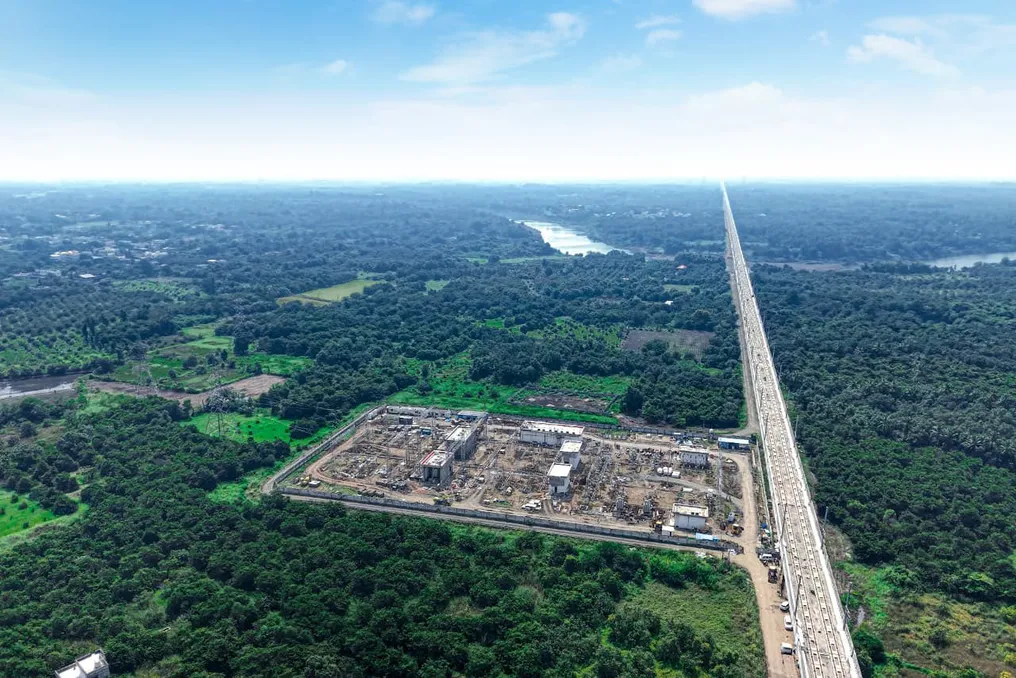
Fourteen electrical substations are being built along the track to ensure the safe and continuous operation of the train to its destination. This project will serve as a model for future high-speed trains that will be built in other cities across the country.

These substations are the main nodes for supplying electricity to the train. Their function is simple but critically important: they step down the high-voltage electricity coming from the national power grid to a level at which the high-speed train can move safely.

Since even a brief power outage can damage the high-speed train, the substations are designed so that if one system fails, a backup system is immediately activated.

The 14 substations are located along the entire 508-kilometer route at specific intervals. This guarantees an even distribution of electrical load across the entire line, providing the train with constant power on every section. Furthermore, the construction of these substations provides the country's engineers and workers with the opportunity to master modern technologies.

Modern circuit breakers and transformers are installed in these substations to promptly eliminate any technical malfunctions. The entire train will run on electricity, which will reduce the use of diesel and gasoline fuel and contribute to improving air quality.

Similar stories

Vande Bharat Sleeper train will run between Varanasi and Delhi starting October 31
Read more
www.aajtak.in

Vande Bharat Sleeper train will run between Varanasi and Delhi starting October 31

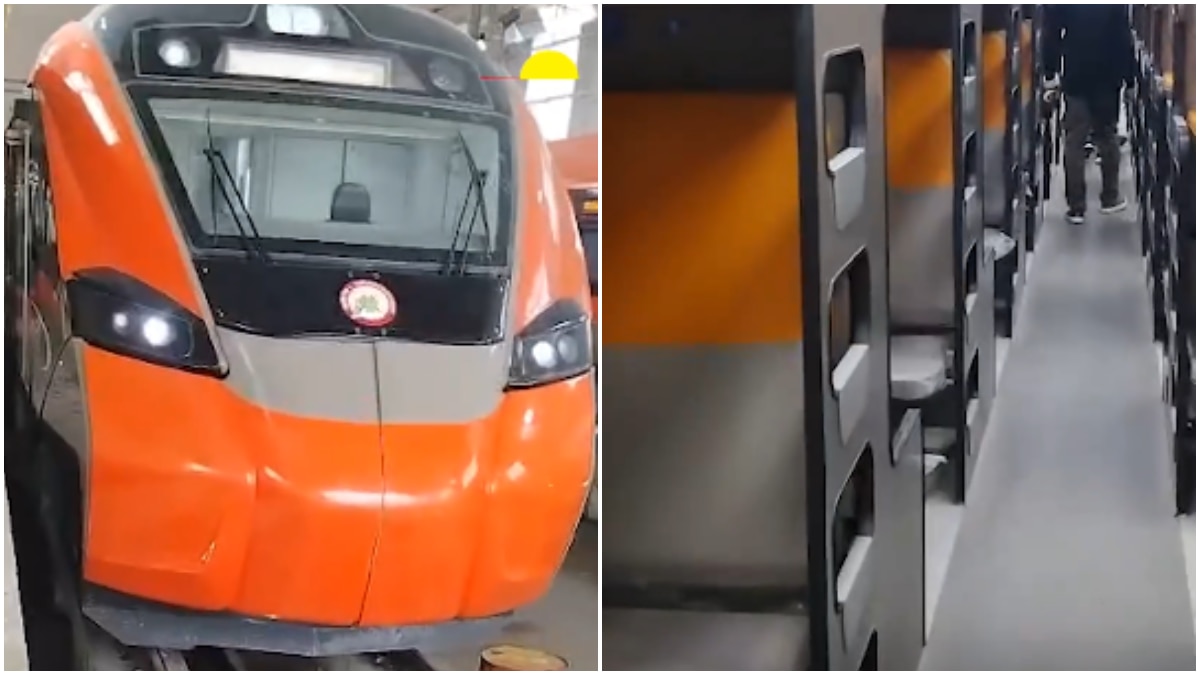
The long-awaited journey between New Delhi and Varanasi is set to become a reality: the 'Vande Bharat Sleeper' train will start operating on these routes from October 31. The grand opening ceremony will be jointly conducted by Railway Minister Ashwini Vaishnaw and Uttar Pradesh Chief Minister Yogi Adityanath. This fully air-conditioned rake will accommodate 823 passengers across 16 coaches.

According to railway services, the train's inauguration is scheduled for October 31. On the same day, two MEMU trains will also depart between Varanasi-Prayagraj Rambagh and Varanasi City-Raja Talab. Railway Minister Ashwini Vaishnaw and Uttar Pradesh Chief Minister Yogi Adityanath will attend the opening.

On the launch day, the train will depart from Varanasi at 16:30. It is expected to arrive in New Delhi at 01:30 the following night. It should be noted that the schedule for the inaugural run differs from the regular service timetable.

As per the schedule approved by the Railway Board, train number 27421 will depart from Varanasi at 20:50, arriving in New Delhi at 05:55 AM. The return journey, train number 27422, will leave New Delhi at 21:40 and arrive in Varanasi at 06:45 AM. This rake will operate every day of the week except Saturdays.

The route between Delhi and Varanasi includes three intermediate stops: Prayagraj, Kanpur Central, and Chhipiana Budhgarh. This allows passengers traveling from Delhi to Varanasi, or from these stations, to utilize the train's services.

The train consists of 16 coaches, offering 823 sleeping berths. All coaches are equipped with a full air conditioning system. The types of coaches include 1 First AC coach, 4 AC 2-Tier coaches, and 11 AC 3-Tier coaches, allowing passengers to choose a class of service according to their needs and budget.

To ensure a comfortable long journey, each compartment is equipped with individual reading lamps, three-pin power sockets, and USB Type-A and Type-C charging ports. Furthermore, the train features LED lighting, large windows, ample luggage space, and onboard Wi-Fi access.

The First AC coach offers the facility of a hot shower. To ensure the best service during the long journey, the rake also includes separate staff quarters. According to railway representatives, the goal of all these enhancements is to maintain high service quality and passenger convenience.

Currently, official information regarding fares for the 'Vande Bharat Sleeper' train between New Delhi and Varanasi has not been published as the commercial circular has not yet been released. However, given the level of services provided, it is anticipated that ticket prices will be higher than those of other trains on this route. Passengers must await an official announcement on prices for various categories.

This route will be the second for the 'Vande Bharat Sleeper' train. Prime Minister Narendra Modi previously launched the first pair of such trains on the Kamakha-Haudra route in January. On that route, it was noted that the cost of the 'Vande Bharat Sleeper' was significantly higher than the Saraighat express: 72% higher in AC 3-Tier, 58% higher in AC 2-Tier, and 16% higher in First AC. The launch of the second train on the Delhi-Varanasi line will provide passengers with an additional option for overnight travel.
Future high-speed train will pass through a 21-kilometer tunnel under Mumbai
Read more
www.aajtak.in

Future high-speed train will pass through a 21-kilometer tunnel under Mumbai

The dream of a high-speed train is soon to become a reality: by August 15 of next year, the high-speed train will start running on the tracks. Work is currently underway on the daytime project. The Mumbai-Ahmedabad High-Speed Rail (MAHSR) corridor, which is the first high-speed train project in the country, attracts global attention due to its outstanding engineering and technical challenges.

The most exciting and complex part of this project is the tunnel being built under the city of Mumbai. Creating a tunnel beneath such a densely populated metropolis as Mumbai proved to be a difficult task. As part of the project, a tunnel approximately 21 kilometers long is being constructed from Thane Creek to the Bandra-Kurla Complex (BKC), a significant portion of which will pass under the sea.

This tunnel is being built at a depth of approximately 25 to 40 meters below the surface of the earth so as not to cause inconvenience to residents, buildings, and infrastructure located above. Advanced global technologies, such as Tunnel Boring Machines (TBM) and the New Austrian Tunneling Method (NATM), are being used for the construction of this tunnel.

This high-speed train project will not only reduce the distance between the two economic capitals (Mumbai and Ahmedabad) to just over two hours but will also mark a milestone in the history of Indian transport. This train, which will travel at a speed of about 320 kilometers per hour, will provide passengers with modern amenities and safety comparable to air travel.

The tunnel passing under Mumbai serves as a vivid example of India's technological self-sufficiency and the strengthening of its modern infrastructure. The project not only promotes the development of environmentally friendly transport but will also give a new impetus to the country's economic growth. When this high-speed train starts running on the tracks, it will be a cause for pride for every Indian.

Video of India's longest train: A 4200 km journey takes over 74 hours
Read more
www.aajtak.in

Video of India's longest train: A 4200 km journey takes over 74 hours

In India, railway journeys are often associated with pleasant memories, whether it is a trip to relatives or a family vacation. However, there is a train that covers a distance of about 4000 kilometers and requires more than three days to complete the route.

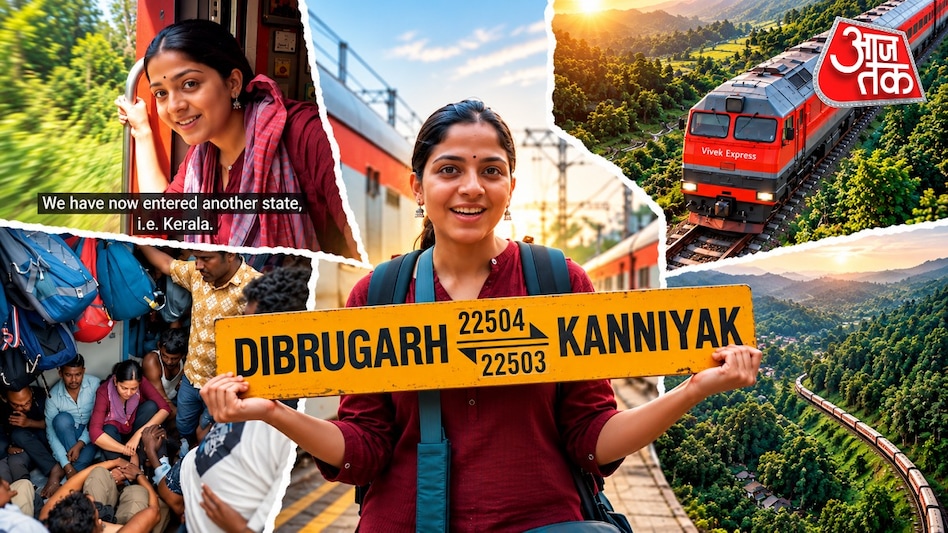
This train is called the Vivek Express. It runs from Dibrugarh in Assam to Kanyakumari in Tamil Nadu, passing through many states, cities, and cultures during its long journey. This trip is especially interesting for those who love long train rides and want to see the diversity of India from the inside.

The Vivek Express route, connecting Dibrugarh and Kanyakumari, is approximately 4200 kilometers long and takes about 74 hours, which is more than three days. Nevertheless, sometimes due to various circumstances, the train may not arrive at the station on schedule. During such a long journey, passengers can observe different sights of India from the window: from vast tea plantations to the hustle and bustle of large urban centers. The change in weather, languages, culinary traditions, and lifestyle makes this trip special.

Content creator Mamta Yadav and her team took a trip from Dibrugarh to Kanyakumari and back to experience this long route. Although the scenic views were the main attraction, the large crowd of passengers in the general compartment created several difficulties. The video shows severe overcrowding in the general compartment, which can cause problems with finding a seat and moving around inside the carriage. Additionally, there were inconveniences related to the cleanliness of the toilets.

The team spent the first two days in the general compartment and the remaining two days in an air-conditioned compartment. In the general compartment, seats are primarily taken by arriving passengers, so finding a comfortable spot on such a long journey can be a serious problem.

The Vivek Express was launched as part of the railway budget announcement in the 2011–2012 period. This train is named in honor of commemorating the 150th anniversary of Swami Vivekananda.

Besides Dibrugarh and Kanyakumari, this train passes through a number of important stations on its extended route, including cities such as Guwahati, Kolkata, Bhubaneswar, and Thiruvananthapuram. The train makes stops at approximately 59 stations along the entire route.

Popular