
How to make pure and fresh hoia at home from milk, avoiding store-bought additives
Read more
Aaj Tak
www.aajtak.in

How to make pure and fresh hoia at home from milk, avoiding store-bought additives

With the approach of Diwali, various sweets are prepared in many homes, either made by themselves or purchased from stores. Hoia is a key ingredient for making delicious desserts such as laddu, gulab jamun, peda, and barfi.

However, during the festive season, there is a high risk of impurities in commercially sold hoia, which not only degrades the taste of the sweets but can also be harmful to health. If you want your sweets this time to be one hundred percent pure, tasty, and healthy, it is best to prepare pure hoia yourself instead of buying expensive and suspicious mawa from the store.

Making hoia by evaporating milk in a pot is very simple. Below is a simple instruction and secret tips for preparing perfect, granular, and pure hoia.

For preparation, you will need: 2 liters of whole-fat milk (preferably using thick buffalo milk), a heavy pot, and a wide spoon.

Pot Selection: Always use a wide pot with a thick bottom made of cast iron, aluminum, or steel when making hoia. A thick bottom prevents the milk from burning to the bottom, and wide cookware promotes rapid steam formation.

Tip to prevent milk from sticking: Before pouring the milk into the pot, lightly spray it with 1-2 teaspoons of water. This will help the milk not to stick to the bottom.

For white hoia: The milk must be cooked over medium or high heat, stirring constantly. Prolonged cooking over low heat may cause the color of the hoia to turn yellow or brown.

Bring the milk to a boil: In a thick-bottomed pot, after spraying with water, pour in 2 liters of whole milk. Set the heat to high and bring the milk to a boil.

Stir constantly: As soon as the milk boils, reduce the heat to medium or high. Stir constantly, scraping the bottom of the pot with the spoon so that the milk does not burn. You must also scrape off the cream that collects around the edges of the pot and mix it back into the milk.

Let it thicken: After continuous cooking for about 20-25 minutes, the milk will reduce in volume by half and begin to thicken. At this stage, the heat should be reduced to medium.

Transition stage from khoya to mawa: When the milk becomes thick and takes on the consistency of cottage cheese (rabdi), do not stop. Continue to stir intensely and continuously. Soon the milk will completely separate its liquid and start to pull away from the sides of the pot.

Hoia is ready: When the mass begins to form a single lump and stops sticking to the sides of the pot, turn off the gas.

Cooling: Do not leave the hoia in the pot; immediately transfer it to a plate or bowl to let it cool. After cooling, it will become soft and granular.
Similar stories

How to make a beautiful floral tablecloth with crochet at home while saving money
Read more
www.aajtak.in

How to make a beautiful floral tablecloth with crochet at home while saving money

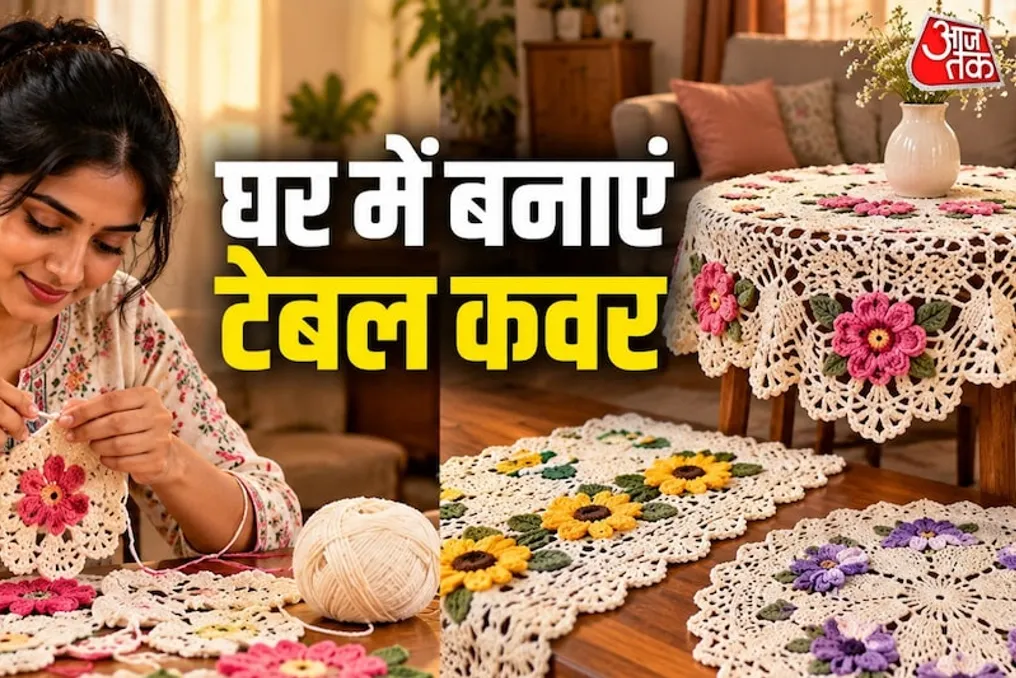
Homemade decorative items lend a special atmosphere and elegant look to the home interior. A beautiful tablecloth placed on a central or dining table in the living room can completely transform the appearance of the room. If you are tired of buying expensive tablecloths in stores and want to show your creativity, try making such an item yourself.

Creating a floral tablecloth using a crochet hook looks very beautiful, but the process is quite simple. This is especially relevant for those who are just starting to learn crochet, as the item can be prepared with great ease.

To make a crochet tablecloth, you need to follow several basic steps and use simple patterns. Among the necessary materials are high-quality cotton or wool yarn of your chosen colors, a crochet hook of the appropriate size, and scissors for cutting threads.

The first stage involves creating small floral motifs. The simplest way is to start with a magic ring or a chain stitch to form small, delicate flowers.

Once you have gathered enough flowers, the next step is to connect them using a hook or a needle, forming a large shape, whether it is a square or a circle. You can use flowers of one color or achieve a multi-colored effect by combining different shades.

The third step is dedicated to edging and final finishing. A beautiful and simple net or fringed border should be made around the tablecloth. This will give the tablecloth a finished and professional look.

The advantages of this handicraft include low production cost, as well as the ability to easily adapt the size of the item to the needs of your table.

How to make clean and grainy dry semolina (sooji) at home from wheat
Read more
www.aajtak.in

How to make clean and grainy dry semolina (sooji) at home from wheat

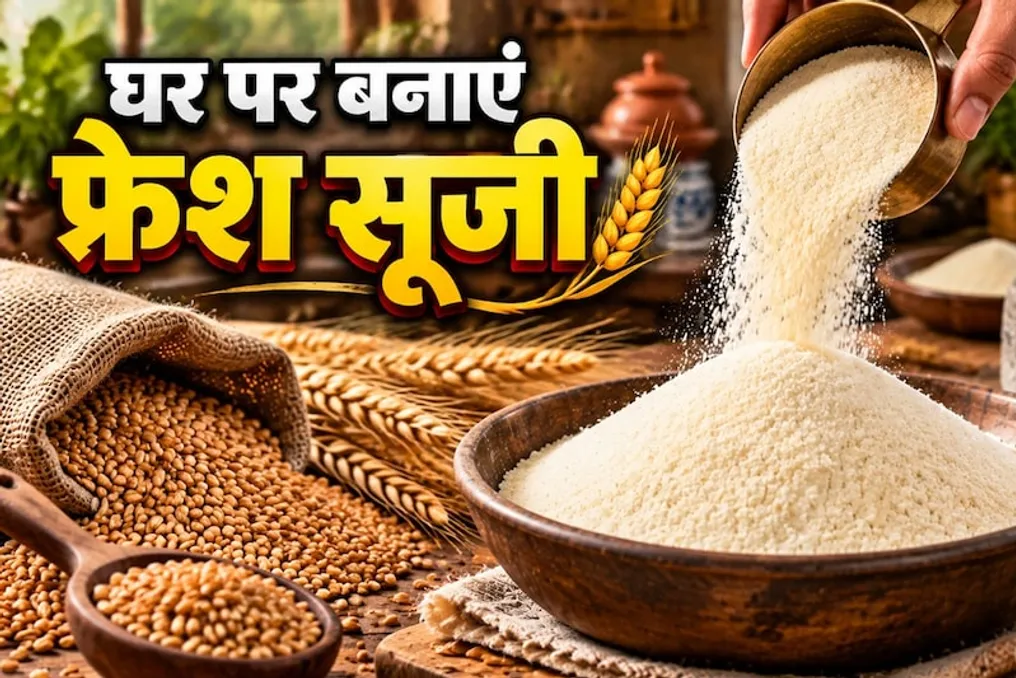
Sooji is an important component of Indian cuisine and is used in many dishes, including halwa, upma, idli, dhokla, and dosa. Despite its significance in the diet, most people buy sooji from stores, where it is often old or contaminated.

Consuming store-bought sooji containing impurities can negatively affect health. However, there is a way to prepare sooji at home. This is especially relevant before the festival of Navratri, when halwa made from sooji is necessarily prepared for the Kanya Puja.

Preparing this product is very simple, and with proper storage, it retains freshness for many months. Below is a simple instruction and secret tips for creating clean, grainy sooji from wheat.

To prepare, you need 2 cups of whole wheat (after cleaning), the required amount of water for soaking and washing, one teaspoon of sunlight or cotton cloth, and a sieve with small and large holes.

First, thoroughly wash and clean the whole wheat. Then, lightly spray the wheat with water and leave it for 15–20 minutes so that the outer layer of the husk becomes slightly moist and relaxed. After this, spread the moist wheat on a cotton cloth and dry it in the wind or under light sun for one to two hours. It is important that the wheat is not completely wet, but only the top surface is dry, while a slight moisture remains inside.

Place the dried wheat into a blender jar. Instead of running the blender continuously, it should be pulsed (on-off) only 2-3 times. This will prevent the wheat from turning into flour and will cause it to break down into fine grains.

The resulting mixture of ground wheat is first sifted through a sieve with large holes to separate large husks and whole grains. Then, the mixture is sifted through a fine mesh sieve. The fine flour that settles at the bottom should be discarded (it can be used for baking bread). The grainy residue left on the sieve is 100% pure and grainy sooji.

To keep the sooji fresh for a long time, it must be lightly roasted in a pan for 2-3 minutes over low heat, without adding oil or ghee. After it cools completely, the sooji should be transferred to a clean, airtight glass jar. In this way, homemade pure sooji will remain fresh for several months.

Popular