Researcher Nicholas Carr analyzes the influence of communication technologies on society and human psyche in his book
Read more
N+1
nplus1.ru

Researcher Nicholas Carr analyzes the influence of communication technologies on society and human psyche in his book

Communication technologies have had a significant positive impact on humanity, helping to overcome geographical and linguistic barriers. Nevertheless, they have also substantially changed the ways we think and interact both with ourselves and with the external world.

In his book 'Superbloom: How Technology is Destroying Society and Driving Us Mad,' published by Alpine Non-Fiction and translated into Russian by Maria Desyatova, technology researcher Nicholas Carr examines this issue. He explains that modern means of communication, ranging from the telegraph of the 19th century to today's social networks, instead of fostering mutual understanding, lead to an increase in conflicts and the spread of misconceptions.

The book includes an excerpt where engineer Claude Shannon, while working on increasing the capacity of the telephone network, proposes a new concept for communication theory.

Similar stories

Indian tech boom depends on efficient use of energy and water, in addition to AI infrastructure
Read more
yourstory.com

Indian tech boom depends on efficient use of energy and water, in addition to AI infrastructure

Although India's technological agenda is increasingly defined by artificial intelligence, data centers, and digital infrastructure, a more fundamental issue lies in ensuring the country has sufficient reliable electricity and water to support growing cities and industries.

At the TechSparks 2026 conference, during a panel discussion titled 'Invisible Infrastructure: Restoring India's Energy, Water, and Clean Air Systems,' Shreya Mishra, co-founder and CEO of SolarSquare, and Vikas Brahmavar, founder and director of Boson Whitewater, discussed the importance of scaling these solutions, which require more than just technological innovation.

Shreya Mishra, co-founder and CEO of SolarSquare, noted significant changes in the residential solar energy market in India over the past five years. When SolarSquare first entered the market, adoption was limited; consumers had a weak understanding of rooftop solar panels, and initial costs deterred many households. Nevertheless, the company believed that the economics of distributed energy generation and the need for energy security would ultimately drive growth.

Mishra stated that 'distributed solar power, meaning solar panels on every roof, will become the cheapest source of energy.' According to her, it took five years for one lakh (100 thousand) homes in India to switch to residential solar energy when the company started. Today, the country adds many homes every week, and SolarSquare has already powered over 60,000 homes.

However, economic factors alone do not alleviate consumer concerns. Rooftop solar panels require significant upfront payments, and households may worry about equipment reliability, maintenance costs, and whether the system will generate the promised amount of electricity. Therefore, for companies in this sector, building trust is as important as justifying financial viability.

Mishra also views distributed solar energy as a way to reduce the costs associated with long-distance electricity transmission. Although energy can be generated relatively cheaply, transmission and distribution costs can increase the final price for consumers. Her argument is that generating power closer to the point of consumption can help bridge this gap. Currently, SolarSquare serves both individual households and about 500 housing societies.

On the other hand, water presents a different challenge. Vikas Brahmavar, who transitioned from software to working on water reuse, reported that years of effort were required to create the necessary policy environment to support this sector. He explained that 'water, unlike the sun, has a fixed sun that shines,' emphasizing that wastewater treatment must account for changing water quality. The business also needs supportive policies and a viable economy to scale.

This necessity is becoming increasingly acute as cities and industries compete for ever-diminishing freshwater resources. Groundwater extraction remains the primary source of supply, while industrial needs, such as data centers, cooling towers, semiconductor manufacturing, galvanizing, and laundries, require substantial amounts of water. Brahmavar reported that over the past four years, his company has reused about 147 billion liters of water that would otherwise have been lost.

This opportunity is particularly relevant amid the expansion of data centers and the growing demand for water-intensive infrastructure. Reusing treated wastewater for industrial purposes can help reduce the strain on freshwater sources while creating a commercially viable market for recycled water.

However, the water supply economics can be counterintuitive. Brahmavar pointed to the Cauvery supply in Bengaluru, noting that consumers are billed around 7 rupees per kiloliter, while the government spends about 95 rupees per kiloliter to transport water from a distant river to the city. He suggested that this gap illustrates the problem faced by alternative water sources: the solution must compete not only with the availability of fresh water but also with how existing water supply systems are priced and subsidized.

If residential solar energy benefits from growing awareness of consumer savings, recycled water faces an additional hurdle—public perception. Brahmavar recounted how his company spent two and a half years engaging with over 300 housing complexes about the possibility of using recycled water, including for drinking. The response showed that convincing people to accept treated wastewater can be difficult, even if the purification technology is available.

Currently, the company is focused on industrial applications, where recycled water can replace fresh water without requiring consumers to overcome the same psychological barrier associated with consumption. In his view, 'technology is the least of the problems'; the more serious obstacles are commercial viability, public perception, regulatory compliance, and on-the-ground implementation.

Meanwhile, SolarSquare is moving beyond just installing rooftop solar panels. Mishra stated that the company aims to become a full-fledged home energy brand, expanding into batteries, electric vehicle chargers, home energy monitoring, energy optimization, and smart grid integration. The company also uses software for remote monitoring of installations and identifying issues. Mishra noted that monitoring data can help detect voltage fluctuations and recurring power outages, allowing the company to identify potential problems and recommend solutions, such as battery storage, where appropriate. She said such capabilities can improve customer service and reduce the need for physical inspections.

The experiences of SolarSquare and Boson Whitewater demonstrate two different stages of climate infrastructure development. Residential solar energy benefits from growing consumer awareness and a clearer financial proposition, while wastewater reuse is still working to overcome barriers related to pricing, policy, and perception. However, the common challenge for both companies is how to transform a technically viable solution into infrastructure that people and organizations can adopt at scale.

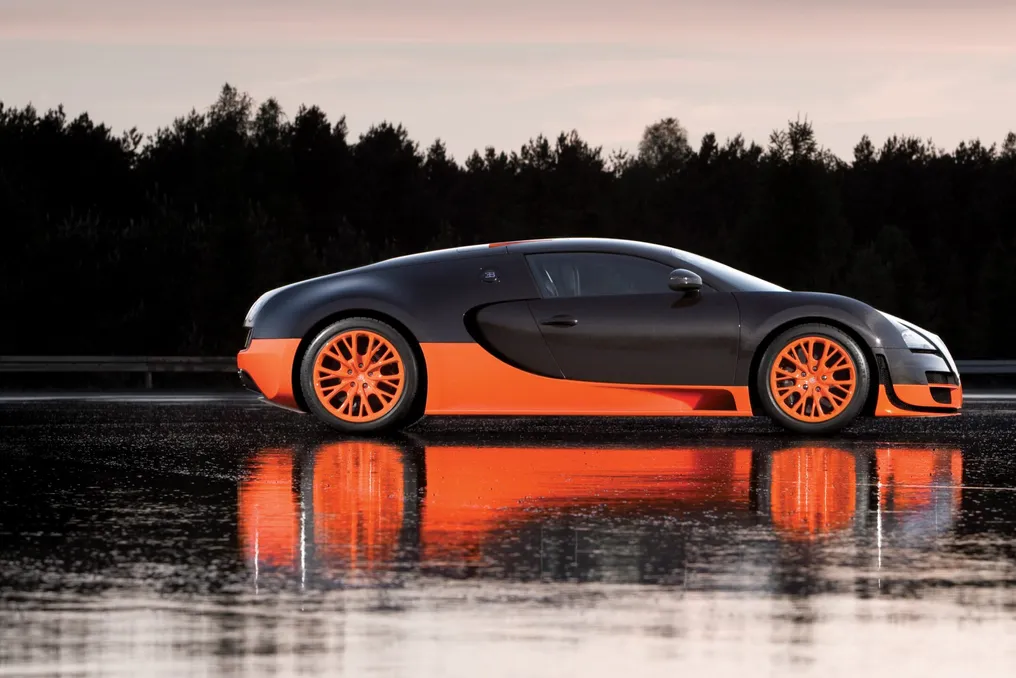
Bugatti Veyron is pointed to as responsible for transforming supercars into excessively powerful and complex machines
Read more
flatout.com.br

Bugatti Veyron is pointed to as responsible for transforming supercars into excessively powerful and complex machines

A notable aspect of the human condition is the concept of free will, which allows individuals to act within the law and respect others, even if their actions have no apparent utility or logic. This principle also applies to opinions, challenging the notion that all human thought must be coherent.

Consciousness is described as something extremely complex and ineffable, something that science has not yet been able to fully explain. Therefore, the requirement that all a person's ideas, tastes, and subjective issues be perfectly organized and free of contradictions is questioned, raising the possibility of disagreeing with oneself.

The ability to form and defend an opinion and subsequently criticize it is a human characteristic that distinguishes humans from animals, which act by immediate instinct or survival. Humans, on the other hand, are complex, constantly reflecting, even if this is not always useful for basic survival.

The author mentions an apology before the Bugatti Veyron, initially seeing it as an exaggeration of waste. However, he began to perceive it as an engineering statement. Although it is known that it is possible to exceed 1,000 hp and 400 km/h with less than eight liters, sixteen cylinders, and four turbos, Volkswagen demonstrated that by pushing its standard components to the limit, it managed to revitalize a brand and create a model of unnecessarily absurd opulence and performance.

Despite recognizing the thermodynamic achievement of the Veyron, the author argues that this vehicle is the main cause of the current state of the industry. The Veyron is seen as the 'patient zero' of a plague that transformed the pursuit of dynamic engagement into an arms race focused solely on technical numbers, acceleration, and metrics that serve the vanity of engineers and owners.

Before the Veyron, the supercar market followed more human rules. When Gordon Murray designed the McLaren F1 in the 1990s, the focus was on weight, throttle response, and central driving position, with the 386 km/h achieved being a consequence of the search for aerodynamic efficiency and lightness, driven by a naturally aspirated V12.

Ferdinand Piëch, in contrast, defined the Veyron with specific numerical goals: '1,001 hp, over 400 km/h top speed, and daily usability to take the wife to the theater.' Bugatti engineers were forced to adapt physics to meet this bureaucratic ultimatum, resulting in the use of four turbos, ten radiators, and a heavy W16 engine.

Although the Veyron won the battle against physics, it permanently changed the mindset of the sector. The car's value shifted from the delicacy of contact with the driver or the chassis balance in corners to scale, brute force, and the ability to impress with grandiose numbers.

This breaking of the four-digit power barrier triggered an uncontrolled spiral. Manufacturers realized they could simply add larger turbos or auxiliary electric motors instead of spending years perfecting suspension geometry or reducing chassis weight. This led to the emergence of the 'Holy Trinity' of hybrid hypercars – LaFerrari, McLaren P1, and Porsche 918 Spyder – where weight increased and electronics began to control every millisecond of dynamics.

The peak of this trend is represented by full electrification, with Mate Rimac as a central figure. Rimac began his journey by converting a BMW M3 E30 in Croatia, seeking electric performance. Later, he presented the Rimac C_Two (future Nevera) at the Geneva Motor Show, promising 'Almost 2,000 hp. 0 to 100 km/h in 1.8 seconds.'

The Nevera is seen as a direct descendant of the Veyron, adopting the premise of seeking shocking numbers but replacing gasoline with lithium ions. To achieve 2,000 hp, four electric motors and a battery pack resulting in a weight of 2,300 kg were used.

Recently, Mate Rimac, who now has a stake in Bugatti, expressed that he considered the Tourbillon 'too much car.' He commented that the 8.3-liter naturally aspirated V16 engine, developed with Cosworth, already delivered almost 1,000 hp on its own, without the need for the trio of electric motors and battery added to reach 1,800 hp. Rimac admitted that, personally, he would prefer a simpler, lighter version with a manual gearbox and purely analog.

The author criticizes this stance, reminding that it was the Veyron that initiated this escalation. After the 1,500 hp Chiron, the arrival of the Nevera proved that electricity could surpass combustion. Now, with technological saturation, the creators of chaos suggest a return to light cars with manual gearboxes.

This demonstrates that the Bugatti Veyron corrupted the market, addicting the world to a dependency that no longer generates pure pleasure. In the past, having 400 or 500 hp in a rear-wheel-drive manual required skill and respect. Today, 2,000 hp or 1,800 hp are accessible to those who can afford it, without the need for skill, as control is done by torque vectoring via software. The supercar has become an ultra-fast luxury appliance, killing the need for purist refinement at the top of the market.


Popular