Dis-Chem Profit Falls Amid Doubling of Technology Spending
Read more
TechCentral
techcentral.co.za

Dis-Chem Profit Falls Amid Doubling of Technology Spending

The Dis-Chem pharmacy group reported a decline in its profit despite an 8% increase in revenue, as the company doubled its investments in its internal technology and innovation unit, X, bigly labs, during the first six months leading up to August.

According to interim results published after market close on Thursday, earnings per share fell by 12.8% to 64.3 cents. Revenue increased by 8% to 23 billion rand, but expenses rose by 13.1%, outpacing the 9% growth in total income, which led to a 10.5% decrease in operating profit to 1 billion rand. Furthermore, the interim dividend was cut by 12.9% to 25.62 cents.

The company attributed the rise in costs to the opening of new stores and the activities of X, bigly labs, which it calls the 'engine of Dis-Chem transformation innovation.' It was noted that this unit 'doubled investment costs for the corresponding period.' The exact amount of these expenses in rand units was not disclosed by the company.

A year ago, Dis-Chem reported spending 130 million rand to create its 'integrated healthcare ecosystem' over the six months leading up to August 2025, with 60% of that amount, about 78 million rand, directed to X, bigly labs. Unlike last year, when the company indicated that pre-tax profit in the retail business had grown by 25.8% after excluding ecosystem investments, such a figure is absent in the current report.

The creation of X, bigly labs cost 330 million rand over a year leading up to February 2026, in which year earnings per share fell by 17.1%. CEO Rui Morais wrote in the annual report that measurable returns from these investments are expected to begin demonstrating in the 2027 financial year as the Better Rewards program matures, the new app launches, and the capabilities of X, bigly labs are gradually commercialized.

Two Different Periods

The group stated that it expects a 'more even distribution of profit' between the two halves of the 2027 financial year, as X, bigly labs' costs were higher in the second half of last year. This, according to them, will contribute to 'stronger full-year profit figures.' Dis-Chem also noted that the increase in this unit's costs will slow down as it approaches a 'presumed stable state.' Dis-Chem shares traded down nearly 11% in Johannesburg on Friday morning, reaching levels seen three years ago.

Since the launch of X, bigly labs, Dis-Chem has allocated 240 million rand to overhaul its 'digital asset.' This unit is also responsible for the group's digital ambitions. According to the report, these funds were used to restore the core commercial platform, as well as cataloging, pricing, order fulfillment, and order management systems. The group stated that 'the business now operates on a modern, scalable basis.'

Customers have not yet seen these changes. The first version of the new app was available to 22,000 customers. The second release, intended for a 'wider customer audience,' is scheduled for the last quarter of the 2027 financial year, which runs from December to February. The report does not specify when all customers will gain access to the app.

Timelines have been adjusted. A year ago, Dis-Chem promised a new app by mid-2027 financial year, around August of this year. In September, Yusuf Kaka, head of integrated digital interaction at X, bigly labs, told TechCentral that the target public release date was early 2027. At that time, he stated: 'There was no possibility of saving the existing application.'

Business expansion costs rose by 71% to 492 million rand for the half-year, covering new stores, digital transformation, and IT upgrades in both retail and wholesale businesses. Dis-Chem stated that a similar approach is now being applied to the digitization of pharmacies and clinics. In July, the company acquired the remaining 50% of Health Window, which it claims supports medication adherence, for 125 million rand.

What the Money Buys

The most apparent result so far is the Better Rewards loyalty program, which Dis-Chem relaunched in October 2025 and named one of the first outcomes of this unit's work. The program replaced points with instant discounts at the checkout. Active membership grew by 27%, reaching 8.2 million people, and program members now account for 86.1% of sales, linking most sales to identified customers. In the first year, the program returned 1.5 billion rand in discounts, partially funded by 200 participating brands.

Sales volume achievements were made: sales volume in Dis-Chem's main stores, excluding pharmacies, grew by 5.5% for the year ending September 27, compared to overall market growth of 0.1%, according to NielsenIQ data provided by the group. Meanwhile, prices showed deflation in 45% of sales in main stores. Overall retail margin still increased from 30.8% to 31.7%, which Dis-Chem attributes to more effective promotions, higher gross margins in key categories, and program funding.

The next step will be 'predictive and adaptive offers delivered through X, bigly labs,' following the stabilization of Better Rewards. The unit's models also determine which stores should be renovated first. Dis-Chem reported that two of its new format stores, located in Melrose Arch and Irene Village, have an initial sales density 25% higher than comparable older format new stores.

None of this has stopped the margin decline. Retail operating margin decreased from 4.6% to 4.1%, and retail operating profit fell by 4% to 794 million rand. Dis-Chem's results do not disclose online sales data; over seven weeks before October 19, the group's total revenue grew by 7.9%.

Similar stories

KPIT Technologies' profit decreased by 29% in the second quarter of fiscal year 27
Read more
business-standard.com

KPIT Technologies' profit decreased by 29% in the second quarter of fiscal year 27

KPIT Technologies reported a nearly 29% drop in consolidated net profit, amounting to 121 crore rupees, for the second quarter ending in September. The main reason for this decline was pressure on the automotive market from Chinese manufacturers, which slowed down deal closures.

In the same period last year, the company demonstrated a net profit of 169 crore rupees. KPIT management expects losses to begin decreasing starting from the third quarter.

Forecasts and Market Trends

Sachin Tikekar, Co-founder and Joint Managing Director of KPIT Technologies, noted that a significant profit decline was observed among two of the company's largest clients—one in Europe and another in Japan. He expressed confidence that these contracts will hit a bottom within the next few quarters, possibly two or three. Nevertheless, he forecasts gradual growth among existing OEM clients in the passenger car, truck, and SUV segments.

In the reporting quarter, KPIT Technologies' consolidated revenue from operations increased by 6.5% to 1,691 crore rupees, compared to 1,588 crore rupees the previous year. However, revenue from the passenger car segment fell by 7.8% year-on-year to USD 132.36 million (approximately 1,260 crore rupees). Meanwhile, commercial vehicle segment revenue grew by 27.3% to USD 39.98 million (nearly 375 crore rupees).

Tikekar stated that the company's prospects look more encouraging. He highlighted nervousness among European passenger car manufacturers, which is leading to a slowdown in the decision-making process. Although the company is winning many new orders, the pace of decision-making remains slightly slow; however, in his opinion, the situation is moving in the right direction, confirming the effectiveness of the adopted strategy.

He also pointed to the immense pressure being exerted on European passenger car manufacturers regarding sales, which continue to decline, as well as on their margins. According to him, companies are forced to implement cost-cutting initiatives, which will likely continue for several more quarters. This pressure is driven by competition they face in China, as well as competition from China in other regions, including Europe, Southeast Asia, the Middle East, and others.

The total contract value secured by the company in the reporting quarter amounted to USD 213 million (about 2,026 crore rupees). Tikekar added that American OEMs are in a relatively protected position because most of their revenue comes from America. He noted that Japanese manufacturers are also in a better position, as America and Japan are two of their largest markets. Although there is some decline in indicators for Japanese, Korean, and American companies, it is minor compared to what European OEMs are experiencing.

In contrast, the situation in India for passenger cars is drastically different, as this market is the fastest growing. Tikekar noted that both local Indian OEMs and some foreign players are gaining momentum. Growth is observed particularly in Maruti Suzuki, Mahindra, Tata Motors, Hyundai, and Kia, while the position of Chinese and Vietnamese companies is noticeably strengthening in the electric vehicle segment.

Godrej Properties' net profit in Q2FY27 decreased by 62% to 154 crore rupees
Read more
business-standard.com

Godrej Properties' net profit in Q2FY27 decreased by 62% to 154 crore rupees

Godrej Properties announced on Friday a 62 percent decrease in its consolidated net profit, amounting to 154.15 crore rupees for the quarter ending in September. This decline was due to increased expenses.

In the comparable period last year, the company's net profit was 405.08 crore rupees. According to regulatory filings, total revenue in the second quarter of the current fiscal year reached 2,571.73 crore rupees, compared to 1,950.05 crore rupees in the same period last year.

Godrej Properties is one of the leading real estate development companies in the country.

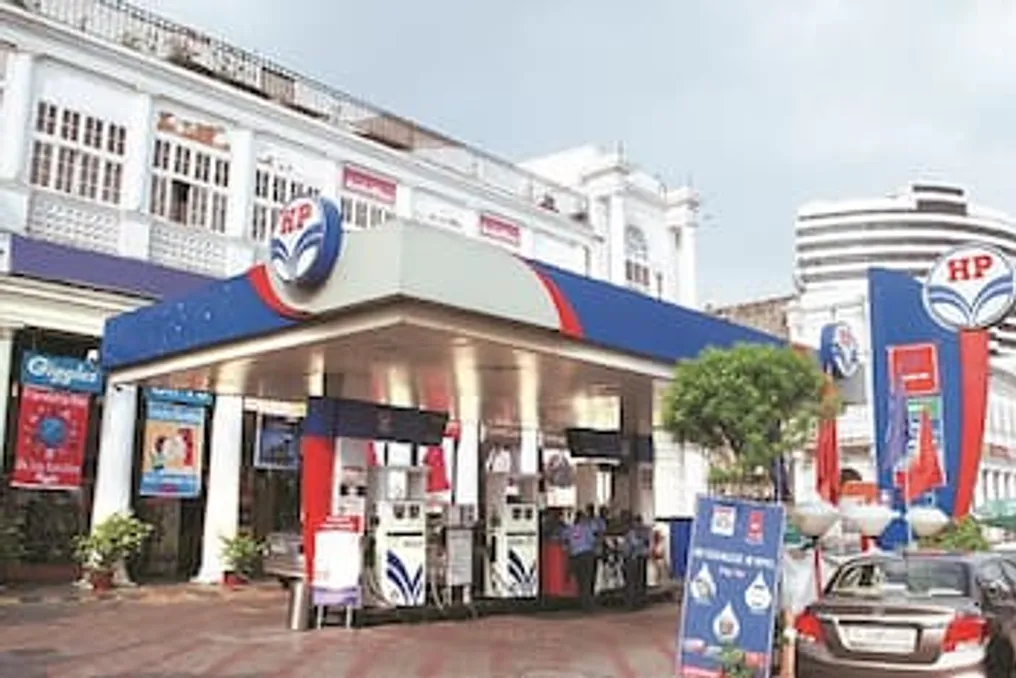
HPCL's second-quarter profit fell by 9% to 3,483 crore rupees due to rising expenses and taxes
Read more
business-standard.com

HPCL's second-quarter profit fell by 9% to 3,483 crore rupees due to rising expenses and taxes

Hindustan Petroleum Corp (HPCL) reported a 9% drop in net profit for the second quarter, amounting to 3,483 crore rupees. This decline was attributed to increased tax expenses and a sharp rise in crude oil prices, which pressured the fuel company's margins despite a 26.2% increase in product sales to 1.39 trillion rupees.

The Indian state-owned company released its earnings report, showing that its autonomous net profit for the quarter ending September 30 decreased to 3,483 crore rupees (US$367.34 million) compared to 3,830 crore rupees the previous year.

Average global Brent crude oil prices rose nearly 40% year-on-year during the second quarter. This increase was driven by the ongoing war in Iran and the conflict between Russia and Ukraine. The higher cost of fuel supplies exceeded revenue from its sale, negatively impacting the marketing margins of oil marketing companies (OMC).

Analysts at Elara Capital predicted that the retail diesel margin for OMC would be negative 24 rupees per liter, whereas it was 5 rupees per liter in the same quarter last year. The gasoline margin was estimated at negative 2 rupees per liter compared to 9 rupees last year.

HPCL's total expenses increased by 25.9% to 1.33 trillion rupees, while the cost of raw materials consumed jumped by 24.3%. Furthermore, the company's total tax expenses more than doubled, reaching 3,285 crore rupees.

Nevertheless, the company's average gross refining margin for the April-September period improved to $27.89 per barrel compared to $5.95 per barrel the previous year. This improvement was supported by profits from raw material inventories, as the market price of oil exceeded the price at which the company acquired its stocks.

The 26.2% growth in product sales to 1.39 trillion rupees was supported by a compensation of 3,960 crore rupees from the Government of India for foregone revenues from domestic liquefied petroleum gas (LPG) between April and September. HPCL became the first among its competitors, such as BPCL and Indian Oil, to publish results for the September quarter.

Popular