The ideal mileage for changing motorcycle oil has changed significantly due to advances in engineering and lubricants themselves. Previously, it was common to change it every 1,000 or 1,500 km, but today, most models require intervals of 5,000, 6,000 km, or even 12,000 km.
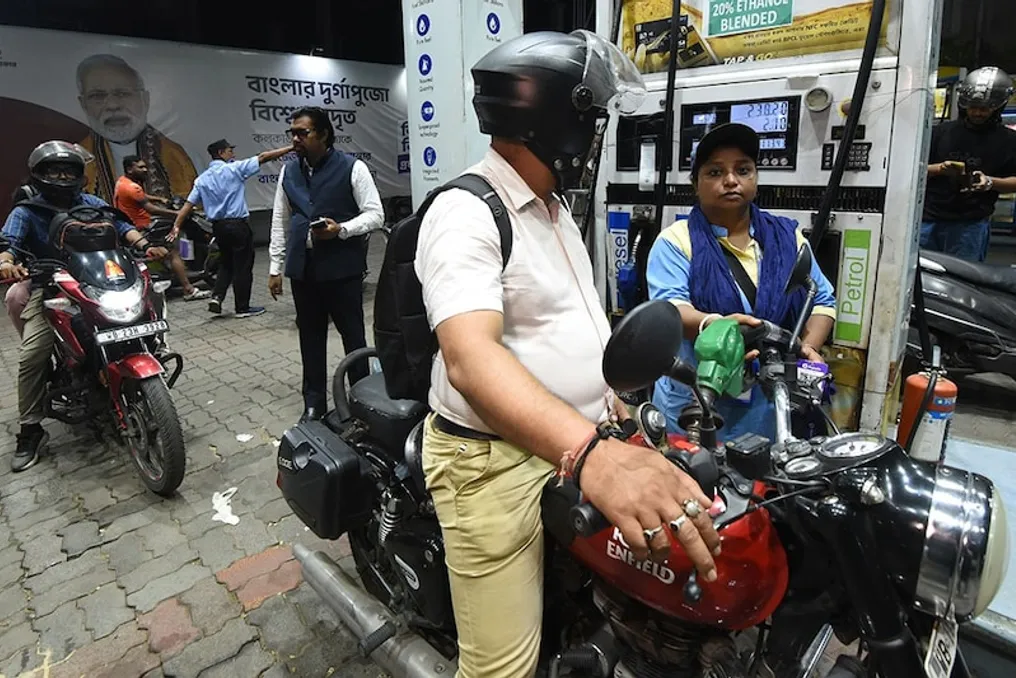
However, for professionals who use the motorcycle intensively, such as delivery riders and motorcycle taxi drivers, the situation may require a review of the schedule. For these users, the suggestion is to reduce the interval stipulated by the manufacturer in half. On many smaller motorcycles, this translates to a change every 2,500 to 3,000 km, or every six months.
Other maintenance considerations
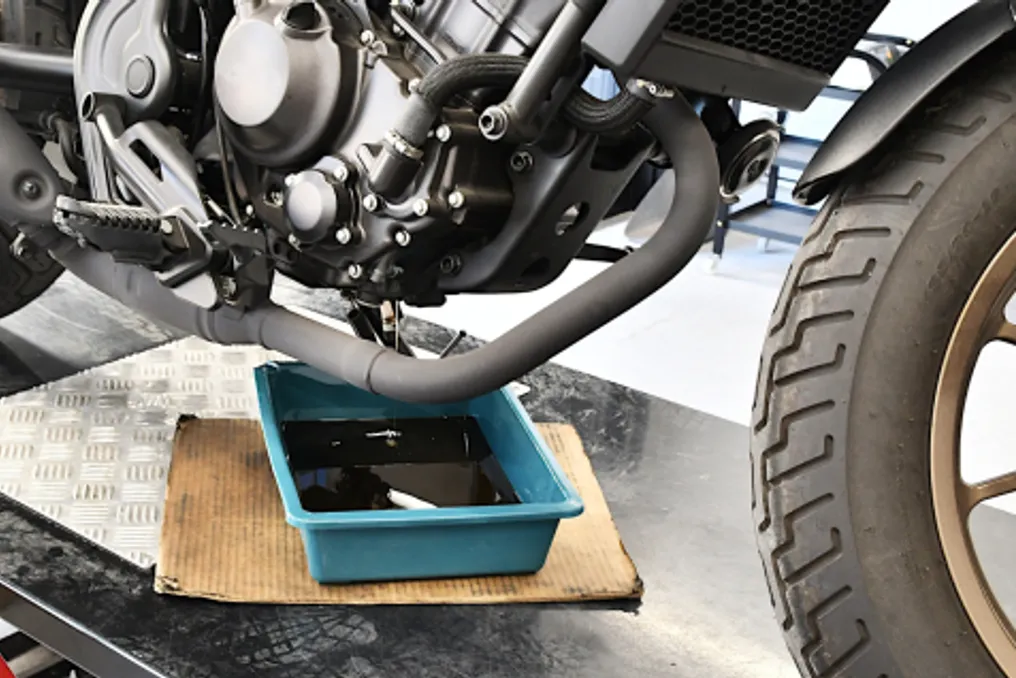
Oil replacement is considered the most crucial preventive maintenance for preserving the engine, as the lubricant reduces friction between parts and aids in cooling, losing its properties with use. However, it is essential not to confuse a shorter period with superior care. The central issue is determining the correct change frequency for the delivery person.
The concept of severe use refers to operating conditions that exceed the standard considered by the manufacturer when calculating the maintenance interval. This includes driving long distances, frequently operating at high speeds (high engine RPM), facing heavy traffic in large cities, or riding on very dirty roads where dust can contaminate the lubricant.
The typical routine of those who make deliveries fits perfectly into this severe use: hundreds of kilometers daily, long periods of idling in traffic jams, and constant acceleration and braking, generating a heating and cooling cycle that accelerates wear. None of these situations is covered in the average calculation of the manual, justifying the need to anticipate maintenance.
The exact number of starts must always be consulted in the owner's manual and never based on workshop opinions. Currently, most smaller motorcycles recommend 5,000 or 6,000 km, while larger models can exceed 10,000 km. Additionally, there is a time limit of one year, regardless of the distance traveled.
When applying the severe use guideline, the change interval is halved. Thus, a motorcycle that indicates 6,000 km now requires changing every 3,000 km, not every 1,000 km. This difference is substantial: someone who follows the myth performs three changes where only one would be sufficient, even under heavy use.
Those who insist on changing every 1,000 km, although they do not face mechanical problems, are incurring unnecessary expenses. On the other hand, another user profile may be surprised: someone who uses the motorcycle only for short trips, two or three kilometers. This is also considered severe use, but for the opposite reason: the engine never reaches the ideal temperature and operates constantly cold.
For this second profile, the same rule applies, but based on time, not mileage. If the motorcycle does not accumulate many kilometers, the limit that expires first is the established period, which is six months, corresponding to half the period planned for normal use.
Origin of the 1,000 km myth
There is a legitimate 1,000 km interval, and this is where the confusion arises. The first oil change, known as the break-in change, should occur within the first 1,000 km. At this time, the new engine releases residues from the seating of the parts, and this oil needs to be replaced.
After this first change, the interval changes. An example is the Honda 160 line, which indicates the first replacement at 1,000 km and subsequently every 6,000 km.
This 'myth' of changing oil every 1,000 km has a real origin. Older motorcycles, such as carbureted Honda CG 125s from past decades, required changes every 1,500 km and used mineral lubricants. More than twenty years later, there were changes in engines, with more precise fittings due to modern machining and assembly processes, and, above all, there was a change in the type of oil used. Today, manufacturers demand synthetic or, at least, semi-synthetic lubricants.
Lubrax, like other lubricant manufacturers, clarifies the distinction between types: mineral oils are derived from separating petroleum components, being a mixture of various compounds. Synthetic oils are created through chemical reactions, ensuring greater control in their production and resulting in a purer product. Semi-synthetic oils combine mineral and synthetic bases in varying proportions, seeking to balance costs and achieve the best characteristics of both types, given that synthetic raw materials are expensive.
Fewer impurities mean longer service life. This is why the change interval migrated from the thousand-kilometer range to 5,000 or 6,000 km, and this is why halving this period is already enough to cover heavy use.
It is crucial to maintain the manufacturer's specification when choosing the lubricant, as using fluid from another vehicle or with inadequate viscosity can cause engine damage. Extending the change interval does not exempt the driver from replacing other components specified in the manual, such as the oil filter and air filter, which represents minimal savings.
Additionally, the oil level must be checked frequently, ideally daily for those who use the motorcycle professionally. It is normal to have a small reduction in level due to moderate burning; in this case, it should be topped up to the correct mark without waiting for the change. If the loss is excessive, it indicates a mechanical problem. It is also necessary to observe the condition of the lubricant: darkening is normal, but if it becomes visibly more viscous than usual and shows embedded dirt, the recommendation is to change it immediately and investigate the cause of the problem in the engine.