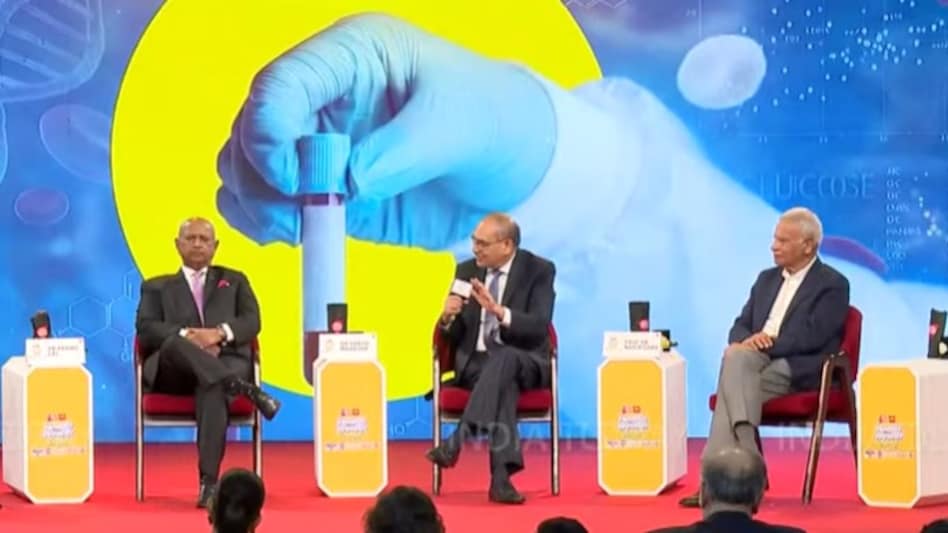
In the modern world, where preventive medicine extends far beyond standard blood tests to include genetic testing, advanced imaging, and artificial intelligence (AI), people often fall into misconceptions. Many are influenced by attractive advertising and undergo test packages that they do not actually need.
Three renowned specialists participated in a session at the Health Wealth Summit: Dr. Navin Dang, founder and director of Dr. Dang's Lab; Dr. Harsh Mahajan, Managing Director of Mahajan Imaging; and Dr. Arvind Lal, Executive Chairman of Lal PathLabs. These experts openly shared their views on the nuances of preventive medicine, selecting correct diagnostic tests, and personalized health screening.
Dr. Navin Dang emphasized that accurate diagnosis is the foundation of any proper treatment. He advised against choosing a laboratory solely based on low prices or tempting packages. When making a choice, one should pay attention to the presence of qualified doctors, such as pathologists and microbiologists, the lab's accreditation, and the possibility of receiving medical consultation regarding the results.
He warned that the slightest error at the diagnostic level can completely distort the direction of patient treatment, so correct identification is of paramount importance.
Dr. Harsh Mahajan explained that there are two types of medical tests: 'preventive screening' for asymptomatic individuals and 'diagnostic testing' for those who are ill. He cautioned against falling for packages named 'Silver,' 'Gold,' or 'Platinum.' Often, the number of tests in advertisements is artificially inflated by counting individual components of a single analysis.
According to Dr. Mahajan, the needs of a 20-year-old young person differ from those of a 40- or 50-year-old person. Therefore, the selection of tests must be based on age, family history, and chronic diseases. He noted that testing is necessary, but its correctness and relevance are more critical.
Dr. Arvind Lal stated that one cannot consider oneself healthy based only on appearance or feeling well. Diseases such as diabetes and high blood pressure can remain unnoticed for a long time. He recommended regularly checking blood sugar levels, cholesterol, blood pressure, and kidney function, especially for those with similar ailments in their family.
Speaking about nutrition, he advised avoiding excessive amounts of sugar, salt, fried food, vegetable fats, and excess ghee. He also insisted on a daily walk of 30–45 minutes. Dr. Lal humorously noted that the cost of a thyroid test is now even lower than a cinema ticket, so necessary checks should not be postponed due to financial considerations.
Dr. Navin Dang reported that diagnostic testing is moving towards predictive medicine. HbA1c and HOMA-IR tests are very useful for determining the state of insulin resistance and diabetes. Additionally, tTG tests are conducted to assess gut microbiome and celiac disease.
Dr. Harsh Mahajan added that if there is a family history of cancer, genetic testing and full-body MRI can help identify early risks. However, proper consultation is extremely necessary before such examinations. Dr. Lal cited the example of Angelina Jolie, who underwent preventive surgery after identifying a genetic risk for the BRCA1 mutation, clarifying that having a genetic risk does not guarantee the development of the disease.
Dr. Lal noted that a serological test conducted in rural areas for typhoid diagnosis may yield a negative result in early stages, so it cannot be considered a substitute for a blood culture. Dr. Navin Dang warned that incorrect and unnecessary testing leads to the uncontrolled use of antibiotics, which increases the risk of antimicrobial resistance (AMR), when drugs stop working in the body.
In conclusion, Dr. Mahajan clarified the difference between general AI, such as ChatGPT, and medical AI. While general AI can help understand medical terms, relying on it for diagnosis or treatment is strictly forbidden. Medical AI systems (such as Carpel.ai) can speed up, increase accuracy, and eliminate reporting errors, assisting doctors, but they can never replace a qualified specialist.