Iran and Belarus Discuss Establishing a Joint Power Plant Repair Center
Read more
Tehran Times
www.tehrantimes.com

Iran and Belarus Discuss Establishing a Joint Power Plant Repair Center

The Deputy Minister of Energy of Iran announced plans to establish a joint power plant repair center between Iran and Belarus. Furthermore, it was stated that Iran is ready to export gas turbines and wind equipment produced by MAPNA to Tatarstan.

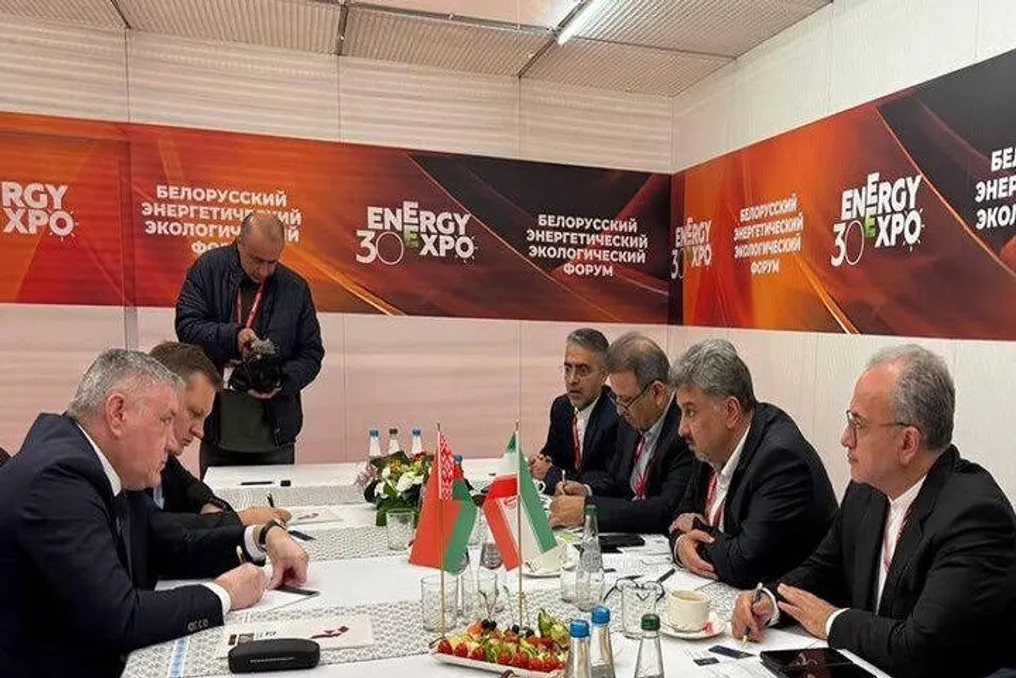
According to Mehr News Agency, Mostafa Rajabi Mashhadi, during his visit to Belarus and meetings with the country's energy officials, proposed establishing a joint power plant repair center. While discussing negotiations with leaders of the national Belarusian energy company, he reported that an agreement has been reached to review and finalize the legal and technical aspects of a memorandum of understanding within a month before moving to signing.

Rajabi Mashhadi also announced the formation of a joint technical group for experience exchange and project support related to smart grids and monitoring centers, which is one of the other areas of negotiation with the Belarusian side. The exchange of knowledge in the field of repairing and maintaining 750 kilovolt transmission lines and similar levels was also discussed.

The Deputy Minister of Energy also met with the Deputy Prime Minister of Tatarstan and stated Iran's readiness to supply gas turbines and wind equipment created by MAPNA through the private sector in cooperation with the Ministry of Energy. An initiative was also raised regarding providing technical and repair assistance to Tatarstan's power plants from the Iranian Power Plant Repair Company. Given the region's experience in reducing losses in transmission and distribution networks, an agreement was reached to transfer this experience to Iran's energy industry.

During this trip, Rajabi Mashhadi visited an energy exhibition and specialized meetings in Belarus. At these events, topics such as growing electricity demand, fossil fuel limitations, renewable energy development, consumption management, and electrical grid modernization were discussed.

He also familiarized himself with the equipment and systems of the Belarusian Meteorological Organization regarding forecasting electricity generation from solar and wind power plants, as well as precipitation and water resource forecasting models. Describing his visit, the Deputy Minister of Energy noted that the infrastructure and equipment of the Belarusian Meteorological Organization are mainly based on Russian technologies and corresponding radars, whereas Iran's systems for flood forecasting and meteorological monitoring possess higher maturity, accuracy, and operational capability.

On October 27, a memorandum of cooperation was signed between the Iranian Minister of Energy, Abbas Aliyabadi, and the Minister of Energy of Belarus, aimed at strengthening the partnership between the parties in the energy sector for mutual benefit. According to the report, the main areas of this memorandum include promoting cooperation in sustainable energy development, including renewable energy; facilitating the conclusion of contracts and provision of energy infrastructure services; and ensuring the possibility of experience exchange, training, and technical support.

The provisions of the memorandum also include cooperation in the fields of energy infrastructure construction and management, electricity distribution and transmission systems, joint participation in seminars, conferences, and exhibitions to attract investment in the energy sector, technical cooperation, and information exchange on engineering and consulting issues, as well as mutual visits by high-ranking officials and technical experts responsible for developing and implementing energy policy.
Similar stories

Uzbekistan and Belarus Discuss Cooperation in Nuclear Energy Sector
Read more
uzdaily.uz

Uzbekistan and Belarus Discuss Cooperation in Nuclear Energy Sector

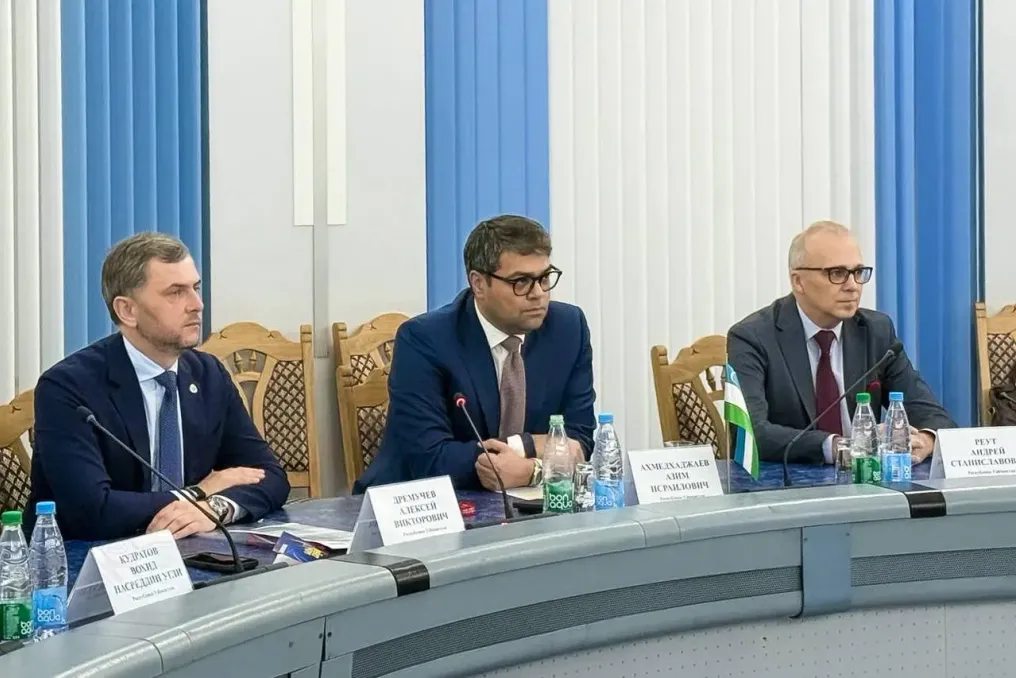
A delegation from the Uzbek agency Uzatom visited Minsk, Belarus, on October 27 to hold negotiations with the Minister of Energy of Belarus, Denis Moroz. The main topic of discussion was the participation of Belarusian enterprises in the project of Uzbekistan's integrated nuclear power plant, as well as the localization of energy equipment and the development of industrial cooperation.

These negotiations took place as part of the Uzbek delegation's working trip to Belarus. The parties reviewed prospects for joint work in the field of nuclear energy and opportunities to involve Belarusian specialists and companies in the implementation of Uzbekistan's national program in the field of atomic energy.

Belarus is also providing practical support in selecting qualified personnel for the construction of the nuclear power plant and related infrastructure. According to Moroz, the production of transformer equipment is one of the promising areas for cooperation.

The Belarusian side is ready to study potential partnership between the V. I. Kozlov Minsk Electrical Engineering Plant, Uzatom, and the Russian state nuclear corporation Rosatom. The Minister also emphasized the possibilities of expanding industrial cooperation, including equipment supplies and the creation of joint production capacities.

Azim Akhmedkhadzhayev, Director of Uzatom, focused on the importance of working with partners who possess the necessary experience to execute the NPP project. He noted that further joint efforts must strengthen the partnership and lead to tangible results. After the meeting, the parties agreed to continue exchanging proposals on specific areas of cooperation and to define projects for further joint consideration.

Iran seeks to expand gas trade with members of the Gas Exporting Countries Forum (GECF)
Read more
www.tehrantimes.com

Iran seeks to expand gas trade with members of the Gas Exporting Countries Forum (GECF)

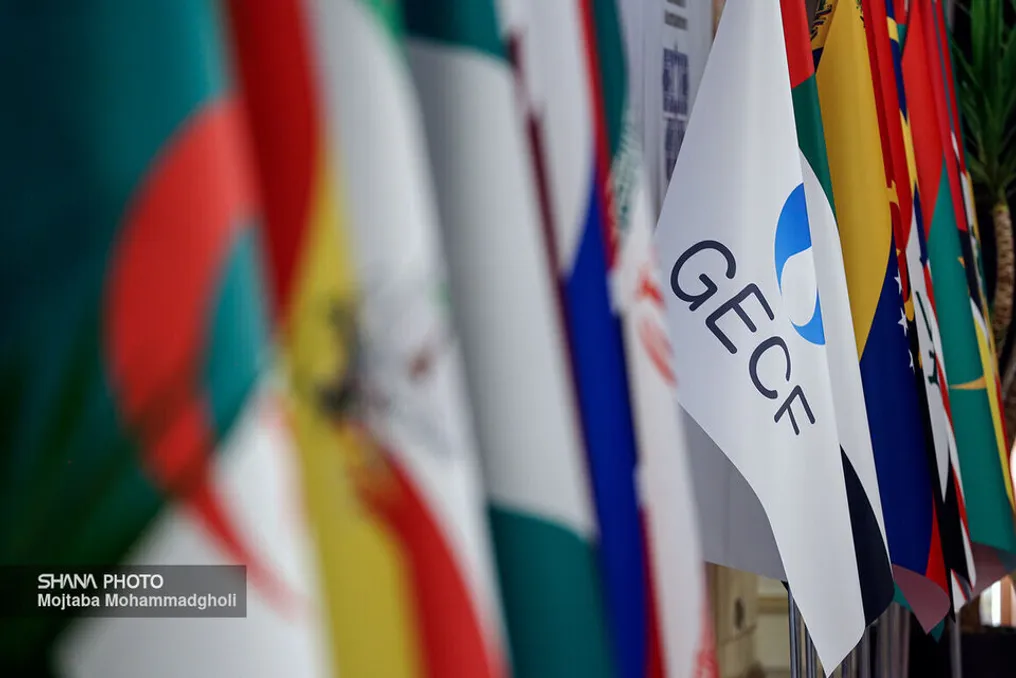
The Iranian Oil Minister stated that the country intends to increase gas trade with member states of the Gas Exporting Countries Forum (GECF), create a unified gas market, and strengthen energy cooperation ahead of the eighth group summit in Russia.

Iran seeks to expand gas trade with GECF members

Hamid Bavard reported that Iran will hold bilateral talks with the oil and energy ministers of member countries during the summit to discuss expanding cooperation and bilateral activities. According to Shana, Iran, as the founder of GECF, will present its position at the leaders' summit through President Masoud Pezeshkian, and at the group's ministerial meeting through the current oil minister.

Key issues on the agenda include protecting energy infrastructure during crises and wars, increasing gas trade among exporting countries, and finding ways to activate exchanges. Bavard added that Iran will insist on creating a common gas market and closer coordination among exporters to develop joint gas export policies.

Regarding relations with Russia, Bavard noted that cooperation has been established between the two countries in the energy sector, with Russian companies holding contracts for the development of several Iranian oil and gas fields. Negotiations are also underway regarding gas exchanges between Iran and Russia. Bavard expressed hope for positive results during the trip to promote strengthening cooperation and expanding energy interaction between Iran and Russia.

Bavard arrived in Moscow on Sunday to accompany Pezeshkian to the eighth GECF summit and participate in the forum's 28th ministerial meeting. The ministerial meeting is scheduled for Monday, one day before the leaders' summit. An extraordinary meeting of the GECF Executive Council, chaired by Seyed Ali-Mohammad Mousavi, Deputy Iranian Oil Minister for International Affairs and Trade, as well as a meeting of the Special High Committee, are also scheduled for Sunday.

These meetings are expected to allow for the review and approval of important documents, including the summit's final declaration. GECF serves as a basis for dialogue and coordination among natural gas producing and exporting countries. Its sessions cover the development of gas markets, supply and demand forecasts, energy security, and the role of natural gas in the global energy balance.

Other areas of focus include the development of natural gas markets, monitoring trends in the liquefied natural gas (LNG) industry, and assessing investment needs to meet future demand. The forum's leaders' summit is held every two years. Previous summits took place in Doha in 2011, Moscow in 2013, Tehran in 2015, Santa Cruz de la Sierra in Bolivia in 2017, Malabo in Equatorial Guinea in 2019, Doha in 2022, and Algiers in 2024.

GECF includes 12 full members: Algeria, Bolivia, Egypt, Equatorial Guinea, Iran, Libya, Nigeria, Qatar, Russia, Trinidad and Tobago, United Arab Emirates, and Venezuela. Angola, Azerbaijan, Iraq, Malaysia, Mauritania, Mozambique, Peru, and Senegal participate as observer countries. According to the forum, members collectively possess about 70 percent of the world's proven natural gas reserves, account for 38 percent of global realized gas production, and 42 percent of global gas exports. Their share in global LNG exports is estimated at approximately 47 percent.

Uzbekistan and Russia Discuss Production Localization for Nuclear Power Plant Construction
Read more
uzdaily.uz

Uzbekistan and Russia Discuss Production Localization for Nuclear Power Plant Construction

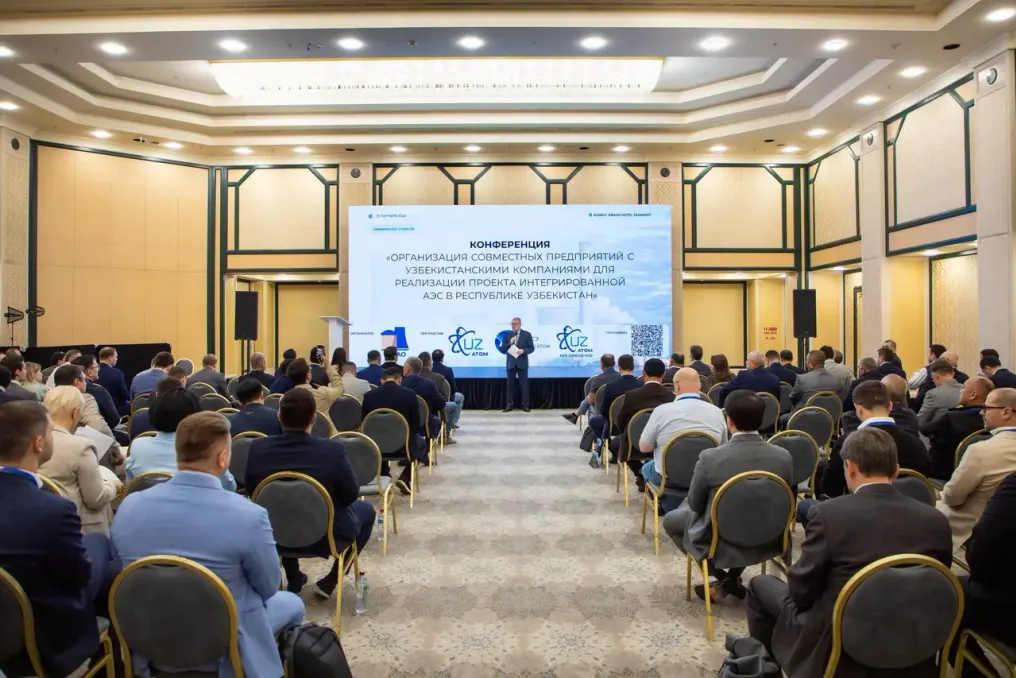
Uzbekistan and Russia held discussions on plans to establish joint ventures and localize production for the construction of a comprehensive nuclear power plant in Uzbekistan. According to a statement from the Uzatom Agency, the project aims to ensure that at least 30% of all components are produced locally.

The issues were raised at an industry conference held in Tashkent. Participants included representatives from Uzatom, relevant state bodies, Uzbek companies, specialists from Rosatom's Engineering Department, the Association of Nuclear Industry Construction Organizations, and executives from Russian companies involved in the NPP construction.

Opening the conference, Shakhzod Alirizayev, Deputy Head of Uzatom, emphasized the critical importance of practical interaction in implementing this project, which is intended to become the world's first integrated nuclear power plant. The project involves combining powerful energy units equipped with VVER-1000 reactors and smaller units with RITM-200N reactors.

Alirizayev noted that this configuration opens up opportunities to combine experience and form its own production base directly in Uzbekistan. During the first session, participants studied modern NPP construction methods, including modular assembly and systems-based approaches.

The role of leading materials science organizations and equipment manufacturers in providing technological solutions for nuclear projects was also discussed. Other topics included backup power supply systems, auxiliary heat and power plants, and components necessary to enhance the safety and efficiency of construction work.

A significant part of the conference was dedicated to the issue of production localization and the creation of joint ventures. Russian and Uzbek companies exchanged experiences in automated control systems and radiation monitoring, specialized ventilation and gas purification, polymer pipeline manufacturing, energy-efficient insulation materials, special concrete chemicals, and prefabricated structures for construction sites.

The establishment of production facilities in Uzbekistan is viewed as a way to increase the share of local goods used in the project and to form an industrial base for the further development of nuclear energy. It is expected that the cooperation will also include specialist training and the development of related industries.

The final B2B business session involved an exchange of proposals, where Russian and Uzbek firms discussed prospects for deepening partnerships, including joint production and professional training.

Popular