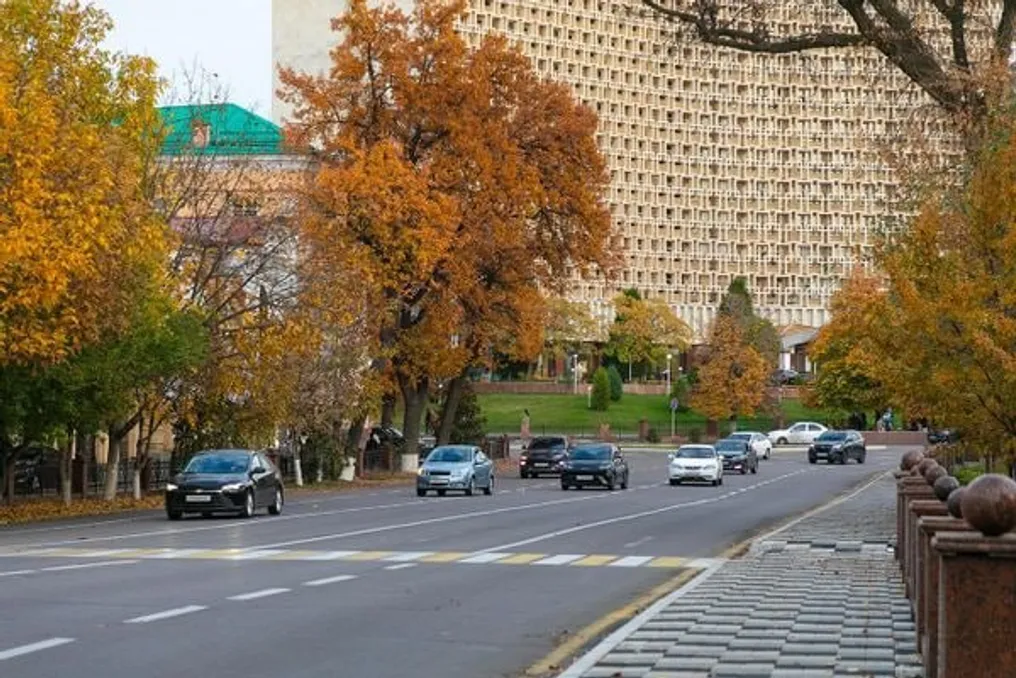
In Tashkent and other major settlements in Central Asia, air quality has become hazardous to health: the AQI index has exceeded 100, and temperature inversion may persist for another ten days. The Ministry of Health has provided recommendations on how to minimize risks under conditions of high concentration of dust and harmful substances.
The deterioration of the atmospheric condition is linked to the establishment of an anticyclone at the end of October, weak winds, and lack of precipitation. Temperature inversion causes emissions from transport, industrial enterprises, and energy facilities, as well as natural dust, to accumulate in the lower layers of the atmosphere and not disperse.
Doctors' recommendations for the population
Specialists advise trying to reduce the time spent outdoors. This recommendation should be given particular attention to people suffering from bronchial asthma, allergic rhinitis, conjunctivitis, bronchitis, and other chronic respiratory diseases. The use of anti-allergic agents must be done only after consulting a doctor.
To reduce the level of dust exposure inside residential premises, it is recommended to keep windows tightly closed, conduct frequent wet cleaning, and use air conditioners and special air purification systems. Additional measures include hanging damp towels and placing containers with water both indoors and near buildings.
Medics also insist on increasing fluid intake, regular showering, and rinsing the nose and mouth with saline solutions. These actions help ease breathing and reduce irritation of mucous membranes.
If symptoms such as cough, shortness of breath, itching or eye redness, nasal congestion, or runny nose appear against the backdrop of dustiness, it is necessary to consult a family doctor. The Ministry of Health reminded that round-the-clock emergency medical assistance is available by calling 103.
Furthermore, a directive has been announced regarding the cleaning of streets in Tashkent and other regions from sand and dust, as well as the activation of city fountains to reduce particle concentration in the air.