Deadline for electricity and gas consumption compensation payment extended until April 2028
Read more
Sputnik Uzbekistan
sputniknews.uz

Deadline for electricity and gas consumption compensation payment extended until April 2028

The deadline for paying compensation for the consumption of electricity and natural gas has been extended in Uzbekistan. The compensation covers the difference between tariffs within the basic standard and tariffs for exceeding this standard.

According to the decree signed by the president, the deadline for receiving this compensation will be increased to April 1, 2028. Additionally, the deadline for providing material assistance to cover part of the costs of coal purchase will be extended until January 1, 2029.

The document also provides for an increase in the average monthly income per capita when determining family need. Specifically, this level will be increased in the following ranges: from 1.072 million to 1.43 million UZS; from 715 thousand to 1.43 million UZS; and another range from 715 thousand to 1.43 million UZS.

Similar stories

From 2026, greenhouses with energy saving in Uzbekistan will be compensated for half of electricity costs
Read more
podrobno.uz

From 2026, greenhouses with energy saving in Uzbekistan will be compensated for half of electricity costs

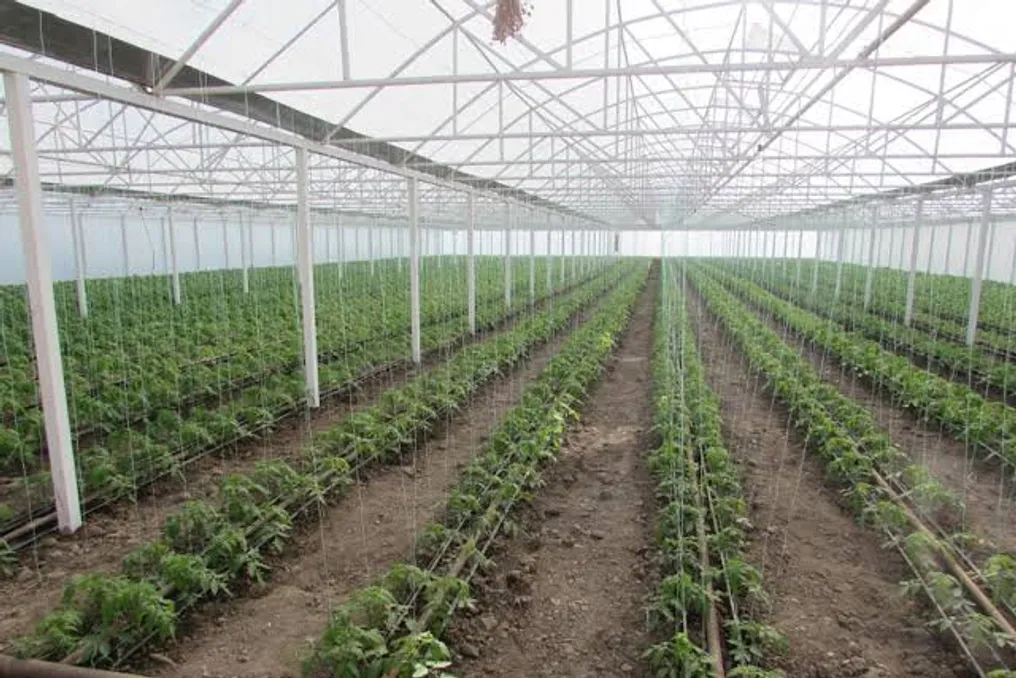
Starting November 1, 2026, a new state support measure is being introduced in Uzbekistan for greenhouse farms that use energy-saving technologies. Under this measure, the state will reimburse 50% of electricity costs for greenhouses during the cold season, which is from October to March. This support program is planned to be effective until April 1, 2030.

Owners of greenhouse complexes that use advanced methods for heat retention and heating can receive compensation. Such modern solutions include heat-saving coatings, heat pumps, geothermal systems, solar thermal installations, as well as high-efficiency electric heating systems.

The main goal of this initiative is to help enterprises reduce operating costs in months when energy consumption for heating facilities reaches its maximum. The new program is of interest to farmers, agricultural companies, and businessmen who have either already implemented energy-saving solutions or intend to modernize their heating systems.

Reducing electricity bills will allow greenhouse farms to manage resources more rationally and decrease their financial burden during the winter period. It should be noted that local authorities have previously tightened requirements for greenhouse heating in Tashkent and five districts of the region, obliging farms to abandon the use of coal and other solid fuels, or to install corresponding emission cleaning and automatic monitoring systems.

Changes take effect on November 1: new rules for gas, pensions, and advertising
Read more
sputniknews.uz

Changes take effect on November 1: new rules for gas, pensions, and advertising

A number of changes will come into force on November 1st, concerning natural gas consumption norms, restrictions on advertising calls and SMS, as well as the introduction of new rules for certain categories of pensioners.

Natural Gas Consumption Norms

In regions other than Karakalpakstan and Khorezm, the monthly basic norm for natural gas consumption will increase from 100 to 500 cubic meters. This norm will be valid during the winter period, i.e., November-February. In Karakalpakstan and Khorezm, this change came into force on October 1st.

Additionally, a new system for liquefied gas supply is being introduced for the population. The company 'LPG-Trade' handles the purchase and delivery of gas through a special exchange trading platform.

Restrictions on Advertising Calls and SMS

Companies are no longer entitled to send advertising messages to citizens without their written or electronic consent. It is also forbidden to distribute advertisements via mobile communication from 6:00 PM to 9:00 AM. Mobile operators are obliged to fully or partially block advertising calls and messages upon subscriber request.

Payment of Certain Pensions Without Application

For individuals recognized as unemployed due to enterprise closure or reduction in work volume, the assignment of a pension two years before the established age will become proactive. No separate application will be required for this. Citizens who worked in heavy or hazardous working conditions can apply to state service centers or via my.gov.uz to receive a preferential pension.

New Procedure for People with Disabilities

Funds allocated for the purchase of certain rehabilitation technical means will be transferred to the social card. This will allow citizens to acquire necessary means in the established manner.

Cheaper Parcels from Abroad

The customs duty for international courier shipments will decrease by 20 percent: from 8,800 sums to 7,040 sums per kilogram. For example, a 5-kilogram parcel will cost 35,200 sums instead of 44,000 sums. This reduction applies to goods exceeding the duty-free import limit and is calculated separately from payments.

Reduction in Energy Payments for Entrepreneurs

Enterprises equipped with automated metering systems and remote control meters will receive a significant discount: the monthly advance payment for electricity and gas will decrease from 100% to 15%. This benefit does not apply to those who have violated payment deadlines in the last two months. Furthermore, paper energy consumption reports are abolished, and contracts are converted to electronic format.

Subsidies for Heated Buildings

Heated buildings using energy-saving coatings or environmentally friendly heating technologies will receive coverage of 50% of the consumed electricity cost from October to March. This program will be valid until April 1, 2030.

Patrols Now Respond to Incidents in Homes

From November 1st, patrol and security service employees will begin to respond promptly not only to public places but also to crime scenes and incidents that occur in residential buildings, based on reports received via '112'. Patrol routes will cover internal neighborhood streets. The patrol service will monitor order on 24-hour gastronomic streets.

Additionally, a restriction is being imposed on attending subsequent events for individuals who violated order at mass events.

Further Changes in November

Starting November 3rd, banks must warn clients about financial risks associated with the irreversibility of credit advertising. Such a warning must occupy at least 10% of the advertising space or video duration, and at least 30% on the first page of the loan agreement.

From November 6th, legislative norms regarding paid roads will come into force. When creating such roads, the existence of an alternative free route is mandatory.

On November 8th, a new law on real estate agency activities comes into force. Requirements for real estate agents include obtaining a qualification certificate and inclusion in a unified register.

Shavkat Mirziyoyev held an open dialogue with investors in the fuel and energy complex sector
Read more
sputniknews.uz

Shavkat Mirziyoyev held an open dialogue with investors in the fuel and energy complex sector

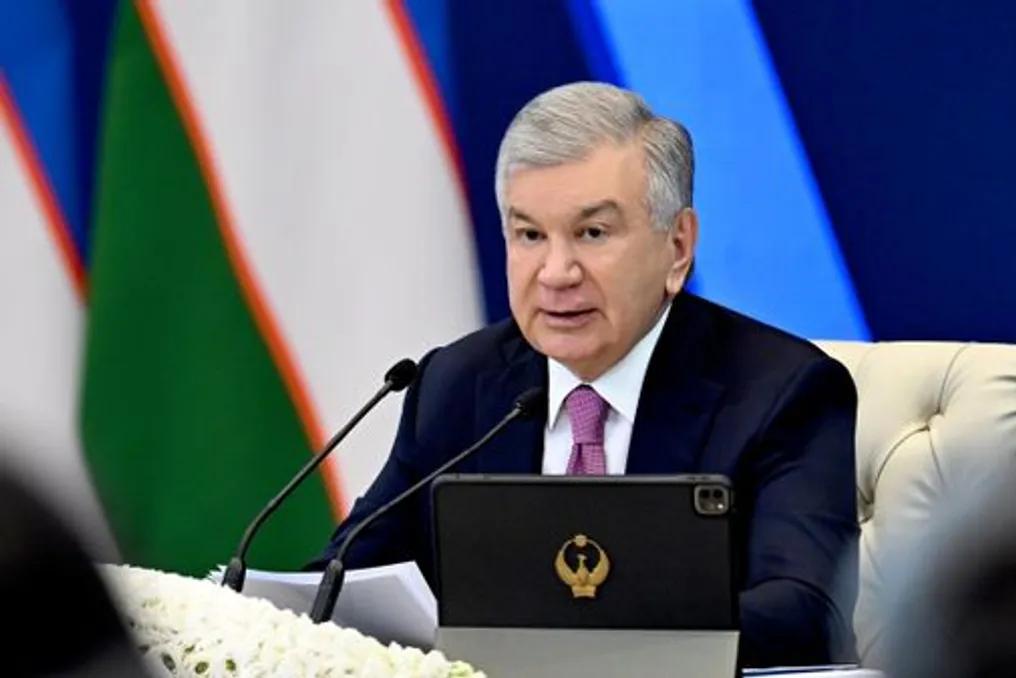
Shavkat Mirziyoyev held an open meeting with investors working in the fuel and energy sector. The creation of an Investor Council for this industry was announced, which will be responsible for promptly resolving problems faced by capitalists.

Today in Tashkent, Shavkat Mirziyoyev met with investors in the energy system. The head of state emphasized that energy is the heart of development, playing a crucial role in stable energy supply, attracting private investment, and strengthening public trust in the future.

Achievements of the Past Period and Plans for the Future

In the past, $35 billion in investments were directed to the sector, and the number of partner countries increased from 2-3 to more than 10. The share of renewable energy in the total generation volume was raised to 31% thanks to solar, wind, and hydroelectric power plants. The volume of 'green' capacity reached 11.1 gigawatts, and electricity production per capita exceeded 28%, amounting to 2300 kilowatt-hours.

During the meeting, agreements on six major projects totaling $4.7 billion were signed. These projects will ensure a generation capacity of 3000 megawatts and energy storage capacity of 400 megawatts. The goal until 2030 is to generate 22 thousand megawatts of new capacity, allowing the annual electricity production volume to exceed 129 billion kilowatt-hours, and the share of renewable energy to reach 54%.

Currently, projects will be put up for open tender taking into account regional needs. Previously, 'green' capacity projects were often located in areas proposed by the investors themselves, which helped attract capital. However, problems have arisen in some places regarding capacity accumulation and costs for transmitting electricity to other regions.

For each project put up for tender, conditions regarding land plots, grid connection points, timelines, as well as rules for purchasing and paying for electricity are announced in advance. Requirements will be the same for all investors, and mechanisms for risk reduction and ensuring payment discipline will be strengthened.

State Concept of Energy until 2050

The National Basic Energy Concept until 2050 was developed and unveiled for the first time. A map of grid connection opportunities will be presented by March 1st of next year, and the full basic concept by July 1st. These documents will show where electricity demand is growing in various regions, what infrastructure is needed, and where new capacities can operate most effectively. Based on this, investors will be able to plan their projects for the long term.

The President also stressed the need to develop networks that will deliver electricity to consumers along with new power plants. Generation, transmission, and energy storage systems must function interdependently. Currently, part of the demand in Fergana, Andijan, and Namangan regions is covered by electricity generated in other regions. The launch of new industrial zones and large enterprises further increases the load on the networks.

Areas for Data Centers Will Be Determined in Advance

The demand for electricity is rapidly growing in the fields of artificial intelligence and data centers. For these, sites with available land, grid connection capability, and sources of 'green' energy will be determined in advance. In every large data center, the main and backup power supply, energy storage, and cooling systems will be planned jointly. Investors are expected to provide solutions that allow for the efficient use of electricity and water.

Networks will be modernized, and energy storage capacities will be created. Over the past five years, more than $2 billion has been invested in the modernization of electrical grids. The next major task is the renewal of networks and the development of energy storage systems. It is planned to build 5000 kilometers of networks and 16 large substations by 2030, as well as increase energy storage capacity to 4.5 gigawatts. A significant portion of the projects is located in the Karakalpakstan, Bukhara, Jizzakh, Samarkand, Namangan, Kashkadarya, and Tashkent regions.

Priority will now be given to integrated projects covering generation, storage, and networks. Cooperation with investors is also planned for the construction of pumped-storage power plants for long-term energy storage. Private sector participation in distribution networks will be expanded. The approach initiated in Samarkand, Jizzakh, and Tashkent regions is planned to continue to reduce electricity losses and improve service quality for consumers. The President noted: 'The cheapest energy is saved energy.'

Energy Export

Uzbekistan's energy sector is not limited to the domestic market. The project to supply 'green' energy to Europe via the Caspian Sea with Azerbaijan and Kazakhstan is moving into a practical phase. The markets of Afghanistan and South Asia are also recognized as promising directions. There is high demand for copper products, cables, transformers, metal structures, and building materials in energy projects. The President noted that local enterprises can compete in terms of quality, price, and standards.

China Energy from China used nearly 40% local raw materials in the construction of eight energy storage plants, the cost of which approached $200 million. Last year, the volume of local goods and services in energy projects reached $740 million. The President emphasized the potential to increase this figure threefold or fourfold. The Agency for Industrial Cooperation and local associations work with enterprises to determine the quality and volume of necessary products for investors.

Currently, components for high-voltage equipment, control system modules for energy storage, and wind turbine parts are being imported in large quantities. 12 promising projects worth $850 million have been prepared for the localization of these components. A special industrial zone with tax and customs benefits will be created for the production of necessary products for the nuclear power plant under construction in the Forish district of Jizzakh region. The head of state called on investors to cooperate in these projects.

Searches are underway in 6 investment blocks in the Ustyurt region, and another 128 blocks have been prepared in other regions to offer to foreign partners. According to preliminary estimates, they contain gas resources of 5 trillion 800 billion cubic meters and liquid hydrocarbons—560 million tons. The President emphasized the importance of not just obtaining gas for electricity, but deeply processing it to create greater added value. The synthetic fuel complex in Kashkadarya annually produces up to 1.5 million tons of fuel and other products. It was also noted that the MTO project for producing polyethylene, polypropylene, and PET is being implemented in Bukhara region, as well as the modernization of oil refineries in Bukhara and Fergana.

Popular