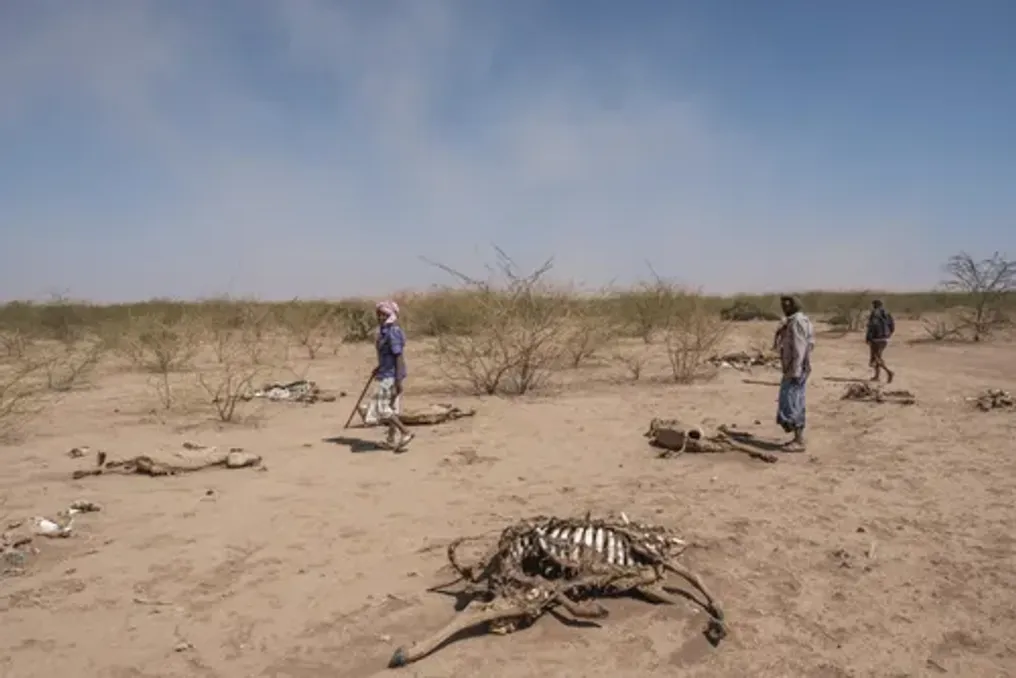
Despite Potential, Africa Faces Mass Hunger Amid Summit Leaders' Declarations
Read more
IOL
iol.co.za

Despite Potential, Africa Faces Mass Hunger Amid Summit Leaders' Declarations

While millions of Africans continue to suffer from hunger, the continent's sovereignty remains meaningless. Africa possesses enormous agricultural potential, yet it has failed to transform it into food security or economic independence. Mass hunger is not an inherent characteristic of the continent or its inevitable fate; rather, it is the result of centuries of exploitation, unequal economic relations, and modern political decisions that ignore the needs of ordinary citizens.

As the African Union marked the 17th anniversary of Africa Day in food and food security in Nairobi this week, the continent was confronted with an unpleasant reality: more people in Africa are suffering from hunger than in any other region of the world.

According to the latest United Nations report on the state of food security in the world, 309 million Africans were hungry in 2025, compared to 292 million in Asia. WHO Director-General Tedros Adhanom Ghebreyesus noted that 'a healthy diet remains inaccessible to one of the three global population categories.' In Africa, this share reaches two out of three. The crisis goes far beyond food production; it is linked to access, distribution, purchasing power, and political priorities.

The food security situation in Africa is exacerbated by ongoing wars and conflicts across various territories of the continent. Agricultural production is severely disrupted in Sudan. Instability and insurgent activity significantly hinder land cultivation in the Democratic Republic of Congo (DRC) and parts of the Sahel.

The serious consequences of this crisis include immediate starvation, long-term malnutrition, disruptions in education, and the slowing of development for an entire generation of African children. South Africa demonstrates that agricultural production alone is insufficient to ensure sustainable food security. Despite South Africa being a major producer and exporter of agricultural products, UNICEF reported in 2024 that 23% of children in South Africa faced severe food poverty.

Furthermore, according to the South African Statistics Agency Household Survey for 2024, about 22% of households in South Africa reported inadequate food access in 2025. Stunting, a form of chronic malnutrition, affected 28.8% of children under five, with the highest rates recorded in the Northern Cape (46.4%) and Western Cape (46.2%).

Food security is viewed as a vital indicator of economic sovereignty and transformation. A country that cannot provide adequate nutrition for its children cannot claim economic independence. While political freedom, territorial integrity, and control over natural resources are valuable, their significance diminishes when ordinary families cannot afford healthy food or when children cannot survive and develop.

Former President of Burkina Faso Thomas Sankara insisted on agricultural self-sufficiency, promoting domestic production and land reform, which allowed him to reduce dependence on imported goods. Four decades later, this principle remains relevant, as Captain Ibrahim Traoré places domestic production and consumption at the center of his political program. The test will be in sustainably increasing agricultural productivity so that ordinary people can afford nutritious food.

When domestic production is ignored or restricted, and regional supply chains remain underdeveloped and underutilized, food security and sovereignty are threatened. The continent does not lack agricultural structures, nor does it have promising policies. The real deficit lies in poor policy prioritization, implementation failures, and weak accountability.

The fifth Biennial Review of the Comprehensive Africa Agriculture Development Programme, conducted by the African Union, recorded a continental average of 5.25 against a target of 9.40. This is not only a serious administrative failure but also a clear indication of the huge gap between agreed commitments and measurable progress. The gap between summit declarations and ensuring food security, access, and availability is a catastrophic political failure.

The long-term commitment to allocate at least 10% of public spending to agriculture dates back to the Maputo Declaration of 2003, yet the continent has failed to consistently or evenly fulfill this promise. Last year, the African Union adopted the Kampala Strategic Action Plan for 2026–2035, aimed at mobilizing $100 billion in investment, increasing agro-food production by 45%, tripling intra-African agricultural trade, and halving post-harvest losses. These goals are commendable, but Kampala will succeed only if there is adequate agricultural financing, sustainable supply chains, competent institutions, transparent monitoring, and the ability to apply measures in case of non-compliance.

Climate change and external shocks make the food problem particularly acute. Unpredictable droughts and floods increasingly destroy farms, especially those without adequate irrigation, insurance, or appropriate technology. Adaptation promises are ineffective if rural communities lack the infrastructure to withstand escalating shocks. Debt pressure and the high cost of seeds, fertilizers, and transportation compound these difficulties.

Regional markets, overall infrastructure, and cross-border trade can reduce dependence on unstable global supply chains. In this regard, the African Continental Free Trade Area is a crucial tool for integration. However, it must be specifically oriented towards benefiting producers and consumers, rather than creating more opportunities for external trade elites.

A crucial element of Pan-African solidarity and sovereignty is the building of productive economies that serve the African people. Historical exploitation and unequal global relations have limited development, but they also constrain modern governments whose budgetary priorities, political decisions, and implementation failures reproduce systemic inequality and vulnerability in the food chain. Affordable food for every citizen is essential for any sovereign state. Malnutrition must become a relic of the past, not a feature of the present or future. Nairobi must be more than just another extravagant event with high declarations. Delegates must identify failures and missed targets and develop a measurable plan of corrective actions with clear deadlines. An empty plate in Africa is not just proof of poverty; it is proof of political failure. Until African agricultural wealth can feed its people, the promise of economic independence will remain unfulfilled.
Similar stories

Local African Cultures and Youth Seen as Key to Solving Hunger Problem
Read more
foodformzansi.co.za

Local African Cultures and Youth Seen as Key to Solving Hunger Problem

Experts who spoke at a recent webinar organized by Young Professionals for Agricultural Development called for the involvement of youth in transforming neglected, climate-resilient local African crops into profitable food systems.

Under the theme 'Innovations Today, Nutrition Tomorrow,' the importance of Africa's agricultural value chain, the heritage of indigenous African foods, agro-processing, market access, nutritional innovation, food security, and the need to transition to a sustainable lifestyle and ensure access to nutritious food were discussed.

Dr. Babafemi Oyewole, CEO of the Pan African Farmers Organisation (PAFO), emphasized the importance of mobilizing African farmers and issued a call to action regarding the value chains of local and underutilized crops.

He noted that Africa possesses exceptional agricultural biodiversity, yet many of these nutritious and climate-resilient crops remain overlooked. Dr. Oyewole stated: 'Africa has a treasure trove of agricultural biodiversity, while millions of its people face hunger, malnutrition, and unemployment. This must change. The youth of Africa represent our greatest opportunity to transform local crops from forgotten agricultural resources into competitive, nutritious, and profitable food products.'

Meanwhile, Dr. Maniu Mutamba, a senior program officer at the African Union Development Agency–New Partnership for Africa’s Development (AUDA-NEPAD), elaborated on the Comprehensive Africa Agriculture Development Programme (CAADP).

He explained that this program expands the continent's ambitions, including combating hunger, malnutrition, and poverty. Furthermore, it is seen as an opportunity to triple intra-continental trade and strengthen resilience, as climate change has begun to pose a serious threat to food security and livelihoods across the continent.

Dr. Rachel Mkandavire, Program Manager for Research and Policy Analysis at the Food, Agriculture and Natural Resources Policy Analysis Network (FANRPAN), reported that strategies have been developed on the continent to improve the agricultural sector and combat malnutrition and food shortages.

She explained that countries in the region have committed for many years to increasing agricultural productivity, food security, and nutrition through continental and regional frameworks. She cited South Africa as an example, which has a diverse portfolio of local and traditionally consumed foods, each with varying levels of research, production, and market development. Sorghum is one of the most established examples among them, possessing a long history of cultivation and consumption, as well as existing research, processing, and potential.

Ezinne Sara Otisi, a researcher of indigenous foods and founder of the Agro Food Heritage Initiative, stressed the importance for young farmers to cultivate, preserve, and protect African foods. She stated that young farmers are the future of the food system, and the earlier they start adopting local foods, the better for everyone.

According to her, growing local foods brings numerous benefits in terms of nutrition, environment, economic stability, and cultural preservation. These local foods are rich in nutrients and contain essential vitamins, proteins, fiber, and trace elements, as well as minerals and antioxidants that can help combat malnutrition in various communities and chronic deficiencies.

On the other hand, Enelle Zulu-Ndlovu, a project specialist at the Centre for Community Impact, linked to the Meatless Monday initiative, noted that this strategy encourages consumers to choose diverse, nutritious, and sustainable dietary options. She also pointed out barriers to choosing healthy food beyond national food security issues, including the negative promotion of the fast-food industry. She added that in urban areas where people work late, they prefer convenient options, opting for fast food instead of preparing healthy meals.

Food assistance needs in Mozambique projected below average despite El Niño risks
Read more
noticiasaominuto.com

Food assistance needs in Mozambique projected below average despite El Niño risks

FEWS NET estimates that around 1.99 million Mozambican citizens will require urgent food aid in April. This number is lower than both the April 2026 record and the five-year average, even considering the risks associated with the El Niño phenomenon.

The latest report from the Famine Early Warning Systems Network (FEWS NET) indicates that in April 2027, between 5% and 10% of the Mozambican population will face acute food insecurity, corresponding to a range of 1.5 million to 1.99 million people. The network observes that food assistance needs in Mozambique in April 2027 are expected to be lower than those recorded in April 2026 and below the five-year average.

Mozambique is part of a select group of nations monitored by this organization, which is an international early warning network for food insecurity and is funded by the United States. Food assistance needs in the country are expected to decrease compared to the same period in 2026, alongside Kenya, Zambia, Lesotho, and Afghanistan.

According to FEWS NET, which monitors famine risks and food assistance demands in various nations, the improvement in the situation in Mozambique is mainly attributed to agricultural production above the average recorded in 2026, the accumulation of food reserves by families, stable food prices, and the availability of stocks that will help mitigate expected problems in the next harvest.

Nevertheless, the organization issues a warning about the continuation of Crisis situations (IPC Phase 3) in areas affected by armed conflict, specifically in Cabo Delgado and the north of Nampula province. In these regions, food insecurity continues to limit access to food and livelihoods.

The FEWS NET analysis highlights that armed conflict will continue to hinder access to food and livelihoods. The report identifies conflict and unfavorable climatic conditions as the main risk vectors for national food security.

The organization also warns that the effects of El Niño may restrict recovery in several regions, forecasting drops in agricultural production in parts of central and southern Mozambique at the beginning of the 2027 harvest. The document adds that the 2026-2027 El Niño phenomenon should cause below-average rainfall in Southern Africa during the rainy season from October 2026 to March 2027, increasing the risk of impacts on production and food security.

According to FEWS NET, these deficiencies may reduce the seasonal improvements usually seen in food access during the harvest period. However, the immediate impact should be smoothed by the good harvests of 2026 and existing reserves.

In a special report released this month, the organization warned that El Niño 2026-2027 has rapidly intensified to levels classified as very strong, and is expected to result in below-average precipitation in much of Southern Africa between October 2026 and March 2027. FEWS NET emphasizes, however, that the most severe effects of the phenomenon on food security usually appear only in the subsequent months, during the scarcity period, indicating that the deepest impacts may occur later in 2027.

In Cabo Delgado, where armed insurgency has generated violence since October 2017, the organization anticipates the maintenance of food crisis scenarios until at least April of next year, due to persistent population displacement and restrictions on access to agricultural land, markets, and sources of income.

How animal welfare and human rights affect food security
Read more
foodformzansi.co.za

How animal welfare and human rights affect food security

On World Food Security Day, lawyer Dr. Tarryn Bannister explains how issues of animal welfare and human rights are transforming the future of food security in South Africa. When major South African retail chains ignored the hearings of the South African Human Rights Commission (SAHRC) investigating the right to food, they may have saved management time, but risked far more valuable assets: consumer trust, constitutional legitimacy, and sustainability.

Their absence also highlighted a gap in how corporations assess risks to people, animals, and the environment. The SAHRC's national inquiry into South Africa's food systems examines everyone's right to access adequate food, enshrined in Section 27(1)(b) of the Constitution. This is crucial because over 1,000 children die from malnutrition annually, and 28.8% of children under five suffer from stunting, despite the country's abundance of food resources. Poverty and inequality exacerbate the situation: the Pietermaritzburg Economic Justice & Dignity group found that a basic nutritional basket for a low-income household costs more than R1,000 per month than families can afford.

These problems are interconnected. The same food systems that prevent families from affording adequate nutrition can subject workers to poor working conditions, harm the environment, and cause extreme suffering to animals. As a recent analysis of the Daybreak Foods case shows, the exploitation of people and animals can stem from the same failures in governance, accountability, and supply chains.

This World Food Security Day (October 16) is an opportune moment to question why corporate risk models still treat people, animals, and the environment as separate aspects. Corporate decisions determine whether people can realize their constitutional rights to adequate food (Section 27) and children's right to basic nutrition (Section 28). The Constitutional Court linked animal welfare to environmental law under Section 24, recognizing animals as sentient beings with intrinsic value. Since Section 8(2) of the Constitution applies to private companies where applicable, food producers and sellers cannot consider animal welfare outside constitutional control.

When suppliers keep poultry in cruel cages or gas-stun pigs, companies must properly account for the associated harms and risks. Public safety is also at risk: industrial farming was linked to a listeriosis outbreak in 2017 that affected over 820 people and resulted in 218 deaths.

These consequences are not merely ethical issues; they enter the governance system that imposes obligations and potential liability on corporations. Directors' duties under the Companies Act 71 of 2008 to act honestly, with due care, skill, and diligence increasingly include ESG considerations. King IV expects boards of directors to integrate responsible corporate citizenship into strategy and view risk as an integral part of strategic decision-making.

The Consumer Protection Act 68 of 2008 requires honest and transparent marketing and disclosure, yet, as highlighted in the ALRSA report 'Scrambling for the Truth', consumers are regularly denied clear information about how their food is produced, undermining their ability to make informed choices. The environmental base is also increasingly recognizing 'animal welfare,' and organizations are advocating for stronger reforms, such as the Animal Law Project Manifesto, which calls for the recognition of animal sentience, corporate responsibility, and transparency.

SAHRC, the independent Chapter 9 institution mandated to promote, protect, investigate, and monitor human rights, held its first phase of hearings in March 2026 and the second in July. Organizations, including ALRSA, submitted written and oral submissions during the first phase. However, many of the largest retail chains were absent from the second phase despite being invited. Only Shoprite provided written responses; Massmart requested a postponement, and others did not participate. Their absence underscores the limitations of relying on voluntary participation. The Commission invited participants rather than summoning them by subpoena, prompting civil society to call on SAHRC to subpoena retailers so they could answer questions under oath.

In 2018, Momentum refused to pay a R2.4 million insurance claim to Deniz Ganas after her husband, Nathan, was shot during a robbery, citing his undisclosed high blood sugar. The Ombudsman supported the insurer, but public anger exposed the gap between legal compliance and public expectations of justice. Ultimately, Momentum made a voluntary payment and introduced compensation for victims of violent crime.

Amid growing debates on corporate governance and scrutiny of corporate behavior, the biggest risks may not lie in legislation or contracts, but in the failure to recognize that every corporate decision shapes relationships of public trust, dependency, and vulnerability. Just as Momentum realized that legal correctness was insufficient, food companies are learning that ignoring people, animals, and the environment is not a low-risk action. In 2020, the Advertising Regulatory Board ruled on appeal that Fair Cape Dairies could not use the terms 'humane' and '#HappyCows' in its advertising, leading to tangible reputational and commercial consequences.

Nevertheless, many corporations still view these risks as an isolated exercise in formal compliance, detached from their reputational, financial, and legal consequences. However, consumers care: 84% of South Africans expect food companies to ensure animal welfare. Investors feel the same way: the FAIRR initiative, a network of over 400 investors representing assets worth over $95 trillion, views intensive livestock farming risks as significant.

The hearings represented a missed opportunity for many food companies to demonstrate their social responsibility efforts and shape their relationship with SAHRC and the public. Notably, when asked if they would support a proposed voluntary food right charter with measurable, SAHRC-monitored commitments, Tiger Brands stated it would 'gladly accept the opportunity to participate' in developing the charter and 'offer support' through its involvement in the food system.

Retailers who skipped the hearings apparently misjudged their risks regarding reputation, access to capital, and constitutional legitimacy. While accountability mechanisms need strengthening, companies wishing to stay ahead of trends must recognize that accountability encompasses social legitimacy, constitutional values, and capital, not just literal adherence to rules. On this World Food Security Day and going forward, corporations must pay attention to how harm to people, animals, and the environment constitutes interconnected corporate risks that must be taken seriously.

Popular