How Bambu Lab turned 3D printing into a popular consumer product
Read more
TechNode
technode.com

How Bambu Lab turned 3D printing into a popular consumer product

Bambu Lab, a company based in Shenzhen, has achieved significant success in the global 3D printing market. As of 2025, the company ranked first globally in terms of shipments of 3D printers priced under $2,500 USD, capturing a 37% market share, and its annual revenue reportedly exceeded 10 billion yuan. The company's MakerWorld platform boasts approximately 10 million active monthly users.

Bambu Lab integrates printers, consumables, software, and the MakerWorld platform within its ecosystem. Furthermore, its R1 laser cutter extends this system into the realm of personal manufacturing.

In 2022, Bambu Lab chose an unconventional market entry path. Instead of debuting at a local exhibition, the young Chinese firm launched its first major product, the X1 series, on Kickstarter. This campaign attracted 5,575 backers and raised 47.28 million yuan, introducing the former DJI team to a global community of early adopters.

The company's financial backing has steadily increased: in 2021, Bambu Lab received angel funding from Mingshi Investment, and in 2022, it secured a Series A round of 30 million yuan from IDG Capital. In 2023, a Series B round took place involving Mingshi, 5Y Capital, Temasek, and True Light Capital, and in April 2024, the company raised 150 million yuan in a Series C round from IDG.

Founded in Shenzhen in 2020, Bambu Lab was initially created to serve customers worldwide. The company maintains R&D centers in Shenzhen and Shanghai, as well as an office in Austin, Texas. Despite being a Chinese company, its focus has always been on a global audience.

For a long time, desktop 3D printing suffered from a contradiction: it promised creative freedom but often forced users to become technical repair specialists. It required leveling, tuning, maintenance, and patience. The main advantage of the X1 series was not that it made 3D printing new, but that it made it less tedious.

Through automatic calibration, cameras, LiDAR monitoring, and an Automatic Material System for multi-color printing, Bambu Lab packaged complex engineering into something resembling a household appliance. The breakthrough was both technical and psychological: it reduced the anxiety associated with starting a print and anticipating potential failures.

This approach resonated internationally. Enthusiasts, educators, small studios, Etsy sellers, and print farm operators were already aware of the potential of 3D printing, as well as its daily challenges: calibration, failed prints, material changes, and maintenance needs.

Bambu Lab's answer was to create an entire ecosystem around the machine. The company sells printers along with software, proprietary filaments, accessories, the Bambu Handy app, and the MakerWorld model exchange platform. These tools collectively reduce the friction between design search and achieving a successful print.

This ecosystem is highly valuable to buyers. Without reliable profiles, suitable models, compatible materials, or a community, a printer can quickly become underutilized equipment.

By the end of 2025, MakerWorld reached approximately 10 million active monthly users, with an annual user retention rate of 83%. This strategy expands Bambu Lab's role beyond hardware, encompassing the entire 3D printing workflow.

Meanwhile, China is becoming a stronger growth engine. By June 2026, cumulative domestic consumer printer sales surpassed one million units, and the company reported 2025 revenue exceeding 10 billion yuan.

By the end of 2025, Bambu Lab held a leading position in the entry-level market. CONTEXT data for the fourth quarter placed the company first globally in shipments of 3D printers priced below $2,500 USD, with a 37% share. However, this does not make it a leader in industrial 3D printing, although it is a notable achievement in an industry that includes Creality, Elegoo, and Anycubic.

The company expanded its X1 lineup, creating a multi-tiered portfolio. The newer P2S model represents a practical mid-range segment: a high-performance device for serious hobbyists and small businesses, equipped with AI-based error detection, an improved airflow system, and a quick nozzle change system.

At the ambitious end is the H2C model. Its Vortek system utilizes up to six interchangeable hotends and supports up to 24 filaments, minimizing material waste typically associated with frequent color changes. The H2D Pro model targets corporate users, offering high-temperature materials, a 350°C hotend, and an actively heated chamber.

Together, these machines demonstrate the company's drive to scale upward without abandoning the users who made it famous—people who want industrial functionality without the industrial barrier to entry.

The scale has also attracted legal attention. In September 2026, a Texas jury awarded Stratasys $27.6 million, finding Bambu Lab liable for infringing four patents; the company plans to appeal this decision. Previously, a European court dismissed an injunction in a related case, and the dispute remains unresolved.

By expanding its range in 3D printing, Bambu Lab began exploring adjacent forms of desktop manufacturing. In September 2026, it introduced the R1—a 55W laser cutter and engraver, marking its first product line outside of 3D printing. This tool is designed to work with materials such as wood, acrylic, leather, paper, and fabric, thereby extending the company's reach from additive manufacturing to cutting and engraving.

Similar stories

Startup CubiFab, producing desktop CNC machines, raises tens of millions of yuan to scale production
Read more
technode.com

Startup CubiFab, producing desktop CNC machines, raises tens of millions of yuan to scale production

CubiFab, a company based in Shenzhen, has raised tens of millions of yuan in a new funding round. The investments came from Nanshan Strategic Emerging Industries Investment and Longhua Capital, as announced on October 23.

The company plans to use the funds to increase production volume and supply of its first product, the CubiFab C1. Furthermore, CubiFab intends to strengthen its supply chain and expand overseas sales channels.

The C1 model is a personal CNC workstation that allows users to manufacture metal parts directly on their desk. This system integrates process control and monitoring functions directly onto the device, simplifying tasks that previously required separate tools for design, processing, and setup.

The CubiFab team consists of former employees from companies such as Intel, Apple, DJI, Anker, and Bambu Lab, providing a combination of experience in industrial management and consumer hardware development.

Global Trends and Opportunities of 3D Printing for Uzbekistan
Read more
uzdaily.uz

Global Trends and Opportunities of 3D Printing for Uzbekistan

The global 3D printing market is showing steady growth. According to the Wohlers Report 2026, the volume of the global additive manufacturing market increased by 10.9% in 2025, reaching 24.2 billion US dollars. The 3D printing services segment is the largest, showing a growth of 15.5%, while equipment sales grew by 3.6%.

Additive manufacturing experts believe that this growth indicates the transition of the 3D printing industry to a more mature stage, where this technology becomes a full-fledged tool for industrial production. This sector is actively developing thanks to large companies from the aviation, aerospace, automotive, and energy industries, which are integrating 3D printing into their workflows.

The in-house production model allows enterprises to fully control the entire production cycle—from design to quality control—reducing dependence on external suppliers. This is particularly critical for the automotive industry, as delays in component supply can disrupt production schedules.

In early September, several automakers announced plans to expand the use of 3D printing at their facilities. Toyota and Rivian began assessing the capabilities of a new large-format system designed for manufacturing auxiliary components and tooling for production. Meanwhile, Hyundai installed two industrial 3D printers at its research center in South Korea. This equipment is intended for printing prototypes, pre-series production parts and testing, as well as small batches of products.

BMW's experience also demonstrates the scale of this technology's application. The company reports that its sites annually produce over 100,000 parts printed using 3D printing. After the opening of the Additive Manufacturing Campus, over 1.6 million items have been manufactured there. Furthermore, starting in 2027, the company plans to use large-format metal 3D printing for mass production of components.

The potential for applying additive manufacturing in Uzbekistan was discussed at a specialized seminar held in August 2026. The event gathered specialists from Rosatom and Uzatom Agency, as well as about 30 representatives from companies in the automotive, chemical, and mining industries. Participants included representatives from UzAuto Motors, Navoi Mining and Metallurgical Company, and Navoiyazot.

The possibility of establishing an Additive Manufacturing Center in Uzbekistan was also considered at the seminar. This project involves forming working groups, auditing industrial enterprises, identifying promising products and services, and assessing the conditions for implementing this initiative.

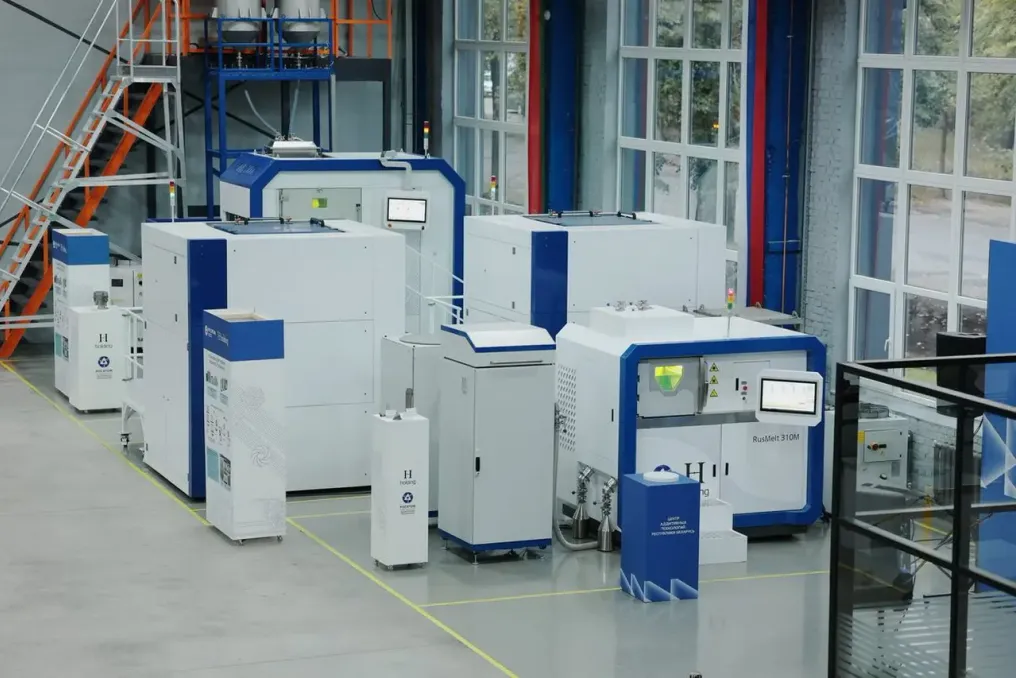
Rosatom's first foreign Additive Manufacturing Center operates in Minsk. Before its establishment, specialists studied the needs and production requirements of over 50 enterprises to assess the demand for 3D printing technologies. In its first year of operation, the center fulfilled over 20 orders for the engineering and energy sectors and produced several pilot batches of components for MAZ and the Minsk Tractor Works.

The center in Minsk serves as a model for similar projects in other countries. According to the Rosatom press service, a project for the comprehensive creation of an Additive Manufacturing Center in Egypt is currently being developed. The project in Vietnam involves establishing a 3D printing center, producing metal powders, training specialists, and jointly developing product quality standards and certification procedures.

In industry, 3D printing is especially useful for manufacturing small batches, geometrically complex parts, and individualized production tooling, as well as in cases requiring rapid modification of product design. Additive technologies can also be used for repairing expensive equipment components. The planned audit within the project will help determine which of these applications are most relevant for industrial enterprises in Uzbekistan, as well as identify demand for specific services and assess the conditions for establishing a center.

Exhibition 'After the Last Sip' showcases the creation of interior design items from coffee and tea waste
Read more
designindaba.com

Exhibition 'After the Last Sip' showcases the creation of interior design items from coffee and tea waste

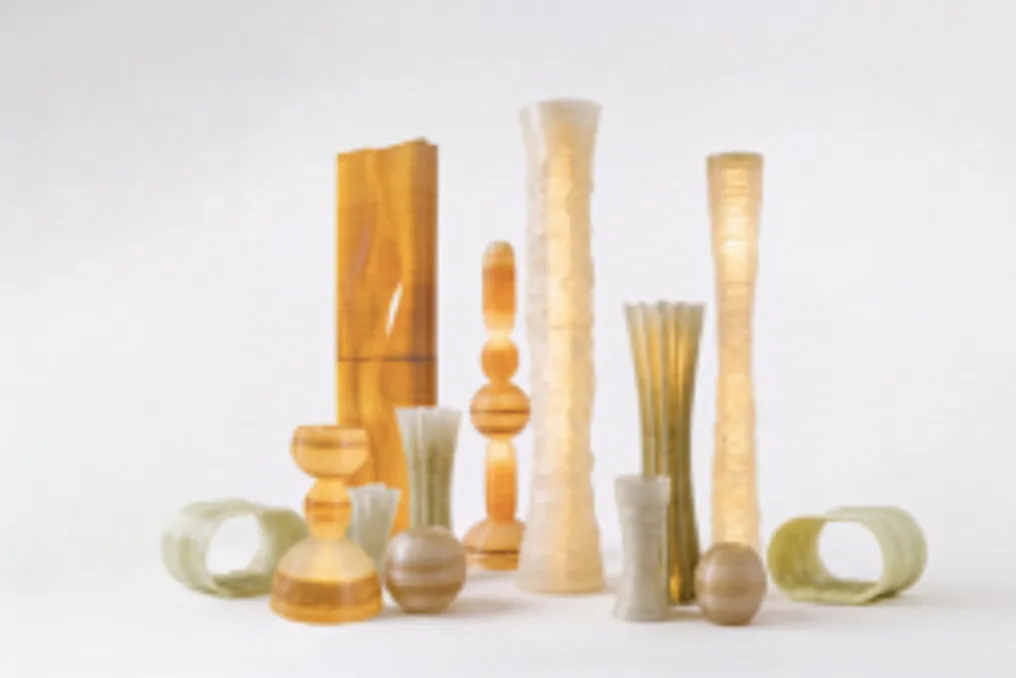
The exhibition 'After the Last Sip', which will be presented at the London Design Festival in 2026, is dedicated to transforming discarded coffee grounds and tea leaves into interior design pieces created using 3D printing.

This project was developed by Taiwanese designers Chao-Chun Kun, Chin-Yoo Lin, and Chen-Yan Chan. The work was created at Fab.Pub in East London by mixing dried coffee grounds and tea waste with polylactic acid (PLA) to obtain a composite material suitable for 3D printing.

The designers conducted a series of iterative experiments, studying how particle size and material ratios affect color, texture, translucency, and structural properties. Parametric design and robotic manufacturing then transform these mixtures into complex, multi-layered forms.

Visible particles, uneven textures, and 3D printing layers make the waste itself an integral part of the aesthetic, organically showing the origin of these items. Each designer approached the material differently.

Kun's work, titled CHA, draws inspiration from the traditions of Taiwanese tea drinking, integrating the Chinese character for tea into his parametric design system. Lin's project, 'Indefinite Shore', uses coffee ground composites to convey the image of Taiwan's changing coastline through layers resembling sedimentary rock. Chan presented 'Nexus Bloom', exploring continuous, fluid geometries that suggest organic growth.

'After the Last Sip' questions the notion that consumption signifies the end of a material's useful life, thereby encouraging the practice of circular design for everyday life.

Popular