Indian Botanists Describe Five New Species of Flowering Plants from the Western Ghats to the Northeast
Read more
The Better India
thebetterindia.com

Indian Botanists Describe Five New Species of Flowering Plants from the Western Ghats to the Northeast

The richness of India's flora continues to surprise scientists. In 2026, botanists officially described and identified several species of flowering plants that were previously unknown to science. Below are five such discoveries made in different parts of the country.

When is a flower considered a new species?

A plant does not necessarily have to be new to science at the time of its discovery. Researchers must study its characteristics, compare it with related species, and publish their findings before recognizing it as a new species. Some of these finds were collected many years ago.

Among the described species:

  • Crotalaria phulei: This flowering species was described in the botanical journal Phytotaxa in May 2026. It was found in forests near the village of Hairi in the Nagpur region. Its name is a tribute to the social reformer and educator Savitribai Phule.
  • Parakaempferia alba: A new species registered in the Siang Valley in Arunachal Pradesh was described in the Nordic Journal of Botany in January 2026. Its white flowers and distinct botanical features helped researchers determine that it differs from previously documented species.
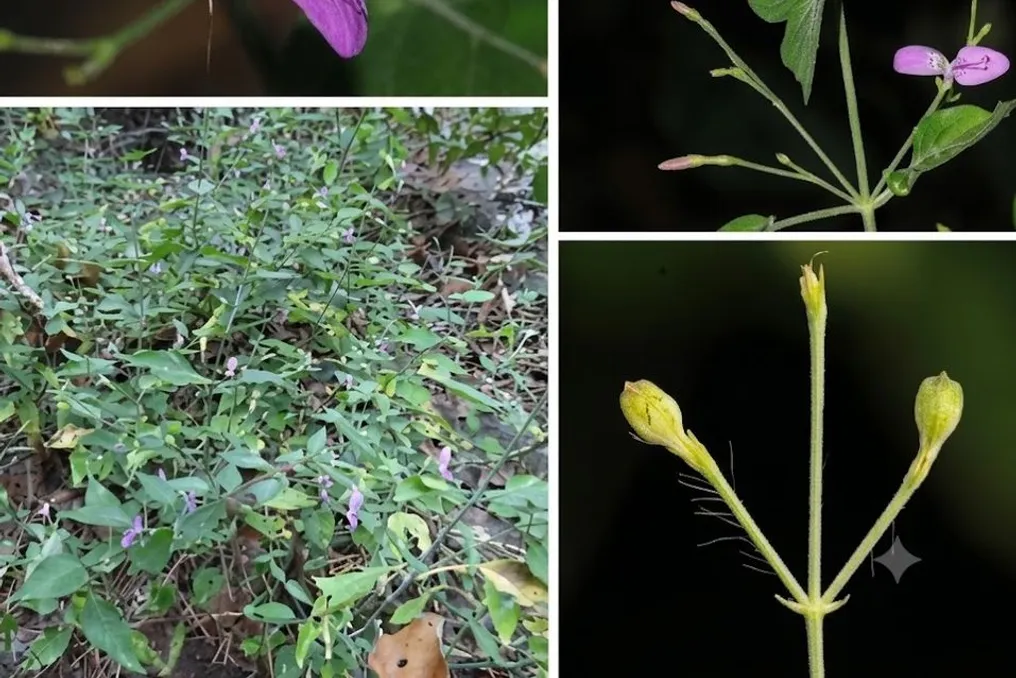
  • Dicliptera pakhalica: This flowering species, belonging to the Acanthaceae family, was discovered in Pakhal Sanctuary in Telangana. Researchers from the Botanical Survey of India officially described it in the journal Brittonia in January 2026. It grows in rocky and riparian areas near waterfalls.
  • Osbeckia ulotricha: Researchers described this new flowering plant from the Agasthyamala Biosphere Reserve in the southern Western Ghats. The plant's name is related to its woolly, curled hairs, which distinguish it from similar species. About 50 flowering individuals were recorded across three sites.
  • Osbeckia assamensis: Another recently described flowering species inhabits the Manas National Park in Assam. The publication in Phytotaxa took place in October 2026. Osbeckia assamensis is a perennial shrub reaching heights of two to 2.5 meters, whose pink flowers form clusters of about 30–35.

How do researchers determine a new species?

The color of the flower alone is insufficient to establish a plant's novelty in science. Botanists analyze leaves, stems, flowers, seeds, and other characteristics, comparing them with existing specimens and herbarium records before publishing results.

Why are these discoveries important?

Some of the newly described plants have a very limited known distribution. For example, Osbeckia ulotricha was recorded in only three locations, and Parakaempferia alba is known from only one location. Further research is needed to understand their range and conservation needs.

These findings demonstrate that India's plant diversity still holds many surprises. They also serve as a reminder of the importance of protecting natural habitats to conserve species that might otherwise go unnoticed.


Similar stories

Six Scenic Destinations in India for a Honeymoon
Read more
www.aajtak.in

Six Scenic Destinations in India for a Honeymoon

With the start of the wedding season in India, which begins in November, many couples are planning a trip as their honeymoon. Some wish to spend time in quiet mountain valleys, while others prefer to enjoy sunsets on the seashore. Time spent with a partner after the wedding rush is always special.

If your wedding is planned for November and you are looking for a beautiful place for a honeymoon, India offers many wonderful options. Here you can visit places that combine mountains, sea, lakes, and greenery.

Below are six romantic places in India where you can go after the wedding.

Goa is a good choice to visit in November. Beautiful beaches, pleasant weather, and vibrant markets can make the honeymoon unforgettable. You can walk on the beach with your partner, admire the sunset, and enjoy delicious food and the atmosphere in seaside cafes.

What to see: Baga Beach, Anjuna Beach, Old Goa churches, and local markets.

If you want to spend a few days in seclusion after the wedding hustle, Munnar is worth choosing. Sprawling tea plantations, green hills, and magnificent natural landscapes bring peace of mind. Walks along mountain roads and spending time in nature with your partner can make your trip romantic.

What to see: Tea plantations, Mattupetty Dam, and Eravikulam National Park.

Udaipur is known for its beautiful palaces, lakes, and historical buildings, and it is perfect for couples. If you want to experience staying in a royal city with stunning views during your honeymoon, this place is for you. Here you can take boat rides on the lake with your partner and stroll through the streets of the old town. Additionally, you can take many beautiful photos that will forever remember your honeymoon.

What to see: Citadel, Pichola Lake, Fateh Sagar Lake, and Jagdish Temple.

Puducherry is ideal for couples who love quiet beaches, beautiful buildings, and cafes. The French style of the streets and colorful houses create a special atmosphere. You can walk along Promenade Beach with your partner and wander through the picturesque streets of the White Town.

What to see: Promenade Beach, White Town, French Quarter, and Auroville.

If you are looking for peaceful moments amidst the mountains while also wanting a budget option, you can go to Rishikesh. There are many opportunities to walk along the Ganges River, admire the mountain scenery, and relax in quiet cafes. Couples who love adventure can engage in various activities.

What to see: Ram Jhula, Ganges embankments, Beatles Ashram, and nearby natural attractions.

For those who want to spend their honeymoon away from the crowds, Kumarakom is suitable. Here you can see beautiful landscapes with lakes, coconut palms, and greenery. A boat ride on the inland waters with your partner and time spent in nature will make this trip unforgettable.

What to see: Vembanad Lake, Kumarakom Bird Sanctuary, and surrounding inland water areas.

During the November wedding season, the number of tourists may increase in popular spots. Therefore, it is recommended to book hotels and tickets in advance. It is also advisable to choose a location according to your preferences and be sure to check the weather information to avoid any problems during your trip.

Bengaluru resident grew over 120 plants in a two-room apartment and shared tips for beginner gardeners
Read more
thebetterindia.com

Bengaluru resident grew over 120 plants in a two-room apartment and shared tips for beginner gardeners

Komal Singh decorated her two-room apartment in Bengaluru with various types of plants. Her gardening began as a simple decision to return to a hobby she had put off while working in the corporate world.

After moving to Bengaluru, she wanted to take up gardening and started growing vegetables from seeds on the balcony, utilizing limited space. Komal notes: 'I took this as a challenge and started growing vegetables from seeds in my small balcony garden.'

As she learned more about growing plants, her small balcony gradually turned into a garden. Among the crops she grows are tomatoes, bell peppers, ginger, and beets. Komal's balcony demonstrates that a backyard or large terrace is not always necessary for home food cultivation.

Furthermore, Komal shares her knowledge through her platform 'Urban Home Vibes'. There, she offers practical ideas for those who want to start gardening at home, including information on plant cultivation, composting, and homemade fertilizers.

Substrate is important for creating a home garden. The gardener recommends using a mixture consisting of 50 percent soil, 30 percent compost, and 20 percent coconut fiber. The correct choice of mixture provides plants with a suitable base for growth in pots.

Even a small balcony can be suitable for growing several plants. It is necessary to choose pots that fit the available space and start with vegetables or other plants suitable for the growing conditions. More can be added as one learns.

Komal's garden includes not only vegetables; flowers and leafy plants add variety to her collection, showing that a balcony can accommodate various types of greenery without needing a separate garden.

Each plant has its unique needs, and gardening requires some patience. It is recommended to start with a small number of pots, carefully monitor the plants' reaction, and make changes as necessary. One should not try to do everything at once.

Komal's story serves as a reminder that one can start gardening without waiting for more spacious housing or more space. A few pots, seeds, and a willingness to learn are enough.

Two friends help Kerala farmers produce organic spices and find buyers in India, the US, and Europe
Read more
thebetterindia.com

Two friends help Kerala farmers produce organic spices and find buyers in India, the US, and Europe

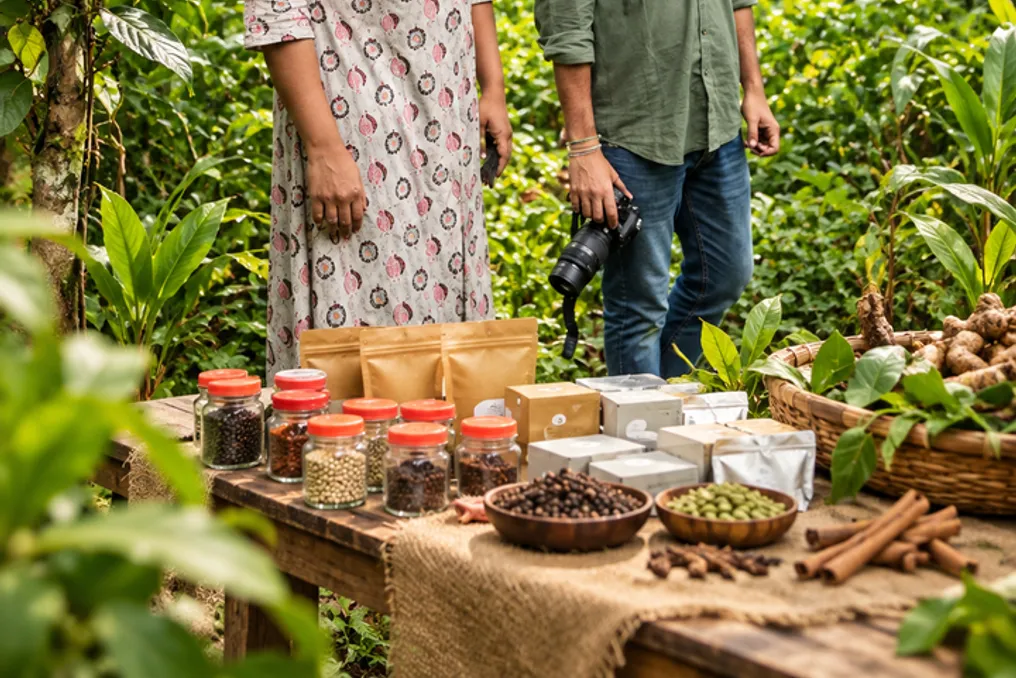
In the Idukki district of Kerala state, farmers faced difficulties finding buyers who valued their spices. To solve this problem, two friends—Bhavesh Savariya and Annu Sunny—decided to help them reach new markets.

Bhavesh, a mechanical engineer from Chhattisgarh, and Annu, a science graduate from Kerala, met in 2015 during the India Fellow social leadership development program. During a study trip to Ladakh, they observed how tourism could affect local communities. Annu noted that 'tourism has taken resources from local residents.'

Annu grew up among spice plantations in Idukki and was well aware of the problems farmers faced. Their shared goal of helping rural communities led to the creation of the organization Graamya in 2016.

From 2016 to 2018, the pair worked with local enterprises in Idukki to study local agriculture and develop a model capable of supporting farmers and their livelihoods. Graamya found that some farmers hesitated to switch to organic farming because improving yields required more time. Other farmers who had been practicing organic farming for decades lacked the necessary buyers.

For farmers who were abandoning intensive chemical use methods, Graamya provided financial support and guarantees. For those already growing organically, the initiative focused on finding consumers who valued their harvest. This platform connects them with buyers across India, the US, and Europe.

P. V. Ravindran stated that thanks to the emergence of Graamya, 'our farmers can now think beyond traditional markets.' Better processing encourages them to improve the quality of their spices. Farmer Denny Augustine noted: 'We get a better price for our chemical-free spices.' The partnership also helps farmers reach consumers who value the quality of their products.

Annu believes that such an approach is applicable elsewhere. She asserts: 'This model can be easily replicated by anyone in their community.' For Bhavesh, it all started as a calling.

Popular