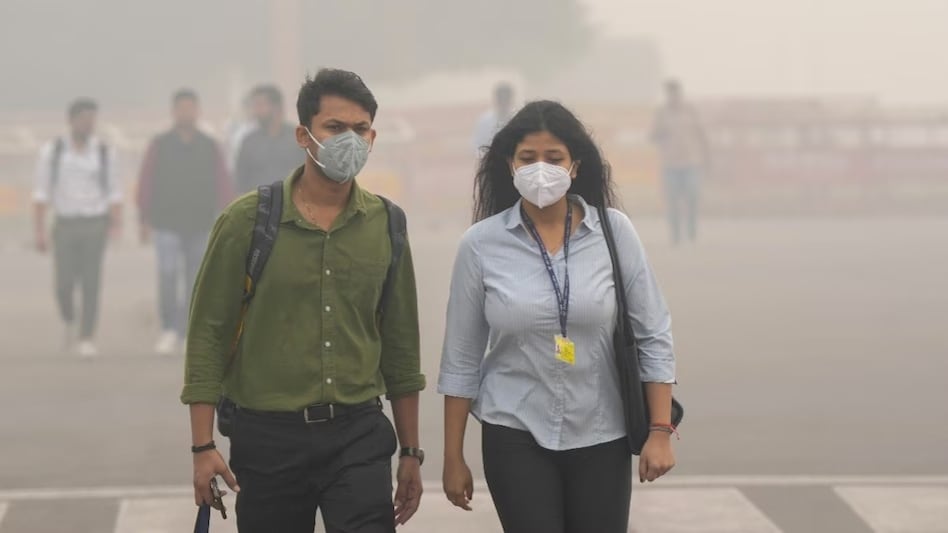
During winter mornings in Delhi, the horizon is often obscured by a gray haze, the air becomes heavy, and even a short walk can cause discomfort. For millions of residents, this is a familiar phenomenon during the pollution season.
The question was whether scientists could predict the deterioration of air quality before it happened. This was the focus of Dr. Sachin Ghude, a researcher at the Indian Institute of Tropical Meteorology (IITM) in Pune.
Ghude played a key role in creating the Air Quality Early Warning System of India (AQEWS). This system is capable of forecasting extreme pollution events in Delhi up to 72 hours in advance. The system was developed through the joint efforts of IITM, the Indian Meteorological Department, and the National Centre for Short-Term Weather Forecasting, providing authorities with valuable time to prepare for atmospheric deterioration.
Forecasting Pollution Before It Appears
Air pollution has numerous sources: vehicle exhaust fumes, industrial emissions, construction dust, and crop residue burning. Weather conditions also play a critical role; when the wind is weak and the atmosphere prevents the dispersion of pollutants, they can accumulate near the ground surface.
Understanding the interaction of these factors is the basis of Ghude's work in atmospheric chemistry and air quality modeling. AQEWS can be seen as a weather forecast for the air we breathe. Unlike a regular weather forecast that predicts rain or temperature changes, this system calculates how pollutants are likely to move, react, and accumulate in the atmosphere.
To achieve this, the system integrates data from ground monitoring stations with information from satellites, weather forecasts, and emission estimates from various sources. Advanced computer models then simulate changes in atmospheric conditions and pollutants over the next three days. The result is an air quality forecast, including pollutants such as fine particulate matter (PM2.5), which can penetrate deep into the lungs.
Why a 72-Hour Warning Matters
The most significant contribution of the system lies in the time it gives governing bodies to take action. When pollution levels rise sharply, officials may be forced to consider measures such as restricting construction work or reducing certain industrial operations under the Graded Response Action Plan (GRAP).
The preliminary forecast allows them to prepare for these interventions instead of only reacting after the air quality has already worsened. The system was launched in October 2018 to forecast episodes of severe pollution and provide early warnings.
Scientific developments have also moved towards more detailed forecasts. IITM implemented an operational air quality forecasting model for Delhi with a resolution of 400 meters, utilizing satellite and surface observations alongside advanced modeling techniques. This allows the forecasts to reflect local pollution fluctuations more accurately than just the average across the entire city.
It is important to note that such forecasts do not eliminate pollution on their own. Their effectiveness depends on how authorities use the information received and how successfully they address the sources of emissions.
Where Does All This Pollution Come From?
Forecasting pollution deterioration is only part of the task. Scientists must also understand its origin. Different pollution sources leave unique chemical traces. By studying these traces against the backdrop of atmospheric conditions, researchers can more accurately assess which sources contribute to poor air quality, helping policymakers determine more targeted measures.
This is an important part of broader scientific efforts to improve air quality management accuracy, shifting the focus from simply measuring pollution to understanding the factors that cause it. For Ghude, whose research links atmospheric chemistry with human health, vegetation, and climate, this work brings complex science closer to the everyday needs of the public.
The forecast cannot guarantee clear skies tomorrow. However, knowing that pollution might intensify in three days gives authorities the opportunity to prepare, and other citizens a clearer picture of the air they are about to breathe.