Government considers increasing the free electricity allowance to 200–300 kWh
Read more
IOL
iol.co.za

Government considers increasing the free electricity allowance to 200–300 kWh

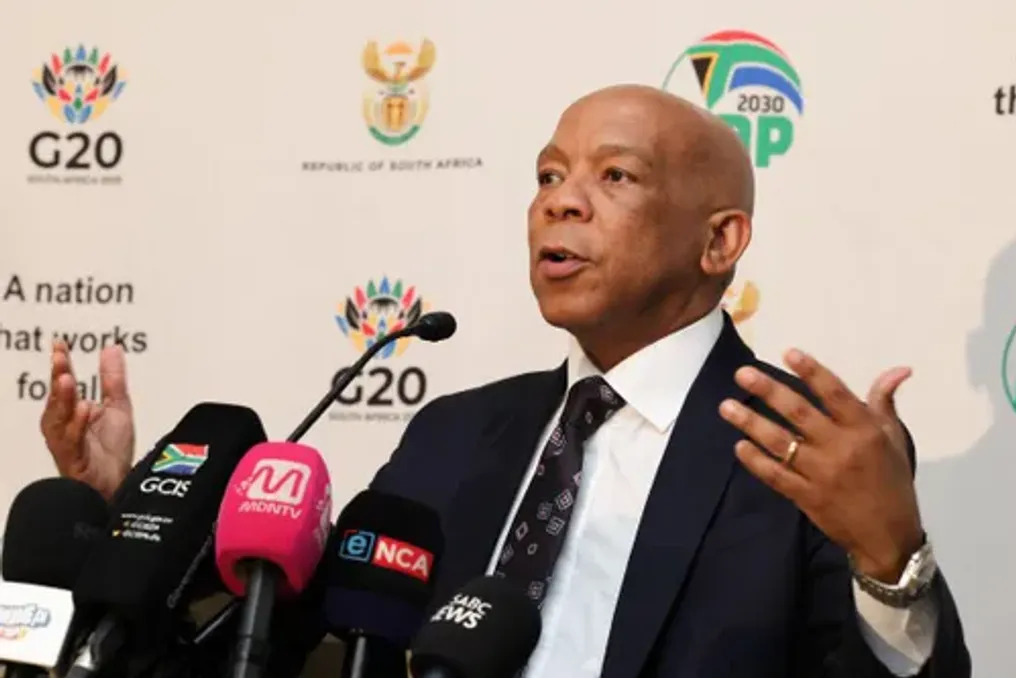
The Minister of Electricity and Energy, Kgosientsho Ramkgoppa, stated that the government is studying the possibility of increasing the current Free Basic Electricity (FBE) norm from 50 kilowatt-hours per household per month to a level between 200 and 300 kilowatt-hours, but a final decision has not yet been made.

Ramkgoppa disclosed this information in response to questions from IFP parliamentarian Nomphumelelo Mkhlongo, who inquired how many low-income households could benefit from the proposed measures under the revised electricity pricing policy.

Mkhlongo also asked about conducting an impact assessment of the new pricing structure on household expenses and the timeline for developing this policy.

In his response, Ramkgoppa emphasized that the goal of this policy is to strengthen the protection of vulnerable electricity consumers and low-income citizens by reviewing the free basic electricity system and support mechanisms for them.

How many households can benefit?

The Minister specified that the government is considering increasing the existing FBE norm from 50 kWh to a qualified household monthly to the range of 200–300 kWh. He stressed that this is only a proposal for consideration, not an already active right.

Furthermore, Ramkgoppa noted that the number of beneficiaries from the revised measures will depend on the final identification and registration of eligible households, as well as the adopted approaches to financing and implementation.

He added that the department will be able to confirm the number of recipients after these issues are settled. Previously, the Cape Argus reported that out of approximately 2.8 million identified needy households, only 1.7 million received free basic electricity.

Many qualified households do not receive FBE

According to Ramkgoppa, reasons why qualified households did not receive the full benefit of FBE included gaps in the identification and registration of relevant households, limited municipal capacity, and a lack of uniformity in administration and maintenance of needy registries.

The Minister also mentioned that municipalities redirected funds allocated by the National Treasury to address other urgent tasks related to service provision and financial priorities.

He stated that the updated policy promotes the implementation of transparent tariff structures, adequate distribution of electricity costs, and oversight by the South African National Energy Regulator.

The proposed review of FBE aims to strengthen support for needy households. However, the impact of the new pricing structure on individual household expenses will depend on the tariffs applied, electricity consumption, supplier, and the implementation of relevant support measures.

Timeline for public consultation needs clarification

Responding to specific questions from ANC parliamentarian Zama Khanyase, Ramkgoppa explained that implementing the proposed measures will require coordination between the Department of Electricity and Energy, the National Treasury, the South African National Energy Regulator, and municipalities. This coordination is necessary to determine target groups, deliver FBE, develop lifeline tariffs, and monitor availability.

These mechanisms are intended to ensure that the sustainability of the power supply industry is achieved in parallel with protecting households least able to withstand rising electricity prices.

Ramkgoppa also stated that it is currently impossible to name a precise date for the final approval of the revised electricity pricing policy. He explained that this depends on public opinion review and the completion of necessary approval procedures.

The Cabinet approved the publication of the revised policy for public consultation on July 29, 2026. Although it was published a day earlier, Ramkgoppa extended the deadline for submitting proposals to October 28, 2026.

After the consultation period, the department will review the received comments, make necessary changes, and complete the relevant approval and consultation processes, including with the Council for National Economic Development and Labour, before presenting the final policy to the Cabinet.
Similar stories

Uzbekistan proposes raising the basic electricity consumption norm for areas without gas supply
Read more
uzdaily.uz

Uzbekistan proposes raising the basic electricity consumption norm for areas without gas supply

Uzbekistan has put forward a proposal to increase the basic monthly electricity consumption norm from 200 to 350 kWh for residents in areas lacking gas connection or where natural gas supply is unstable.

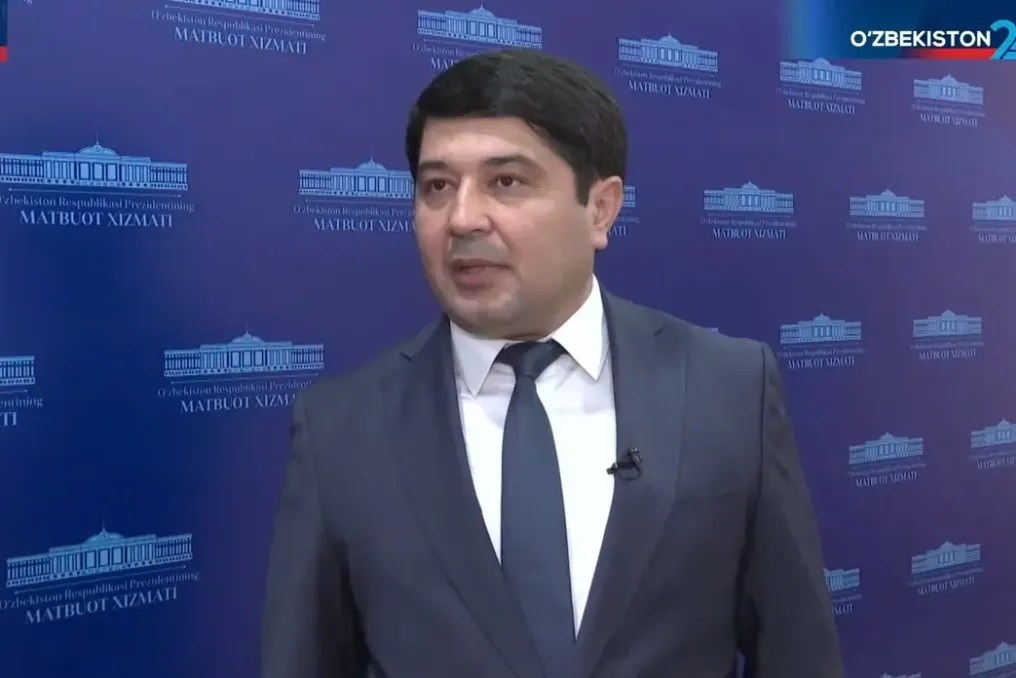
This proposal is based on an analysis of actual electricity consumption during the winter period, as well as existing social support measures. Deputy Minister of Economy and Finance Khurshid Mustafayev presented this initiative at a press conference on October 14 dedicated to planned tariff changes and household support during the autumn-winter period.

Mustafayev noted that two main aspects were taken into account when preparing the proposal. Firstly, the existing mechanism for assisting low-income families was considered. Under this scheme, the Social Protection Agency compensates eligible households for the difference between the basic and increased tariffs for an additional 150 kWh above the current norm of 200 kWh, allowing these families to pay the basic tariff for this extra volume.

Secondly, an analysis of winter electricity consumption in areas without gas connections was conducted. The data presented showed that about 60% of households in such zones consume up to 300 kWh per month in winter. Based on this analysis, the authorities proposed setting the basic norm at 350 kWh.

The Ministry of Economy and Finance reports that approximately 4 million households in Uzbekistan are not connected to gas networks and use alternative sources, including liquefied petroleum gas cylinders. In some other places, centralized gas supply is unreliable due to pressure drops or temporary supply interruptions observed during the heating season.

To identify such zones, the authorities analyzed gas supply data for households from December 2, 2025, to March 13, 2026. The proposed increased norm will apply not only in areas without gas connection but also where there are disruptions in natural gas supply.

A previous option of setting the norm at 500 kWh was discussed, but no separate estimates of potential budgetary expenditures for this level were provided at the press conference.

President Shavkat Mirziyoyev approved this proposal on October 6. The draft government resolution was published for public discussion on October 13. An analysis prepared by the authorities, covering the period from September 2025 to August 2026, showed that during the heating season, the share of consumers without gas supply using more than 200 kWh of electricity per month increases from approximately 25% to 39%. Meanwhile, the share of households consuming up to 200 kWh decreases from 74% to 61%; the share of those consuming from 201 to 350 kWh increases from 17% to 19%, and the share of consumers in the 351–500 kWh range grows from 5% to 9%, while the share of those consuming over 500 kWh increases from 3% to 10%.

The number of households connected to gas networks but experiencing difficulties in receiving gas also varies greatly depending on supply conditions. According to official data, during the period from December 2, 2025, to March 17, 2026, this number fluctuated from about 5,000 on some days to 607,000 on others.

The proposed increase will lead to a reduction in the tariff for monthly consumption in the range of 201 to 350 kWh from 900 soms to 650 soms per kWh, which is a decrease of almost 28%. The authorities predict that the new norm will cover about 80% of consumers in areas without gas connection. Over 1.5 million consumers could save a total of about 171 billion soms during the heating season, with the average savings estimated at approximately 27,500 soms per household per month.

For households consuming 250 kWh per month, bills will decrease by 12,500 soms; for consumption of 300 kWh, savings will reach 25,000 soms; and for consumption of 350 kWh, it will be 37,500 soms.

It is proposed that the increased norm comes into effect on November 1, 2026, for the heating season. In Karakalpakstan and Khorezm region, it will be valid from October to February, and in other regions—from November to February. Regional administrations will approve lists of households facing gas supply problems based on proposals from the Uzenergoinspection, Khududgazt'aminot, and Regional Electric Grids.

Furthermore, the authorities had previously proposed one-time payments of 1 million soms in November to over 1 million needy families. It is also planned to expand the criteria for receiving compensation covering electricity, gas, and coal expenses, as well as extend these payments.

Popular