Stelcore helps brands enter the global market without the need to build infrastructure from scratch
Read more
YourStory [india, en]
yourstory.com

Stelcore helps brands enter the global market without the need to build infrastructure from scratch

Entering international markets opens up new opportunities for brands, but behind every order lies a complex network of requirements: logistics, payments, product certification, customs regulations, and local compliance standards. Managing these numerous elements when expanding business across different countries can become a serious problem.

This is where Stelcore Group comes in. At the TechSparks 2026 event, founder and Chairman of the Board, Baharat Mandot, discussed how the company combines trade infrastructure, compliance, and technology to help brands navigate global markets.

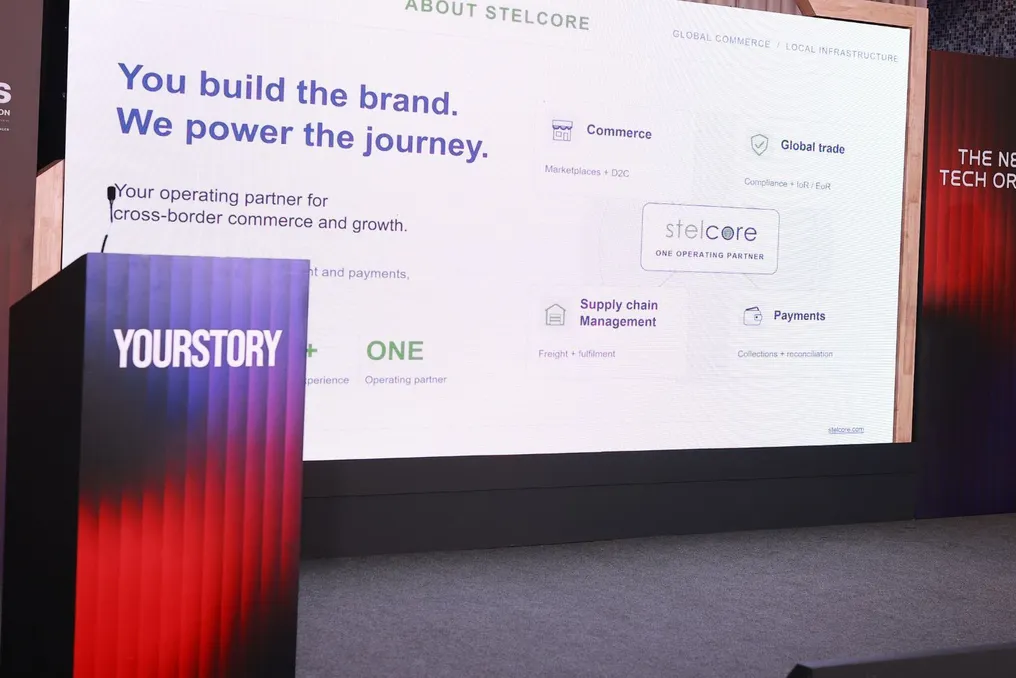
Mandot emphasized that Stelcore focuses on creating infrastructure for trade, regulatory compliance, and technologies designed for the global market. The company claims that over 14 years of operation, it has collaborated with more than 30,000 brands and sellers from India and has presences in over 14 countries, including the USA, Canada, the UK, Europe, the UAE, Singapore, Australia, and South Korea.

Instead of requiring brands to establish a separate legal entity in each target country, Stelcore takes on the functions of import, warehousing, payment processing, last-mile delivery, and returns. When an order comes through a marketplace or the brand's own e-commerce store (D2C), the system coordinates inventory distribution and delivery. A local Stelcore entity can act as the seller on paper and the importer, ensuring all applicable logistical and regulatory requirements are met.

Mandot described this model as a way to ensure a brand's international presence through a single operational partner, eliminating the need to restructure processes for every new market. Cross-border commerce involves not only moving goods between warehouses; brands must also comply with the target market's requirements regarding product registration, packaging, labeling, certification, and technical documentation.

Mandot demonstrated Stelcore's compliance assessment tool, which allows sellers to select a destination country and product category to determine the necessary tests, reports, import procedures, and certificates. He noted that using this tool is free, and sellers can assess the requirements for a product category in different countries in just 10–15 minutes.

The platform also serves as a centralized repository of product information, including HSN codes and other market-specific details. This helps brands respond quickly to inquiries from logistics companies and customs authorities, reducing the risk of cargo delays due to documentation issues.

Mandot distinguished between business compliance and product compliance. While companies can choose various cooperation models, such as working with a distributor or a local entity, product compliance remains mandatory regardless of the chosen business model.

Stelcore's technologies integrate order processing, warehouse capacity allocation, and last-mile delivery into a single interface. Brands can access this data via an Application Programming Interface (API) and build their own management systems around it. The platform also supports services such as taxpayer registration, VAT, customs procedures, intellectual property support, and payment reconciliation.

For brands entering unfamiliar markets, the main challenge is not just finding customers but creating the operational infrastructure for stable service. Stelcore's approach is to link these interconnected elements through a single operational partner, helping businesses expand internationally without having to assemble every component themselves.
Similar stories

Indian Global Competence Centers Transition to Developing Products for the Global Market
Read more
yourstory.com

Indian Global Competence Centers Transition to Developing Products for the Global Market

India has long served as a global hub for technology services; however, the country's growing engineering capabilities are opening new avenues for product creation, intellectual property (IP) formation, and taking responsibility for innovation. As multinational corporations expand their research and development (R&D) centers in India, Indian teams are moving beyond merely executing assigned tasks to solving complex problems and creating solutions for the global market.

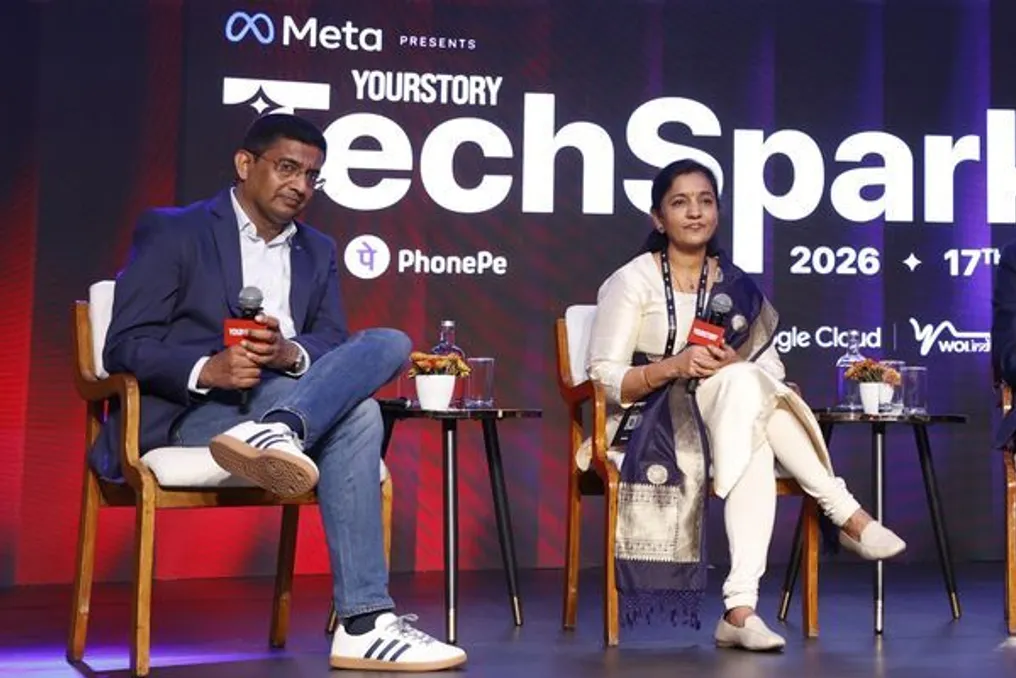
At the TechSparks 2026 event by YourStory, company leaders shared their vision of how India's Global Competence Centers (GCCs) can move up the value chain. The discussion covered the importance of product localization, building industry expertise, and developing problem-solving skills.

Kalavati G.V. noted that medical solutions cannot simply be transferred from one market to another, emphasizing: 'What works in the US does not work in India.' She explained that while medical technologies are global, healthcare must be local because solutions must account for differences in lifestyle, disease prevalence, accessibility, and level of medical care.

Previously, companies often adapted products designed for developed markets by removing features to align them with Indian needs. However, this approach failed to meet the diverse medical needs of the country, which span private hospitals, government institutions, and district clinics. Consequently, the company began collaborating with Indian clinics, hospitals, and clients to develop solutions that meet local requirements. 'We started co-creating some ideas with Indian clients,' she said.

An example of this approach is the C-arm visualization system, which was developed, designed, and manufactured in India to meet local needs. This product is now used in 40 other markets and has an installed base of 1400 units. Furthermore, Kalavati reported that the share of Siemens Healthineers software specialists based in India has reached about 50%.

For Lufthansa Systems, India's advanced engineering ecosystem and automation achievements offer opportunities to leverage existing capabilities within the Lufthansa Group. Although Lufthansa Systems recently commenced operations in India, the broader group already employs over a thousand people in the country. The CEO of the company in India, Luigi Chelmi, stated that they do not consider themselves lagging but see an opportunity to benefit from advancements in automation and established industry partnerships.

The expanding aviation and aerospace ecosystem in Bengaluru is also attracting attention. In a sector where reliability is critical, engineers must possess deep industry expertise and focus on change validation. Chelmi noted that engineers spend more time validating changes than creating them.

At Mercedes-Benz Research and Development India, the evolution lies in shifting from task execution to taking ownership of broader engineering challenges. While the vehicle remains a global product, Manu Sale indicated that the head unit—the digital interface inside the vehicle—offers opportunities for customization. Previously, India solved problems based on given instructions, but the focus has now shifted to asking questions: 'What is the problem? What is the big problem? Give me a clear statement, and I will try to solve it.'

Sale emphasized that this shift allows Indian teams to take responsibility for entire systems and subsystems instead of depending on daily directives from global headquarters. As engineers accumulate product knowledge and systemic expertise, they can engage with headquarters at a higher level and take charge of more complex tasks. He also stressed the need for India to move beyond traditional IT services and start creating products for both domestic and export markets, aiming not just to connect layers of technology but to develop expertise to own the entire stack.

These ambitions are reflected in the broader GCC ecosystem. Kalavati cited Nasscom data showing that 39% of GCCs in India are involved in product development, including product management, while about 9% act as transformation hubs. She concluded that 'we have reached a stage where, given the growth of the ecosystem, we can own complete products.'

Creating original IP also requires companies to start with a problem they want to solve, rather than a technology they want to implement. Kalavati advised organizations to rely on product experience, physicians, client relationships, and partnerships with hospitals and startups to develop solutions that address unmet needs. Sale agreed with this view, stressing that innovation begins when teams transition from service-oriented thinking to identifying problems and developing solutions.

Popular