Bank achieves temporary bankruptcy of trust due to unpaid debts and debt disputes
Read more
IOL
iol.co.za

Bank achieves temporary bankruptcy of trust due to unpaid debts and debt disputes

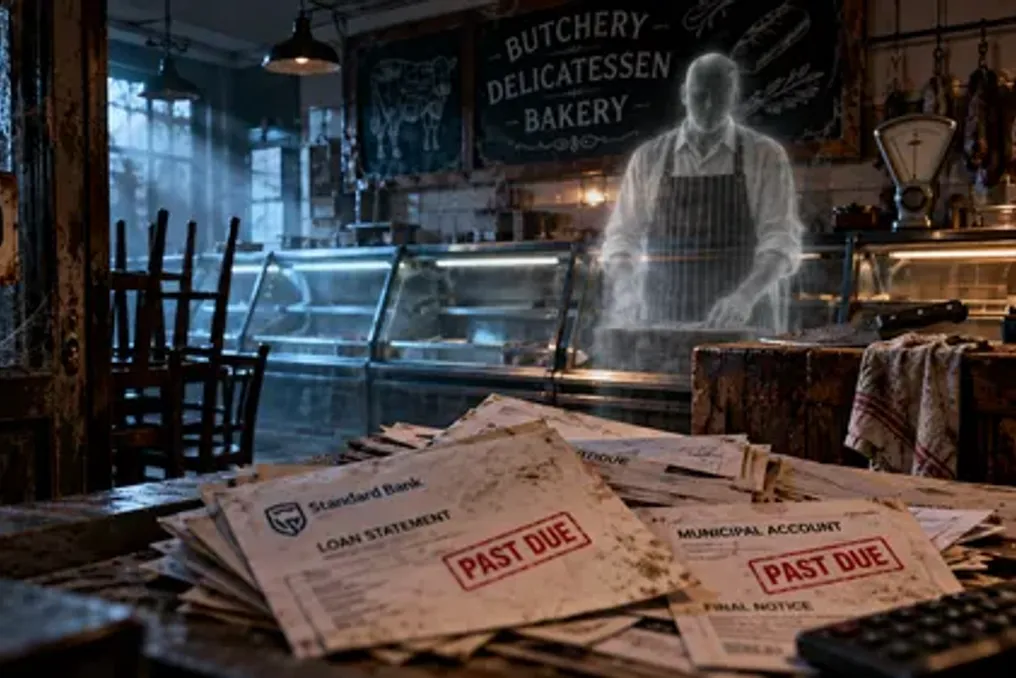
The business case has been closed, but the debt persists. The Durban-based trust, which previously owned a bakery, delicatessen, and butcher shop, faced the threat of sequestration after failing to repay a loan of several million rand issued by Standard Bank. The situation was worsened by the accumulation of unpaid municipal bills, and assurances that the problems were being resolved proved empty.

The High Court of KwaZulu-Natal ruled that the trust is unable to service its obligations, rejected attempts to dispute the bank's figures, and issued a preliminary sequestration order.

In December 2016, Standard Bank provided Continental Trust, the owner of the retail outlets, with a commercial loan of 9 million rand, secured by property in Durban. Monthly payments amounted to approximately 130,000 rand, and the interest rate was set at the base rate plus 1.8 percentage points.

The trust began falling behind on payments and failed to settle municipal accounts. By January 2021, the municipal account showed a debt of about 2.6 million rand, which the trust attributed to penalties for ownership changes made without approved building plans. The bank received assurances that this matter was at the highest level of resolution.

"Money is needed now"

In April 2023, trustee Hasan Khan sent an optimistic email to the bank stating: "GREAT NEWS! Urban planning approved the plan." However, a subsequent message was less encouraging: "Arrange the money for me now :)".

Nevertheless, Khan's messages did not reflect the reality. When the bank's lawyers independently requested the municipal account, it turned out that the debt had grown to approximately 5.2 million rand. Of this amount, about 4.9 million rand was overdue and required immediate payment.

Meanwhile, the trust's overdue payments on the bank loan reached approximately 270,000 rand by February 2023, and then increased to approximately 1.6 million rand by November 2024. After this, Standard Bank unsuccessfully demanded repayment of the remaining amount of about 6 million rand.

In June 2023, the trust's lawyers promised full repayment within four months, but this did not happen. By March 2025, Khan requested another six months, citing difficulties in many areas and construction plan issues that hindered dealings with tenants.

No money

After the trust failed to make the required payment, and the case went to court, Judge Mossop considered whether the March 2025 email constituted an act of insolvency. The Judge ruled that it was an admission of inability to pay under the Insolvency Act, which states that written notification to a creditor of the inability to repay debts constitutes an act of insolvency.

Mossop stated: "The conclusion, therefore, is inescapable: the Trust never paid at any stage because it could not pay." Nevertheless, the trust argued that its assets exceeded its liabilities. Khan valued the property at 25 million rand, and the bakery equipment at 500,000 rand, totaling 25.5 million rand. However, Khan could not explain how he obtained these figures and confirmed during the trial that he lacked expert valuation knowledge.

The bank's professional appraiser valued the property at 12 million rand upon forced sale and at 16 million rand on the open market. Mossop accepted these figures, and including the bakery equipment, the trust's assets amounted to a maximum of 12.5 million rand against claims of about 22 million rand.

Illogical

The trust also claimed that the bank's demand for payment and its balance statement contained contradictory information, suggesting that payments had not been reconciled and that the interest rate was "excessive." Mossop found that Khan was only comparing the principal amount in the statement with the total amount in the demand, ignoring the interest and accrued interest listed alongside it. The Judge noted that the difference between the two documents was explained by one word: time.

In Mossop's view, the alleged disputes were artificial and served as a tool to impede the filing of a lawsuit, rather than a genuine challenge to the debt. The court found a reasonable probability that creditors would benefit from sequestration, noting that a trustee in insolvent estate can sell property via private contract or tender instead of limiting themselves to an auction, which could potentially yield better returns.

The property is temporarily sequestered. Interested parties have until January 27, 2027, to justify why the order should not be final.
Similar stories

Business representative Darbin raises alarm over port crisis, cheap imports, and SME issues
Read more
iol.co.za

Business representative Darbin raises alarm over port crisis, cheap imports, and SME issues

Palesa Phili, CEO of the Darbin Chamber of Commerce and Industry, called for direct intervention from President Cyril Ramaphosa on three critical issues affecting the city's business environment: the port crisis, the influx of cheap imports, and obstacles for small and medium-sized enterprises (SMEs).

During her speech at the 170th anniversary of the Phili Chamber, she noted that despite the inflow of investment into the Southern Coast and Etkutwini, local industry is under serious pressure.

Cheap imports entering through Darbin

Phili emphasized that the city is at the forefront of receiving inexpensive imports and counterfeit goods into the country because Darbin is home to the largest port. She stated: 'When all these products arrive, it starts here, affecting our industry.'

She informed the President that the Chamber collaborates closely with the International Trade Commission (ITAC) and its commissioner Ayabonga Khwe, who has provided some assistance to the agricultural sector, but more measures are needed for other industries.

Phili called for the full utilization of existing legislation, including the International Trade Act No. 72 of 2002, to protect local production from unfair imports, as well as strengthening the fight against counterfeit and undervalued goods.

Port crisis: ships wait for days

The CEO described the situation at the Port of Darbin as extremely severe. She explained that although Transnet management had previously stabilized the port after a very difficult period, conditions have deteriorated again in recent months.

'We have lost ships that waited for days outside the port. There are producers who have had to shut down operations because they do not have raw materials waiting for days, sometimes over 10 days, to leave the port,' she said.

Phili also noted that importers face difficulties obtaining raw materials due to delays, and that private investors are ready to support Transnet. She appealed to the President to support the CEO of Transnet Group, Michelle Phillips, and her team to urgently resolve the port problems.

'We cannot afford to have a port in this condition. It sets us back by years,' she stated.

Call to review Transnet's debt of 150 billion rand

Phili pointed out that the main obstacle to Transnet's recovery is the burden of debt amounting to 150 billion rand, which dominates the company's management key performance indicators (KPIs). She asked the President to consider deferring or restructuring this debt with the National Treasury so that Michelle and her team can effectively work on fixing the ports' operations.

In the concluding part of her address, Phili addressed the low contribution of SMEs to employment in South Africa. According to Stats SA, in developing markets such as Brazil and China, SMEs provide about 80% of the workforce, whereas in South Africa, this figure is approximately 40%.

She listed barriers to SME growth, including electricity issues, infrastructure, high rental costs, access to finance, and labour market regulation, and asked the President to address these issues to create much-needed jobs.

South African Finance Minister Announces Financial Stabilization but Warns of Growth Challenges
Read more
iol.co.za

South African Finance Minister Announces Financial Stabilization but Warns of Growth Challenges

Despite South Africa achieving improvements in public finances, Finance Minister Enoch Godongwana warned on Wednesday that transitioning from fiscal stability to faster economic growth is a more complex task. This is because the deteriorating global situation threatens to undermine the achievements made.

Speaking at the mid-term budget policy statement in Parliament, Godongwana reported that the debt-to-GDP ratio is declining for the first time in nearly two decades. He stated that the debt-to-GDP ratio stabilized at 78.4% in 2025/26, which is the first occurrence in twenty years. Furthermore, the budget deficit is narrowing to 3.9% of GDP, which is better than the February forecast of 4%, and the primary surplus is increasing from 1.7% of GDP this year to almost 3% by 2030.

Godongwana noted that at the beginning of this year, all three major credit rating agencies announced positive actions on South Africa's rating. However, the global situation worsened since February. Acknowledging that 'growth remains too low,' he mentioned that the attack by Israel and the US on Iran led to the closure of the Strait of Hormuz, causing a rise in global prices for oil, food, and energy.

As a result, global growth is now estimated at 3.1% in 2026, compared to the January forecast of 3.3%. The Ministry of Finance has adjusted its domestic growth forecast to 1.2% for 2026, lowering it from 1.6% in February.

Reduction in Fuel Levies

The most immediate measure to respond to cost-of-living pressures was a temporary reduction in fuel levies. Godongwana announced that from the election day, November 4, the levy will be reduced by 3 cents per liter of diesel and by 1.50 cents per liter of petrol until December 1, with a smaller reduction following until January 5, 2027.

Financial costs amounting to 10 billion cents will be covered by returning funds previously transferred to the Central Energy Fund into the National Revenue Fund. The Minister also reported that gross tax revenue was revised upwards by 17.1 billion cents compared to the February estimate, driven by corporate tax, dividend tax, and VAT.

Godongwana cautioned that a significant part of the improvements reflects rising commodity prices and will not be permanent. In the medium term, an additional expenditure reduction of 38.1 billion cents has been identified, including 13 billion cents from reduced fraud in social grants. The fiscal anchor bill, presented for public consultation in October, requires each administration to set its own fiscal targets and report on them with every budget. This document is expected to be introduced in Parliament in 2027.

Preparation for Growth

Additional revenues allow for an increase in expenditure of 45.5 billion cents compared to February. The Infrastructure Financing and Implementation Agency supports projects with a potential investment value exceeding 217 billion cents, while the Transport Guarantee Mechanism has secured conditional commitments of $553 million from development partners and is planned to launch by 2027.

Regarding gender-based violence, 3.8 billion cents have been allocated to hire over 3,500 social workers, and courts for sexual offenses are expanding from 55 to 101. Consolidated government spending is growing by 3.6% annually, reaching 3 trillion cents by 2029/30, with capital investment being the fastest-growing item at an annual increase of 5.3%. Godongwana stated: 'If we maintain the course, growth could exceed 3% per year.'

Discussion on who bears the costs when municipal bills are unpaid in South Africa
Read more
iol.co.za

Discussion on who bears the costs when municipal bills are unpaid in South Africa

Taxpayer representatives and economists in South Africa are calling for greater transparency in debt collection, write-off procedures, and law enforcement by local authorities, as the question arises of who covers the costs when municipal bills remain unpaid.

The discussion centers on whether municipalities collect all due funds from residential, commercial, and government accounts, and whether an disproportionately heavy burden falls on businesses when other customers default.

Duncan Hifield, Deputy Chairperson and representative of the Umhlanga Ratepayers' and Residents' Association (URRA), noted that high rates on commercial property alone do not allow for determining the extent of cross-subsidization of the residential sector. Transparent data on billing, revenue collection, and recoverable debt across all client categories is necessary to ascertain who pays and where the income goes.

URRA's position is that businesses and honest residents should not automatically become a source of additional income whenever collections fall short. The municipality is obliged to disclose evidence showing who receives the bills, who makes the payments, and where the revenue loss occurs, stated Hifield.

He also emphasized that when comparing cities, one must consider full municipal accounts and the quality of services provided, rather than just the ratio of commercial to residential expenses, as true value is determined by valuations, discounts, tariffs, and supplementary charges.

Hifield added that it is impossible to responsibly claim equal enforcement or quantitatively assess its unevenness between three cities without comparable data on collection and enforcement. He clarified that having written policy is not proof of consistent implementation.

"Every municipality must separately publish collection figures, overdue debt, payment arrangements, write-offs, and enforcement outcomes for residential, commercial, and government accounts. Property tax debt must also be separated from debt for electricity, water, and other services," said Hifield. He explained that fairness requires transparent assistance to needy households, consistent action against defaulters, and reliable dispute resolution, rather than selective targeting of easier-to-find clients.

"Our central message is simple: Durban cannot build a stronger municipal revenue base while making life more difficult for businesses and limiting residents' ability to afford housing," he concluded. He added that protecting vital revenue requires a growing economy, reliable services, and fair collection. Businesses and residents share a common interest in a municipality that collects what is owed and demonstrates value for every rand spent.

Independent economist Ulrich Jobert noted that businesses effectively compensated for residential sector defaults because they faced immediate service disconnection if municipal bills were not settled. He questioned whether city administrative bodies, especially in Durban and Johannesburg, maintain up-to-date systems and issue accurate bills across all areas, compared to Cape Town, where stronger administration might lead to reduced cross-subsidization.

Jobert also pointed out that councils face low returns on infrastructure investment in historically neglected settlements compared to other areas. He also highlighted how anti-payment rhetoric before 1994 shaped attitudes towards paying taxes and fees, which persists to this day. At the same time, he noted that many services, including electricity and water, are provided in settlements, while poorer segments of the population receive them for free.

"But these funds come from somewhere. So, in any case, there is a lot of subsidization," commented Jobert.

Chief Economist of Efficient Group, Douwe Rudd, stated that local authorities would largely not exist without business. He explained that they cannot exist for several reasons: businesses employ people, pay taxes, and pay more taxes than individuals. Without their employment and tax contributions, local authorities will cease to function. Business is critical.

Rudd noted that when starting a business, rates and taxes increase, whereas they should decrease to stimulate economic growth, employment, and tax revenue. He stressed that local municipalities, being the primary point of contact for essential services, influence business far more than the Ministry of Finance. If the local government fails, the entire economy collapses.

"This is perhaps our biggest challenge in South Africa, concerning various bodies, namely collapsing local authorities. If businesses pay taxes, they expect the local authority to provide certain services. And as we know, this is not happening," said Rudd.

Popular