Transport Minister Barbara Creecy reported that the problematic container terminal Durban Pier 2 will face a prolonged recovery after the latest congestion, which will last for months. She expects new equipment to arrive in December, and a gradual improvement in the situation is forecast until February of next year.
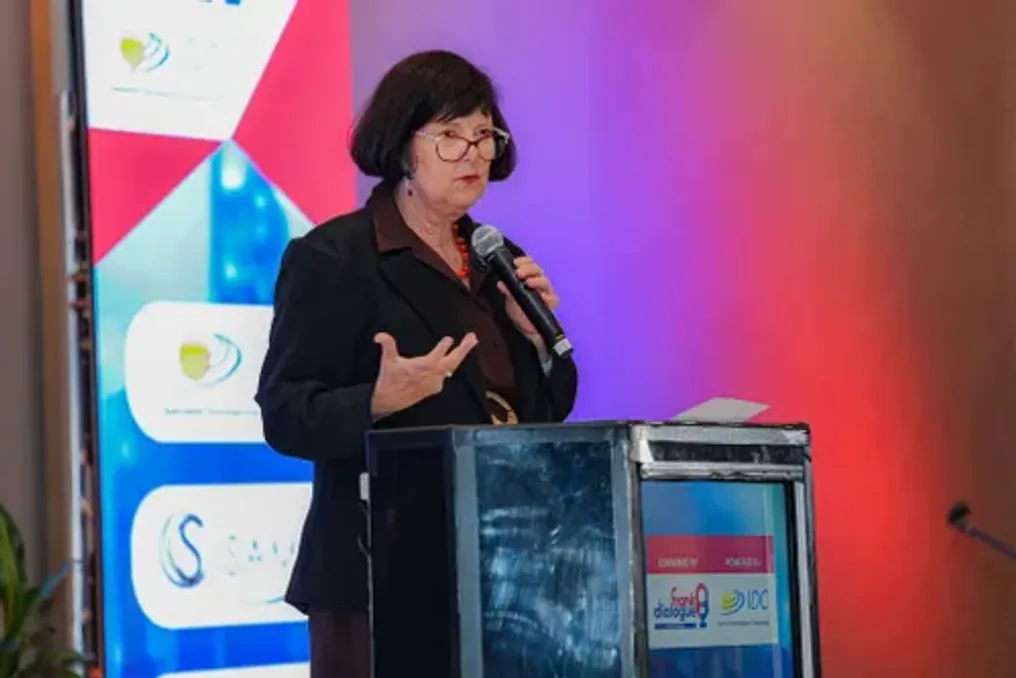
During her address at the South African transport industry Frankofsky Dialogue in uMhlangi yesterday, Creecy stated that during her flight to the city on Wednesday, she counted 39 vessels near Durban, compared to 32 vessels during her previous visit.
“When I landed… I had a heart attack because I was counting the ships,” she shared with the delegates.
Creecy immediately contacted the Group Transnet Chief Operating Officer Solly Letsoalo, who provided information on which terminals were being used by the vessels. Eight of them were linked to the Durban Gateway Terminal (DGT), a privately managed facility at Pier 2.
She warned that not all vessels off the coast should be attributed to the problems of this terminal. The disruption at DGT began after the transition to the Navis N4 computer system in August, which affected cargo movement, truck booking, and vessel operations. Despite attempts to restore normal operations, delays persist, forcing importers, exporters, and carriers to incur additional costs.
Creecy acknowledged that while the private operator controls daily operations at Pier 2, Transnet remains a partner. She noted that the system change was poorly timed, which created the congestion that will require time to resolve.
She mentioned visiting the facility, as did the Chairman of the Transnet board, while the group's CEO and COO inspected it on Wednesday. The operator is taking steps to increase productivity, but additional equipment is required.
“The point is that we brought in these partners because the entire port needs capital repairs. Everything requires new equipment,” Creecy stated. She expected that the incoming equipment would help restore productivity during December, January, and February, rather than providing an immediate turnaround.
“So I cannot promise an instant solution, but I can say that we are satisfied with the appropriate steps being taken to solve the problem,” she added.
Pier 2, which handles about 46% of South Africa's container volumes according to Transnet data, is managed by DGT since January under a 25-year partnership between Transnet and the Philippines-based company International Container Terminal Services Inc (ICTSI). Transnet retains a controlling stake, while ICTSI manages daily operations.
During the inspection of Durban Gateway Terminal on October 2, Creecy reported that vessels waited an average of 8.3 days, whereas the target was 24 hours. Following this, officials presented plans for implementing a new truck booking system, increasing rail transport, and changes in container yard operations. These measures were announced before the fourth dialogue.
Overcrowding is also felt outside the port. Truckers complain about long waits at gates and on adjacent roads, intensifying pressure on routes used for moving containers between Durban and Gauteng.
On Tuesday, trucks stood in kilometer-long queues outside the harbour during severe thunderstorms in Durban, although the cause of the congestion had not yet been determined.
The Truckers Association of South Africa warned that prolonged delays put small transport companies in financial difficulty, forcing operators to incur extra costs for fuel, driver overtime, and standing charges.
Letsoalo reported that Transnet has tasked work on an intermodal freight system along the Johannesburg-Durban corridor, studying how Transnet's railway lines and land can connect ports, inland terminals, and facilities where goods are transferred between trucks and trains. The work will also consider opportunities for private investment in these freight facilities.
Letsoalo did not specify timelines for the proposed intermodal system's commissioning. He insisted that existing lines have sufficient capacity for a larger volume of cargo, including what is currently transported by road. According to him, the national network could theoretically carry 250 million tons per year, compared to almost 170 million tons moved last year.
“The problem is that its quality is very low. It has not been maintained,” Letsoalo noted. He described stolen copper cables, damaged electrical infrastructure, and manual signaling, which can delay trains on the Durban-Gauteng route. He argued that repairing these systems is more urgent than building new tracks.
Letsoalo stated that the deterioration of freight railways has contributed to the increase in road traffic on the N2 and N3. “We must transport most of our raw materials by rail,” he added, noting that more containers should be transported by train to reduce congestion. Trucks will continue to play a role, especially over short distances.
Creecy assured that Transnet will continue to demand results from the terminal operator. “We will monitor them until the situation changes,” she concluded.