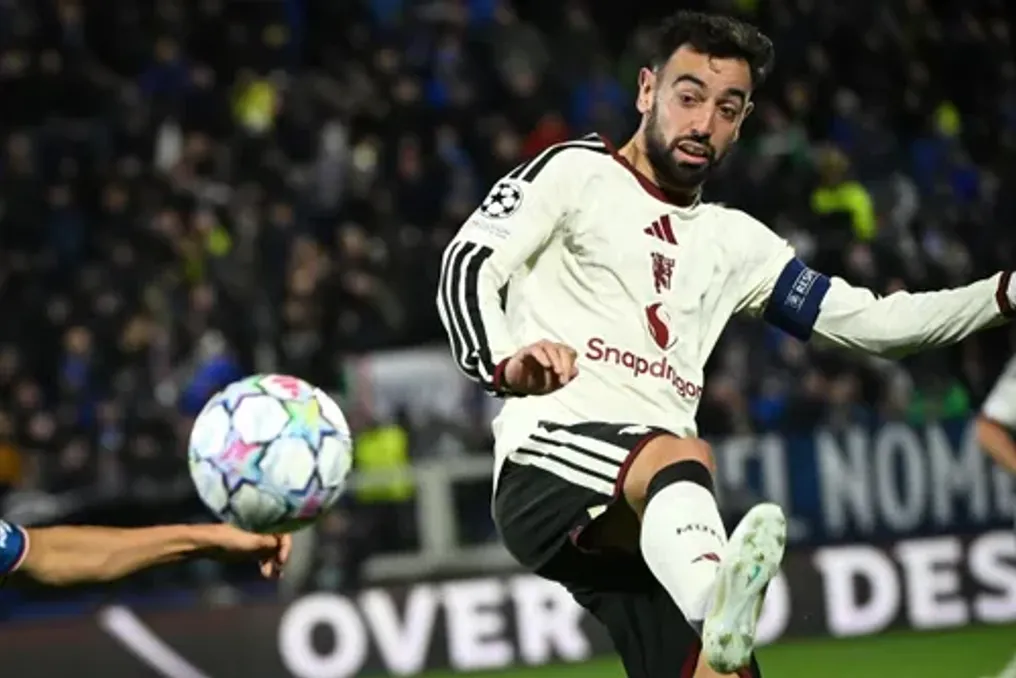
Michael Carrick's agreement with Bruno Fernandes puts him in a vulnerable position
Read more
IOL
iol.co.za

Michael Carrick's agreement with Bruno Fernandes puts him in a vulnerable position

In modern elite football, a handshake without apologies is regarded not as a diplomatic gesture, but as a polite capitulation. When reports surfaced this week that Michael Carrick and Bruno Fernandes had 'reconciled' after the captain openly disagreed with the coach's tactical plan, public relations specialists at Old Trafford surely felt a sense of relief.

The initial version of events was supposed to look flawless, mature, and reassuring: two passionate footballers clashed, resolved their differences, and moved forward for the common good of a club that has won only one league match this season and is dangerously close to the relegation zone.

However, anyone familiar with the subtleties of modern football PR can spot an obvious gap in the foundation of this truce. In an era of hyper-controlled corporate media operations, genuine remorse never remains hidden. If Fernandes had offered an unconditional, unambiguous apology behind closed doors, the back pages of newspapers would not have needed to speculate.

Friendly briefings would have instantly appeared in all national publications before match reports had even dried, reassuring the public that the Portuguese playmaker expressed deep regret and confirmed his coach's absolute authority. Instead, we received a classic set of institutional maneuvers: 'constructive dialogue,' 'frank conversations,' and mutual agreement to move on.

This deafening silence in PR says a lot. It shows that Fernandes never backed down, and Carrick was forced to accept it. What is worse, Carrick allowed this player to publicly question his plan without any tangible consequences.

This soft compromise should be contrasted with how truly serious, system-oriented organizations handle insubordination in the dressing room. When Pierre-Emerick Aubameyang violated the cultural protocol at Arsenal, Mikel Arteta sent his captain away, stripped him of his armband, and showed him out of the Emirates Stadium. When João Cancelo allowed his tactical frustrations to manifest in negative non-verbal communication at Manchester City, Pep Guardiola sent him to Bavaria for the rest of the week.

At Brighton, Fabian Hürzeler demands unconditional acceptance of the collective opinion, and at Aston Villa, Unai Emery's microscopic positional demands are absolutely non-negotiable.

At Old Trafford, the star dictates the terms because the club fears the consequences if it dares to bench him. The humiliating defeat last weekend against Bournemouth with Fernandes on the bench only strengthened his position. This is a direct consequence of the incident with Lisandro Martínez in Madrid. When a central defender feels bold enough to criticize Technical Director Jason Wilcox live, and a club captain can openly challenge his head coach's tactical intelligence without a hint of regret, decay ceases to be structural—it becomes terminal.

This exposes a dressing room that knows hierarchy is completely powerless. Michael Carrick may believe he extinguished a dangerous fire before the next crucial weekend when United plays Chelsea away in the league. In reality, he has only confirmed his status as a hostage to the dressing room leaders. As is known, Sir Alex Ferguson ruled by one unshakeable principle: once a player becomes more important than the coach, the club is doomed. Carrick's unstable truce with Bruno Fernandes proves that at Manchester United, player power remains the only undisputed authority in the building.
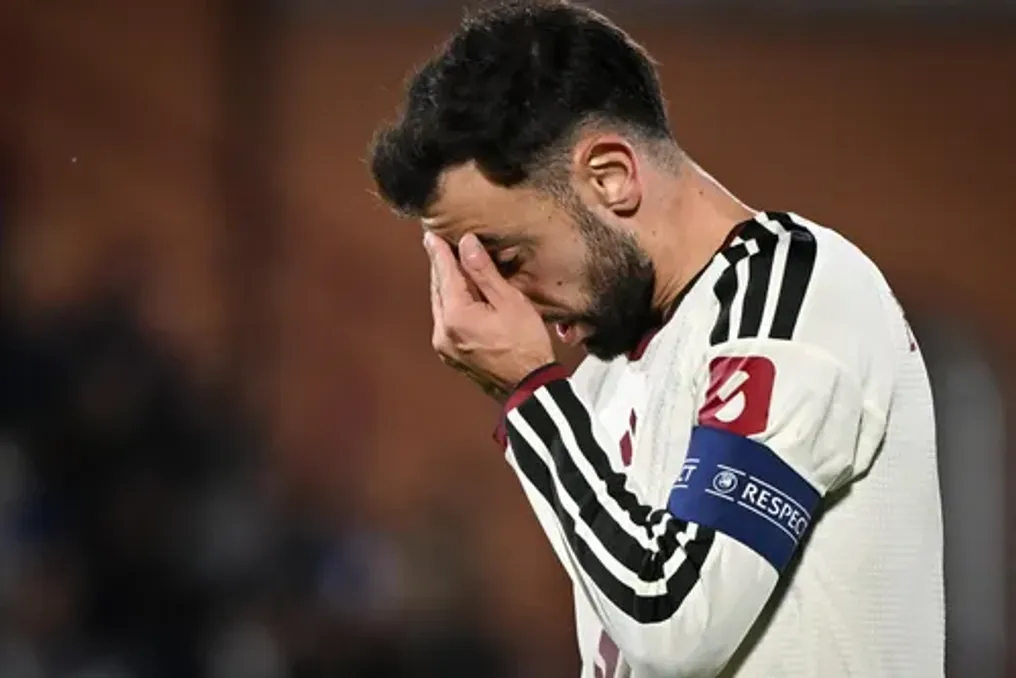
Similar stories

Risks for coaches who leave iconic club players on the bench
Read more
iol.co.za

Risks for coaches who leave iconic club players on the bench

Michael Carrick's decision to leave Bruno Fernandes on the bench before Manchester United's home 3-0 defeat to Bournemouth has once again raised one of European football's long-standing dilemmas.

After Fernandes publicly criticized Carrick's tactical instructions regarding retreating instead of high pressing during United's heavy 4-1 away loss to Como in the Champions League, Carrick decided to keep his captain on the bench against Bournemouth. This move turned into a disaster: United suffered a passive defeat, and Fernandes remained an unused substitute as the coach opted for academy players.

Having suffered such a crushing defeat without his playmaker, Carrick undermined his authority and left the board of directors with a familiar choice: sack the coach or retain the indispensable star asset.

Nevertheless, history shows that turning tactical disagreement into an existential conflict rarely saves a struggling manager. From Ruud Gullit and José Mourinho to the rare institutional authority of Sir Alex Ferguson and Galáctico's rebellion against Rafa Benítez—coaches who challenge established superstars almost always fail.

The Story of Ruud Gullit vs. Alan Shearer

A cautionary tale that set this modern precedent occurred in August 1999 at St James' Park. Newcastle coach Ruud Gullit, seeking to implement a flexible tactical vision, grew tired of the dominant influence of Alan Shearer in the dressing room.

During the Tyne-Wear derby in the rain against Sunderland, Gullit made the bold decision to leave Shearer and attacking partner Duncan Ferguson on the bench in favor of newcomer Paul Robinson. Newcastle missed their advantage and lost 2-1.

When Gullit provocatively stated after the match that the team looked sharper without Shearer, the Tyneside management and fans reacted furiously. Having lost all leverage, Gullit resigned three days later, thereby cementing Shearer's untouchable status.

Sir Alex Ferguson's Situation Against David Beckham

A historical exception confirming the general rule took place at Old Trafford in 2003. Convinced that David Beckham's growing celebrity status was deteriorating his defensive concentration, Sir Alex's anger erupted after the FA Cup defeat to Arsenal, leading to the player receiving a cut above his eyebrow from a flying boot in the dressing room.

Several months later, Ferguson dared to leave Beckham on the bench in a crucial Champions League quarter-final against Real Madrid. Unlike fragile managers, Ferguson had the support of institutions and 17 years of trophies. Even after Beckham scored twice from the bench, Ferguson sanctioned his sale to Madrid that summer, proving that a coach with full board support is more important than any superstar.

Andre Villas-Boas' Conflict with the Chelsea Core

Chelsea demonstrated a masterclass in dressing room resistance in 2012 when thirty-three-year-old Andre Villas-Boas attempted to replace the club's battle-hardened core squad. Accused of modernizing the team, Villas-Boas distanced Frank Lampard, John Terry, and Ashley Cole due to inflexible tactical demands and remote team management.

As his position in the national championship sharply deteriorated, AVB benched Lampard, Cole, and Michael Essien before an important away trip to Napoli in the Champions League quarter-finals, where the team suffered a humiliating 3-1 defeat. By staking his authority and sidelining veterans, Villas-Boas was fired two weeks later. After Roberto Di Matteo was appointed interim manager, the same veterans famously came together to win Chelsea's first Champions League title.

José Mourinho vs. Paul Pogba Rivalry

Mourinho's toxic final chapter at Old Trafford illustrated the immense financial power of the modern star player. The 2018-2019 season turned into an exhausting conflict between Mourinho and Paul Pogba, a record £89 million signing, over positional freedom and defensive discipline.

After publicly stripping Pogba of his vice-captaincy, Mourinho played his last match at Anfield, leaving the French World Cup winner unused on the bench during United's humiliating 3-1 defeat to Liverpool. Instead of boosting the team, this display proved that Mourinho had lost the dressing room's support. United's board sacked him within 48 hours, immediately reinstating Pogba as midfield organizer.

Rafa Benítez vs. Cristiano Ronaldo

In Spain, Benítez discovered the dangers of Galáctico's micromanagement attempts. Arriving at Real Madrid in 2015, Benítez soon alienated Cristiano Ronaldo and Sergio Ramos due to rigid tactical structures and meticulous training drills, famously offering unsolicited advice on shooting to the Portuguese icon.

Reports suggest Ronaldo told club president Florentino Pérez that Madrid would achieve nothing under Benítez. Internal discord flared in November when the divided Madrid team suffered a humiliating 4-0 home defeat to Barcelona in El Clásico. Pérez sacked Benítez seven months into his tenure, appointing Zinedine Zidane, who quickly solidified Ronaldo's and Ramos' positions, allowing them to win three consecutive Champions League titles.

Popular