Chinese efforts to conserve biodiversity demonstrate how nature can be protected outside officially designated reserves by utilizing cooperation between local communities, researchers, businesses, and government bodies, noted a Chinese environmental specialist at a UN event.
At a thematic event titled 'Strategies and Actions of Multilateral Stakeholders for Biodiversity Conservation,' held at the Chinese Pavilion during the 17th meeting of the Convention on Biological Diversity (COP17) in the Armenian capital of Yerevan, a successful example of such efforts was presented—work in the wetland area of Weitou Bay in China.
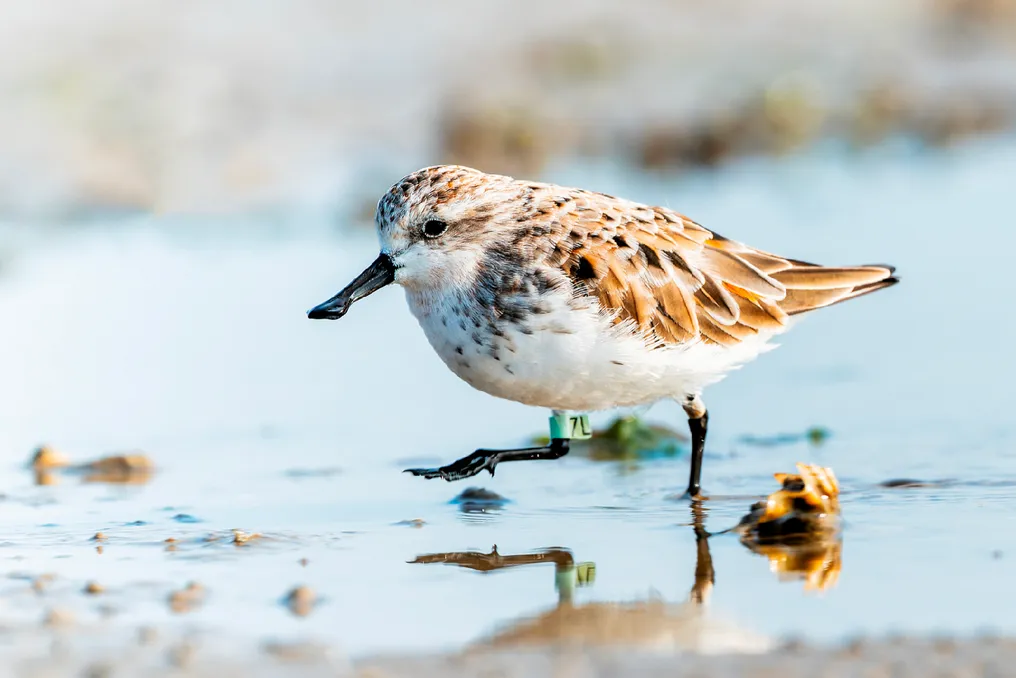
Yan Baohua, Secretary-General of the Marine Conservation Foundation of China (MCF), reported that over the last three winters, more than 1% of the estimated global population of spoon-billed sandpipers overwintered in the Weitou Bay wetland in Quanzhou, Fujian Province, southeastern China. Notably, this wetland area is not a protected zone.
The spoon-billed sandpiper breeds in the Russian Far East and migrates thousands of kilometers along the East Asian-Australasian Flyway, relying on coastal stops and wintering grounds. However, according to Yan's research, only about 15% of the projected suitable tidal habitats for this species are located within protected areas.
MCF and Beijing Forestry University initiated a project to conserve the spoon-billed sandpiper in 2018. Yan noted that surveys conducted in southern China from 2019 to 2026 discovered additional wintering sites, many of which are located outside protected zones, highlighting the need to expand conservation efforts beyond the existing network of protected areas.
In the Weitou Bay wetland, conservation work was long primarily carried out by local volunteers engaged in birdwatching. In March 2025, MCF partnered with local birdwatching groups and government agencies to establish a protection station to better coordinate conservation efforts. Bird enthusiast groups now conduct regular monitoring and patrolling, while local prosecutors contribute to habitat protection through public interest litigation. Local residents are also working to create their own patrol groups.
Another example of public participation is found in Sunnyan Bay in Jinzhou, Guangxi Zhuang Autonomous Region in southern China, where community fishermen outside the nature reserve help protect sea urchins accidentally caught in fishing nets. With support from this network, local residents established a rescue and release group in 2021 to return accidentally caught sea urchins to the sea.
Song reported that reports of declining sea urchin numbers in local fishermen's nets prompted her team and scientists to survey the area. They found that Sunnyan Bay is a habitat for adult and sub-adult sea urchins, while spawning and juvenile areas are further east, near the mouth of the Dafeng River, indicating a need to extend conservation measures beyond the bay itself.
Biodiversity conservation efforts also extend to urban spaces. At the Hongshan Zoo in Nanjing, Jiangsu Province, eastern China, according to the zoo's Director of Sustainability, Wei Ye, nearly 700 species of local wildlife have been recorded, including about 130 bird species.
An artificial lake, once lined with hardened banks, underwent ecological restoration, creating more natural shorelines and improving the connection between the water surface and the riparian vegetation. Wei stated that the zoo saw the birth of Chinese waterfalls at the restored lake this year.
These examples illustrate China's commitment to exploring other effective nature-based conservation measures (OECM) that complement protected areas. These OECMs contribute to achieving Target 3 of the Kunming-Montreal Global Biodiversity Framework 2022—effectively conserving at least 30% of the world's terrestrial, inland water, coastal, and marine areas by 2030.
Madhu Rao, Chair of the IUCN World Commission on Protected Areas, stated that this target cannot be achieved solely through protected areas. She noted: 'One of the major advantages of OECMs is that they allow us to recognize nature management by non-state actors, as well demonstrated by the example from China.'
The thematic event was organized by the All-China Federation of Environmental Protection and the China Environmental Protection Fund.