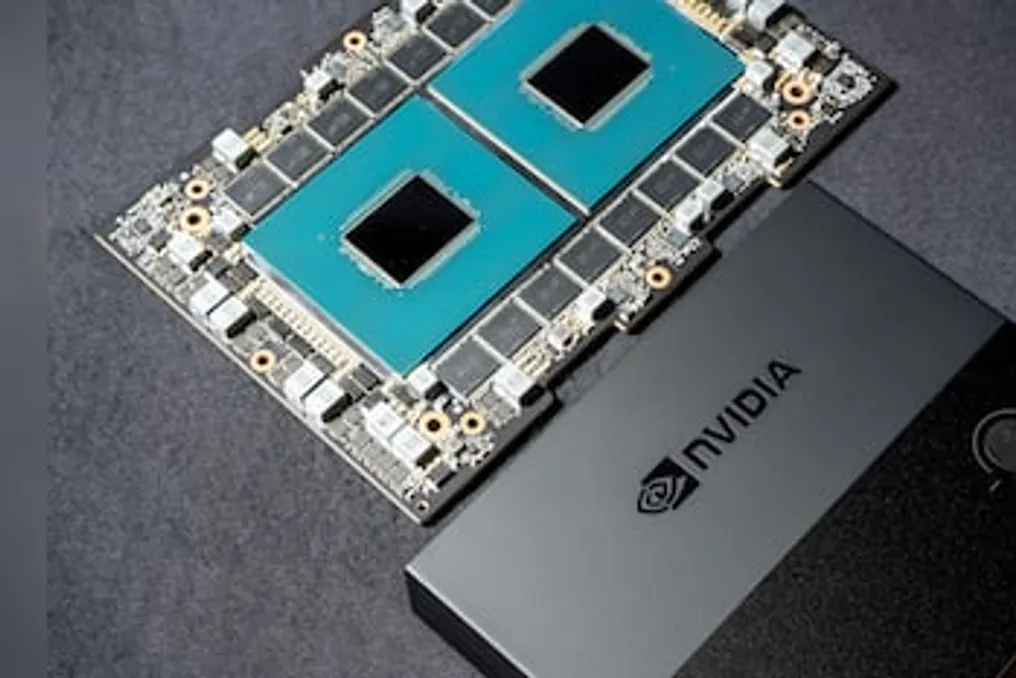
AI company AM Intelligence raises $3 billion in funding for Nvidia chip order
Read more
Business Standard
business-standard.com

AI company AM Intelligence raises $3 billion in funding for Nvidia chip order

The Indian artificial intelligence infrastructure company AM Intelligence plans to raise up to $3 billion to finance its previously announced purchase of next-generation chips from Nvidia Corp. According to sources familiar with the situation, this is another sign that the technology boom is stimulating an increase in debt burden.

The financial package for the company, founded by founders of renewable energy producer Greenko Group Plc, may include bonds and bank loans, among other instruments, according to anonymous sources discussing the private details of the deal. Details on the distribution across various options are still being clarified, and the company also expects to receive $300 million as an advance payment from potential buyers. The parties note that negotiations are in the early stages, and terms may change.

A representative of AM Intelligence declined to comment on the situation, and Nvidia did not respond to requests for comment.

The planned deal demonstrates how the race for funding AI infrastructure construction in Asia and other regions is leading to increasingly complex financial structures. These structures combine traditional bank lending with private capital and upfront commitments from clients as developers strive to secure billions of dollars for the latest processors.

Globally, the debt associated with the AI boom has led to a flooding of markets with over $650 billion in debt in less than two years, according to data collected by Bloomberg.

In August, AM Intelligence announced that it had placed an order for Vera Rubin chips as part of a project worth over $8 billion. The company aims to be one of the first users of the advanced computing platform in Asia. This project is part of a broader plan to create 1 gigawatt of computing power. Its facility in Hyderabad is intended to run trillion-parameter AI models and next-generation agentic AI applications.

According to a KPMG report published in July, by the 2035 fiscal year, the Indian data center value chain could see an estimated investment opportunity of $90 billion, covering not only capacity expansion but also related infrastructure and services.
Similar stories

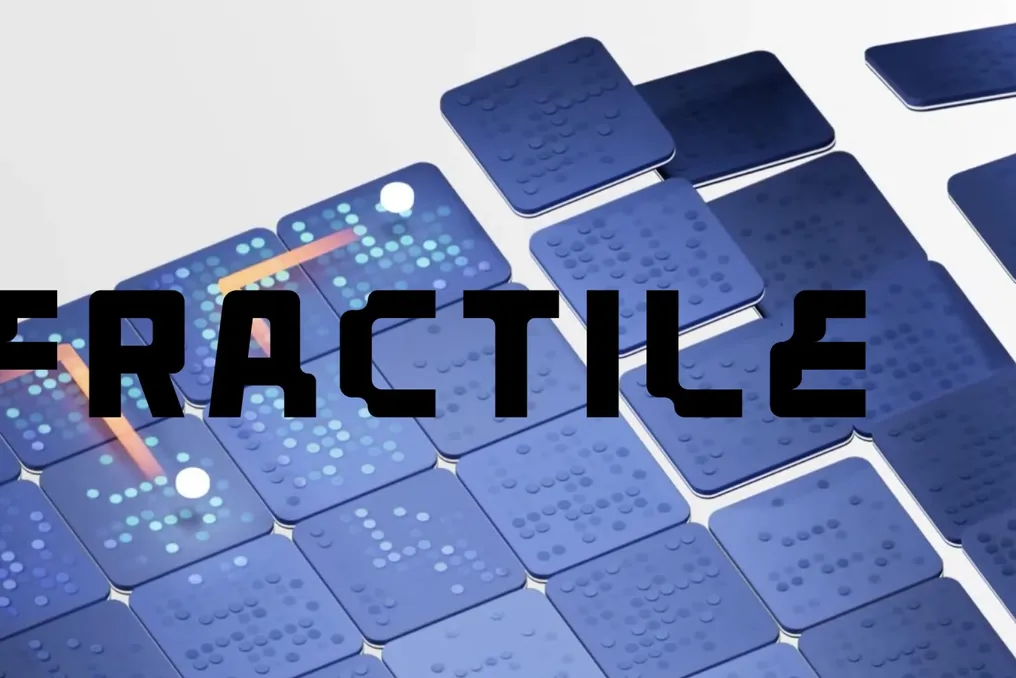
Fractile raises £577 million to challenge NVIDIA's monopoly on AI chips
Read more
ventureburn.com

Fractile raises £577 million to challenge NVIDIA's monopoly on AI chips

Despite market reactions to the massive expenditures in artificial intelligence, investments in AI hardware continue to grow. In a Series C round, the British chip manufacturer Fractile raised £577 million, causing significant resonance in the European tech scene.

Fractile's latest funding round is aimed at challenging NVIDIA's absolute dominance in the semiconductor sector. Attracting such a large amount of capital in such a short period demonstrates the huge investor demand for AI infrastructure. These funds will be used to actively expand the company's engineering centers in London and Bristol, where leading robotics and silicon design specialists are being hired.

For end-users, this means that the bottleneck in AI computing power may begin to ease. Increased competition, in turn, contributes to lower costs for running advanced AI systems, which will positively affect software accessibility and the improvement of consumer tools.

Fractile is not just opposing NVIDIA; the company is using a completely different technical approach. While NVIDIA built its empire based on Graphics Processing Units (GPUs), Fractile is developing AI inference chips based on Static Random-Access Memory (SRAM). This is highly significant because the inference phase requires fast and massive computations. SRAM provides extremely fast data access, significantly reducing the time taken to generate AI responses.

Instead of competing where NVIDIA already dominates, Fractile aims to change the principles of AI memory operation. Success in this area could lead to AI energy efficiency and speed surpassing current market standards.

Raising over half a billion pounds is only possible with serious buyers, and Fractile has secured a major initial supply agreement with Anthropic, the research lab behind Claude. This serves as strong endorsement, as Anthropic is essentially betting that Fractile's architecture will surpass the industry standard by 2027, when the chips enter data centers.

This partnership confirms the viability of the European chip market, showing that major AI labs are actively seeking alternatives to the NVIDIA monopoly, needing efficiently scalable hardware. Although NVIDIA maintains significant influence in the market, Fractile's large Series C round proves that the industry is tired of depending on a single supplier. This is a major sign of confidence in British deep technology, demonstrating that European startups can compete at the highest global level with sufficient capital, radical engineering solutions, and strategic partners.

New Indian manufacturers could benefit from the $3 trillion global AI investment cycle
Read more
yourstory.com

New Indian manufacturers could benefit from the $3 trillion global AI investment cycle

According to a report by Avendus Capital, India's modern manufacturing sector is poised to gain significant benefits from the global artificial intelligence infrastructure investment cycle, which is estimated at $3 trillion.

The investment bank identified sectors such as aerospace and defense, space technology, robotics and automation, semiconductors, energy transition and advanced materials as those that will drive the next phase of India's industrial growth, opening opportunities for local companies.

The report emphasizes that the period of 2027–2028 is critical for commercialization, as companies transition from receiving policy support and project approvals to actual production.

This potential is driven by increased global investments in AI infrastructure, growing demand for energy infrastructure, and intensifying geopolitical security concerns. India's domestic demand, engineering talent, and regulatory framework can help manufacturers reduce import dependence and form globally competitive opportunities.

Koushik Bhattacharya, Managing Director and Head of Industrial Investment Banking at Avendus Capital, noted that 'the opportunity for modern manufacturing in India is substantial, but its right to win lies in specific segments.'

He added that since more than 80% of the $3 trillion in AI infrastructure investments have not yet been distributed globally, India has a chance to leverage its domestic demand base, engineering capabilities, and policy support.

Among the segments showing significant growth potential are semiconductors and space technology. Semiconductor consumption in India is projected to more than double: from $49.5 billion in 2025 to $106.5 billion by 2030, creating opportunities in chip design, packaging, testing, and specialized materials.

India's space economy is expected to grow more than threefold—from approximately $13 billion in 2025 to $44 billion by 2033. Domestic defense production should reach about $31.6 billion by 2030, while the robotics market could increase almost fourfold, reaching $4.6 billion by 2030, due to wider adoption and import substitution.

Furthermore, the report forecasts a further advancement of the clean energy manufacturing ecosystem in India up the supply chain over the next five years. By the end of the decade, the country could establish an integrated solar energy production chain, covering everything from ingots to modules, as well as gigawatt-hour scale battery cell factories and commercial production of domestic electrolyzer stacks and rare-earth-free motors.

Advanced materials represent another emerging opportunity; growing domestic demand and strong import dependency create room to build local capacity. Recycling is expected to expand first, followed by battery materials, and the production of rare-earth magnets may advance with policy support.

In conclusion, the report notes that the coming years will test India's ability to transform these opportunities into commercially viable manufacturing capacities.

Itaú acquires Minas Gerais AI startup NeoSpace AI for R$ 2.925 billion
Read more
g1.globo.com

Itaú acquires Minas Gerais AI startup NeoSpace AI for R$ 2.925 billion

Itaú Unibanco announced on Monday, the 26th, the acquisition of NeoSpace AI, a company from Uberlândia, located in the Triângulo Mineiro region. The deal involved a value of R$ 2.925 billion for the startup, which specializes in creating foundational artificial intelligence models.

NeoSpace AI had already maintained a collaboration with the financial institution for almost two years. During this partnership period, the technology developed by the startup was applied in various areas of the bank, such as credit analysis, fraud prevention mechanisms, and improving customer relationships.

For the transaction to be finalized, Itaú informed that it still requires approval from both the Administrative Council for Economic Defense (Cade) and the Central Bank of Brazil (BC).

With this purchase, the bank now possesses an internal structure dedicated to developing sophisticated artificial intelligence models specifically focused on the financial sector. Itaú highlighted that this will enable the creation of more customized solutions, which consider the moment and context of each client when assisting in their financial decisions, always maintaining rigorous care for security, privacy, and responsible data use.

Furthermore, the operation strengthens the innovation ecosystem of the city of Uberlândia. According to data collected by UberHub, the startup community of Uberlândia, the city's technology companies have generated about R$ 13 billion in investments, acquisitions, and added value over the last eight years. With the inclusion of NeoSpace AI, this total value approaches R$ 16 billion.

According to Itaú, NeoSpace is dedicated to developing foundational artificial intelligence, which focuses on identifying complex patterns and relationships in large volumes of data. This specialization allows the startup to create models tailored to the specific characteristics of different market segments.

The bank detailed that the development of these models expands the options for personalizing banking services, offering solutions capable of addressing different financial situations and needs throughout the customer relationship, respecting the principles of security, privacy, and ethical data use.

Additionally, Itaú emphasized that the integration of the startup represents a natural progression of a partnership that already showed good results and which now gains the conditions to boost new projects in the field of artificial intelligence.

It is important to note that, even after the acquisition, NeoSpace AI will maintain its operations autonomously. The company will remain under the management of CEO Bruno Pierobon, preserving its team and the research culture established since its founding.

Popular