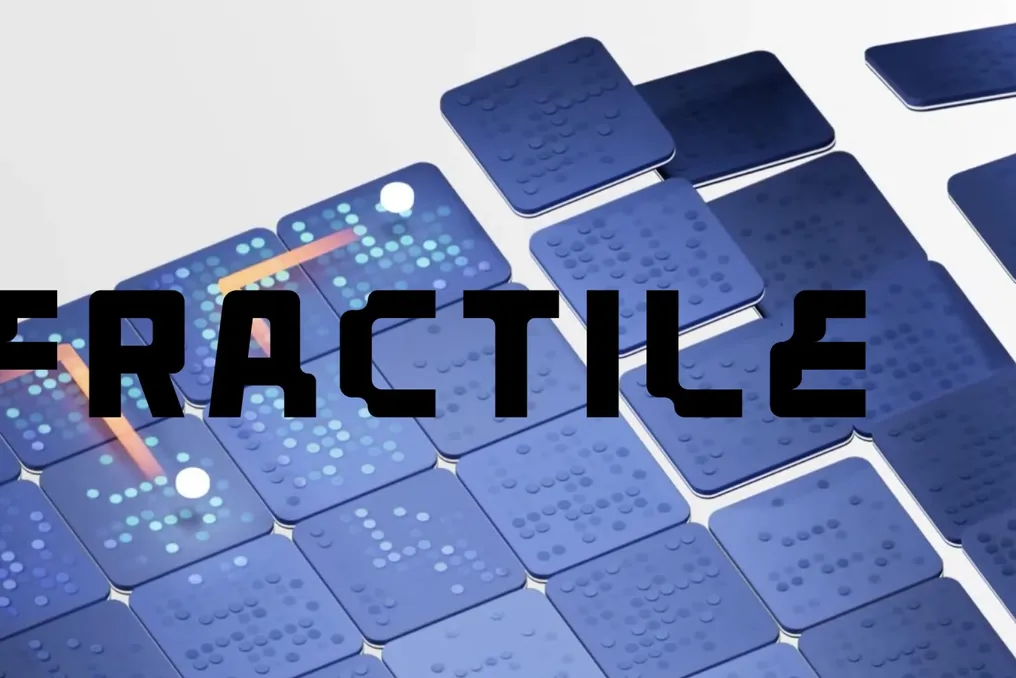
Despite market reactions to the massive expenditures in artificial intelligence, investments in AI hardware continue to grow. In a Series C round, the British chip manufacturer Fractile raised £577 million, causing significant resonance in the European tech scene.
Fractile's latest funding round is aimed at challenging NVIDIA's absolute dominance in the semiconductor sector. Attracting such a large amount of capital in such a short period demonstrates the huge investor demand for AI infrastructure. These funds will be used to actively expand the company's engineering centers in London and Bristol, where leading robotics and silicon design specialists are being hired.
For end-users, this means that the bottleneck in AI computing power may begin to ease. Increased competition, in turn, contributes to lower costs for running advanced AI systems, which will positively affect software accessibility and the improvement of consumer tools.
Fractile is not just opposing NVIDIA; the company is using a completely different technical approach. While NVIDIA built its empire based on Graphics Processing Units (GPUs), Fractile is developing AI inference chips based on Static Random-Access Memory (SRAM). This is highly significant because the inference phase requires fast and massive computations. SRAM provides extremely fast data access, significantly reducing the time taken to generate AI responses.
Instead of competing where NVIDIA already dominates, Fractile aims to change the principles of AI memory operation. Success in this area could lead to AI energy efficiency and speed surpassing current market standards.
Raising over half a billion pounds is only possible with serious buyers, and Fractile has secured a major initial supply agreement with Anthropic, the research lab behind Claude. This serves as strong endorsement, as Anthropic is essentially betting that Fractile's architecture will surpass the industry standard by 2027, when the chips enter data centers.
This partnership confirms the viability of the European chip market, showing that major AI labs are actively seeking alternatives to the NVIDIA monopoly, needing efficiently scalable hardware. Although NVIDIA maintains significant influence in the market, Fractile's large Series C round proves that the industry is tired of depending on a single supplier. This is a major sign of confidence in British deep technology, demonstrating that European startups can compete at the highest global level with sufficient capital, radical engineering solutions, and strategic partners.