
NASA is concerned about Martian dust, which is 500 times finer than a hair strand
Read more
Olhar Digital
olhardigital.com.br

NASA is concerned about Martian dust, which is 500 times finer than a hair strand

The Perseverance rover, operated by NASA, identified dust particles on the surface of Mars with dimensions of approximately 100 nanometers, making them about 500 times finer than a human hair. This finding raises concerns about the risks this material poses to the health of future astronauts and to the preservation of habitats and spacesuits during crewed missions to the planet.

The detection was made using the PIXL instrument, which analyzed particles accumulated on the rover's equipment and in samples of transported materials. In addition to the ultrafine 100-nanometer particles, the instrument also detected particles with a diameter smaller than 2.5 micrometers.

Such minuscule particles have the ability to penetrate deep into the lungs and reach the bloodstream, potentially causing damage to vital organs. However, according to Scott VanBommel, a planetary scientist at the University of Washington in St. Louis and lead author of the study published in the Proceedings of the National Academy of Sciences, the level of risk is directly linked to the quantity and duration of exposure.

The chemical composition of the Martian dust is also a point of concern, as it contains silica, iron compounds, and chlorine compounds, such as perchlorate, substances that can be harmful in high concentrations.

To investigate how the dust adheres to potential materials for spacesuits, Perseverance carries samples of two types of material: the synthetic fiber Vectran and a protective Teflon coating, both measuring about 20 millimeters on a side. The results of these tests indicated different behaviors; VanBommel emphasized that the tests did not show damage caused by the dust to these materials, suggesting that the observed variations may stem from the physical-electrostatic characteristics of each, affecting particle adhesion.

Additionally, the dust has the potential to deteriorate habitat and spacesuit materials over time. The data collected by the rover are crucial for guiding the selection of appropriate materials and for developing efficient cleaning procedures capable of removing particles smaller than one micrometer.

NASA already has knowledge about the effects of dust on space missions, dating back to the Apollo lunar landings between 1969 and 1972. On the Moon, the material caused wear on the outer layers of suits, damaged seals, and scratched visors, and could also contribute to symptoms similar to hay fever in some astronauts. Lunar dust is primarily formed by surface impacts and remains angular and sharp due to the absence of an atmosphere or wind to wear it down. In contrast, on Mars, the biggest concerns lie in the chemical composition and the reduced size of the particles.

With NASA planning to send astronauts to the Red Planet as early as the 2030s, VanBommel stated that the findings will serve as a basis for guiding the planning of life support systems, the selection of materials for suits and habitats, and the creation of protocols to manage toxicological risks. The researcher concluded that such findings will aid in designing future human support systems for Martian missions, covering material selection and the establishment of effective cleaning methods for sub-micrometer particles.

Similar stories

Samsung unveils new foldable phone Samsung W27 with 200MP camera
Read more
www.aajtak.in

Samsung unveils new foldable phone Samsung W27 with 200MP camera

Samsung recently released a series of foldable smartphones, including the Samsung Galaxy Z Fold 8, Fold 8 Ultra, and Flip 8. The company has now introduced the Samsung W27 model in the Chinese market. The Samsung W27 will be sold alongside other foldable variants in China.

According to media reports, the Samsung W27 was developed based on the Samsung Galaxy Z Fold 8 Ultra. Furthermore, the company has decided not to release any additional variants for the Samsung Galaxy Z Fold 8 and Flip 8 for now.

A few days before the announcement of the Samsung W27, known leaks from tipster Evan Blass and Ice Universe were published in image form.

The Samsung W27 smartphone is equipped with a 6.5-inch external display and an 8-inch internal display. It features a 5000 mAh battery and uses the Snapdragon 8 Elite Gen 5 chipset.

The main camera of the Samsung W27 has a resolution of 200 MP and also includes a secondary camera and a 50 MP ultra-wide-angle lens. Additionally, a 10-megapixel telephoto lens is installed. A 10 MP camera is provided for selfies on both the external and internal displays.

The weight of the Samsung W27 is 215 grams. The device's design is original; it is presented in red and blue panel colors with gold accents. A free protective magnetic case and a 45W charger are also provided upon purchase.

The Samsung W27 is available in various memory configurations. The starting price in China is set at 18,999 Chinese yuan, which is approximately equivalent to 2,71,356 rupees. It should be noted that the starting price of the Samsung Galaxy Z Fold 8 Ultra in India is 1,99,999 rupees. While the Indian version offers 12 GB of RAM, the Chinese version is equipped with 16 GB of RAM.

Shopflo claims D2C brands do not need their own AI team for growth and discovery
Read more
yourstory.com

Shopflo claims D2C brands do not need their own AI team for growth and discovery

Shopflo stated that Direct-to-Consumer (D2C) brands do not need to build an in-house artificial intelligence specialist team to achieve growth and increase brand awareness.

As consumers increasingly turn to AI-powered assistants like ChatGPT and Claude to compare products, search for options, and make purchasing decisions, D2C brands face a new question: how to remain visible amid changing consumer behavior without hiring a staff of AI specialists?

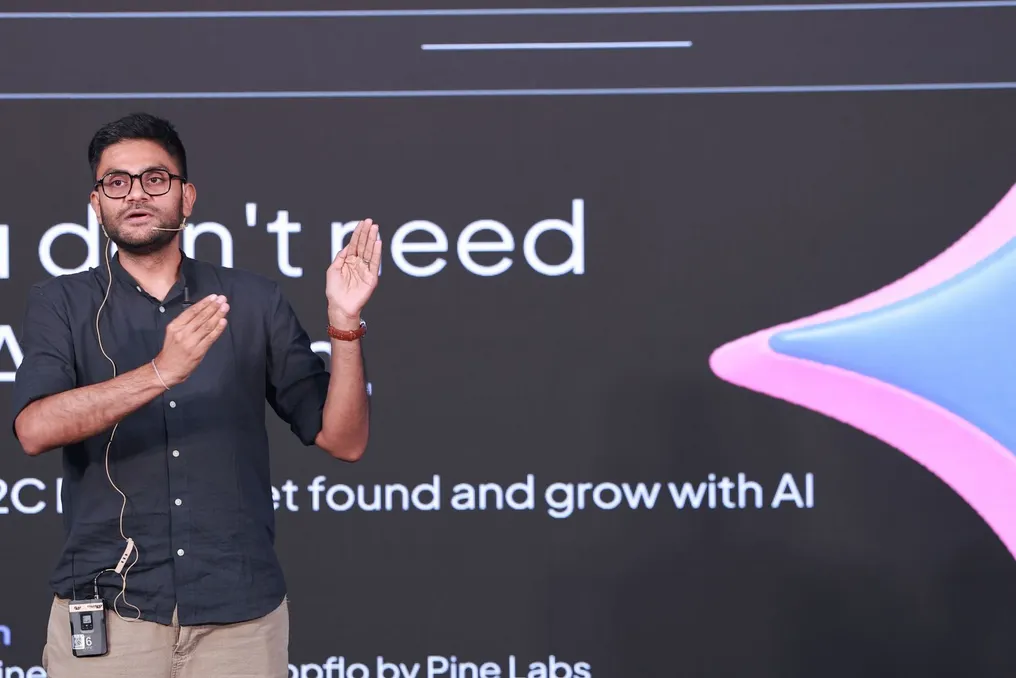
At the TechSparks 2026 event, Mihir Shah, Director of Business Development at Shopflo by Pine Labs, presented two areas where the company helps brands solve this problem: agentic commerce, which connects product catalogs with AI-based search and purchase surfaces, and AI agents that help improve operational efficiency and business growth.

Shah emphasized: 'You don't need an AI team to figure out growth or efficiency issues. You need Shopflo.'

Previously, brands spent years increasing their visibility through social media, search engines, and marketplaces. Now, AI assistants add another discovery channel, allowing customers to describe their needs and receive relevant product recommendations.

According to Shah, Shopflo's agentic commerce offering makes participating brands' catalogs accessible on platforms originally built for AI, including ChatGPT and Claude, as well as on other new interfaces. Through integrations, the company feeds product catalog information to these platforms, enabling customers to find desired items and proceed to checkout with system support.

For example, a customer looking for festive gifts under 2000 rupees can find items from a participating brand via an AI assistant. Shopflo's integration with Pine Labs' payment infrastructure is designed to support transactions within these scenarios.

Shah noted that as consumer behavior evolves, brands must look beyond traditional discovery channels. However, he clarified that AI visibility does not replace Search Engine Optimization (SEO), which continues to drive traffic to websites.

Discovery is only one part of D2C business operations. According to Shah, brands also have to balance metrics such as conversion rate, average order value, return rate, customer retention, and profitability, often using separate tools for each function.

Shopflo's Growth Orchestrator system, presented in beta, aims to unify these solutions. Brands can define their priorities—whether it is striving for growth or protecting profitability—and receive recommendations based on their store's performance data.

During the demonstration, Shah showed how the system could detect a drop in conversion between address entry and payment, suggest placing a banner about commission transparency, and propose an experiment to test whether this change would improve conversion. Brands have the option to review these recommendations, set constraints, and approve experiments before scaling them. They can also decide the degree of autonomy to grant to the agents.

Shah concluded: 'How much or how little to use agents is up to you.' For D2C enterprises with small teams, this means less about implementing every new AI tool and more about simplifying the management of existing growth solutions. The Shopflo approach combines AI-driven discovery with tools that help brands achieve their own business goals, leaving the final decisions to them.

Tencent's WorkBuddy adds remote control feature to monitor AI tasks from mobile devices
Read more
technode.com

Tencent's WorkBuddy adds remote control feature to monitor AI tasks from mobile devices

Tencent's artificial intelligence agent platform, WorkBuddy, has released a remote control feature supported by the Tencent Edge One team. This new capability allows users to connect to a computer logged into the same account using a mobile application. Users can view the desktop in real-time and intervene in operations if necessary.

Unlike traditional remote desktop tools, which primarily focus on device-to-device access, the WorkBuddy feature is specifically designed for AI agent workflows. Users gain the ability to monitor the agent's actions in real time and intervene if tasks deviate from course or require manual confirmation.

To use this feature, the mobile application must be updated to version 2.7.0 or later, as well as the macOS desktop client to version 5.9.3 or higher. After connecting, the computer screen is displayed in a pop-up window on the app's home page or at the top of the dialogue, allowing monitoring of the agent without leaving the current chat.

If an agent encounters an issue while performing a task, users can intervene directly from their phones. For example, if an account is not authorized or the connector authorization has expired, users can attempt to resolve the issue on mobile devices instead of returning to their computers.

For manual control, users can press the full-screen mode button, which switches the phone interface to landscape orientation and activates the ability to control the desktop via touch input. The interface provides three options: Control, Keyboard, and Mouse, which support actions such as switching windows, returning to the desktop, and text input. A virtual mouse is also available for more precise clicking and scrolling in small areas of the screen.

Regarding security, Tencent states that the feature limits each device to one authenticated mobile device simultaneously. Screen data and control commands are transmitted over an encrypted channel. The platform does not record user input or store video recordings of remote control sessions. Network traffic generated by remote control is deducted from the device's data usage and does not consume WorkBuddy AI agent token quota.

To get started, users need to enable the remote connection option for devices logged into the same account in WorkBuddy settings, install the necessary remote control component, and grant screen recording and accessibility permissions. Once configured, users can connect remotely while the computer remains powered on and WorkBuddy is online.

In practice, this feature helps solve a common problem in AI agent workflows—the need for human intervention during task execution. AI agents are already capable of performing multi-step tasks, such as document organization and data collection, but they can still encounter authorization requirements, permission requests, or operational errors. Remote control gives users the ability to monitor progress and make adjustments from their phones without being tied to their desks.

However, this feature may offer more than just a way to control computers from a phone. It could potentially introduce a more flexible model of human-AI collaboration, where AI handles routine work, and users intervene to make decisions and correct errors at critical moments. Rather than striving for completely autonomous execution at all costs, maintaining human oversight might be a more practical approach for AI productivity tools at the current stage of development.

Nevertheless, a smartphone cannot fully replicate the computer experience. Remote access may be convenient for simple tasks, such as approving permissions or switching windows, but its effectiveness in more complex workflows involving data processing and multiple windows remains to be seen. The feature is currently available for trial use by all users. Tencent reports that future versions will include more enterprise-oriented capabilities, including role-based permission management and audit logs.

Popular