The Tropical Forest Forever Facility (TFFF) is celebrating its first anniversary since its presentation at the COP30 climate summit in Belém, Brazil. The initial idea was to create an investment fund of $125 billion USD to incentivize countries to reduce deforestation, as many cannot afford such protective measures.
However, one year after the initiative's launch, the fund is still significantly behind its planned fundraising goals. Over 65 countries have supported TFFF, but only eight have made actual contributions, totaling $7.8 billion USD. The latest of these contributions was a $500 million donation from the Netherlands.
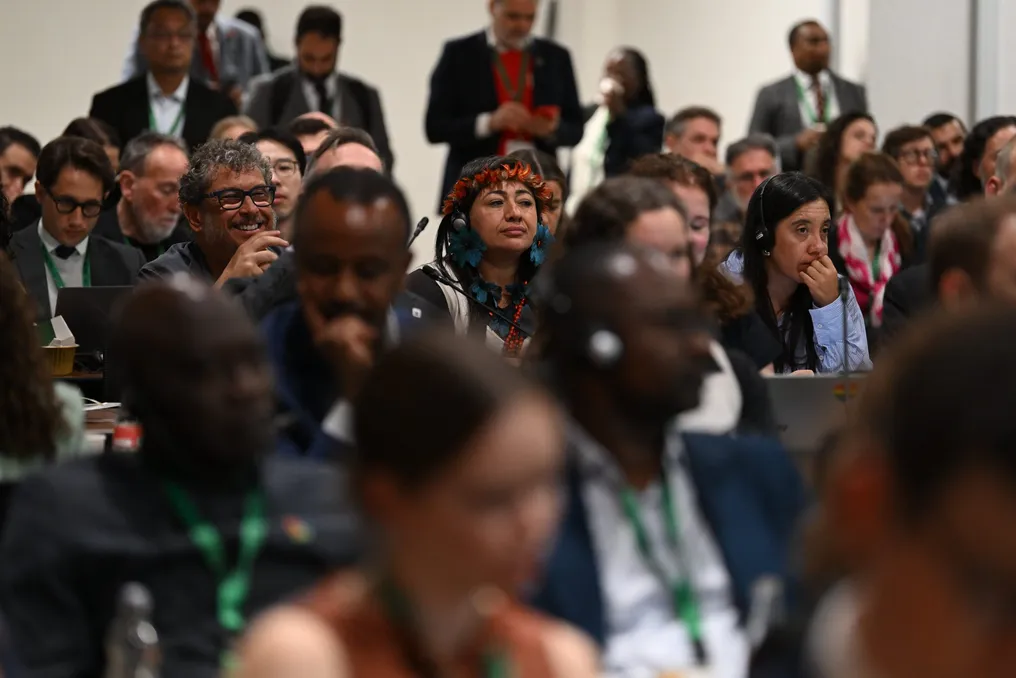
Despite the financial deficit, there is a festive atmosphere among the fund's supporters. At the TFFF event during the UN Biodiversity Conference (COP17) in Armenia, about 200 people gathered, including ministers, UN representatives, and indigenous peoples. Participants welcomed the re-election of Brazilian President Luiz Inácio Lula da Silva, believing that his victory eliminated the immediate political threat to the Amazon rainforest posed by his ultra-right-wing opponent, Flavio Bolsonaro. They also felt this signaled continuity for TFFF.
The fund aims to attract $10 billion by the end of the current year, with Norway's $3 billion pledge contingent on achieving this goal. Mauricio Voivodick, Executive Director of WWF-Brazil, emphasized the need for adaptation: 'We must acknowledge vulnerabilities and things that can be improved, making adjustments along the way. Otherwise, we risk losing many years.'
TFFF's governance structure is already established: a temporary charter and board have been created, and the World Bank serves as the trustee and host. The fund is expected to become operational in 2027, but the first payments are not planned until 2028. Meanwhile, negotiations continue on various rules governing TFFF, including monitoring and penalties for forest degradation, the fund's investment areas, and the distribution mechanism for indigenous communities.
Mauricio Voivodick, Executive Director of the environmental NGO WWF-Brazil, noted that the fund was launched 'without full security.' He added: 'We must acknowledge vulnerabilities and things that can be improved, making adjustments along the way. Otherwise, we risk losing many years. TFFF has real potential to change the game.'
Tropical forests are critical for biodiversity and the water cycle. Only the Amazon, Congo, and Borneo basins contain about 78% of the world's remaining tropical forests, yet they face a financial deficit. According to the UN Environment Programme, countries with tropical forests will require annual investments of $67 billion by 2030: $33 billion for reforestation, $18 billion for agroforestry, and $16 billion for conservation.
TFFF was created to fill this gap. Unlike traditional nature conservation financing, which relies mainly on grants, the fund aims to generate income from financial markets over many years. Thorben Giefsen, a climate policy consultant from Rainforest Foundation Norway, stated that the fund is designed to operate parallel to other mechanisms and will pay countries for conserving standing forests, which is a new and extremely necessary concept in forest finance.
Governments and philanthropic groups will provide long-term loans totaling $25 billion, repayable over decades. Private investors can add $100 billion by purchasing bonds issued by the fund, which offer fixed returns. The total amount of $125 billion will be invested in other fixed-income assets, such as corporate and sovereign bonds in emerging markets. If these investments yield more than the fund owes in interest, the surplus will be paid annually to tropical forest countries, and this surplus is expected to amount to billions of dollars.
However, countries only receive payments if the return remains above the fund's own costs. Any deficit covering these costs will be covered by funds borrowed from governments. Under the scheme, relevant tropical forest countries will receive up to $4 per year for every hectare of standing forest (measured by satellite), with at least 20% directed to indigenous peoples and local communities. Conversely, payments will decrease as deforestation and forest degradation increase.
The fund will operate through two interconnected structures. The Tropical Forest Investment Fund (TFIF), based in Luxembourg, will manage investments, while TFFF will oversee reporting and payment distribution. Currently, the secretariat is housed at the World Bank.
Countries that have already contributed include Brazil, Indonesia, Norway, Germany, France, Luxembourg, the United Kingdom, and the Netherlands. Other countries may join in the coming weeks. At the TFFF event during COP17, the fund's co-chairs expressed confidence in reaching the $10 billion target by the end of this year. Sources told Dialogue Earth that South Korea, Canada, and Japan might be next.
Anita de Horde, Executive Director of Finance for Biodiversity Foundation, anticipates private investor participation once the structure is fully ready. This year, 34 financial institutions and organizations signed letters of support, including Allianz Global Investors and Deutsche Bank, although these are not investment commitments.
De Horde told Dialogue Earth at COP17: 'What makes it unique is the combination of scale and impact with financial returns. Institutional investors manage money on behalf of clients, pension holders, and asset owners, so they need a return. That is why it has been so well received.'
Despite the apparent simplicity of the concept, the success of the scheme will depend on the rules that are still being refined. Within the design, an annual payment of $4 per hectare of standing forest runs parallel to a penalty deduction for every hectare of lost forest. This deduction offsets the payment for 100 hectares of standing forest, meaning the penalty is $400 per hectare. Felix Finkbeiner, founder of the NGO Plant-for-the-Planet, told Dialogue Earth at COP17: 'No one will stop deforestation for four dollars, but others will stop because of the penalty deduction. The incentive is the money they don't receive.'
The penalty doubles for losses exceeding the annual deforestation rate of 0.3%. This mechanism can only reduce the amount a country receives, but it will not result in the country having to pay. Voivodick acknowledged that the payment cannot compete with profits from cattle ranching or soy, but he also noted that the total amount a country could receive would still be 'something that cannot be ignored.'
WWF has conducted calculations and prepared briefings to show tropical countries what they could receive. For example, Suriname could receive an estimated $42–46 million annually if the fund reaches the full $125 billion. This is comparable to the approximately $2 million annually it currently receives in bilateral biodiversity aid. Voivodick stated: 'Once countries start receiving this, there will be such strong pressure to avoid and reduce deforestation.'
With such a large sum of money at stake, the method of measuring forest loss will be vital. In the current structure, the fund only penalizes degradation caused by fires. Finkbeiner explained that 'fire-induced degradation is easier to control than other forms,' adding that it accounts for only about a third of all forest losses. Ignoring other causes 'is a bad incentive for countries.'
Voivodick agrees but said there is no global methodology reliable enough for immediate use. Waiting for it will take years. It is important to get everything right now, as most future board decisions will require a qualified majority of two-thirds votes. Donors and tropical forest countries will have equal representation. Finkbeiner warned that changing the deforestation measurement method in the future will create winners and losers: 'You may get a majority in most cases, but it will be difficult.'
Therefore, Plant-for-the-Planet proposed that the scientific advisory council should have the ability to propose new measurement methods. The council could veto them but would not be obliged to approve them, allowing the method to be implemented without needing a vote. The current charter covers only the preparatory phase and must be updated before the fund comes into force, when such a change could be formalized.
The fund's investment criteria are also under development. Finkbeiner noted that general principles have been established: no funds should be invested in activities leading to deforestation or mining. However, he added that 'details matter greatly.'
De Horde reported that investors insist on guarantees beyond deforestation. They demand social and environmental due diligence applied to the entire company from which the fund buys bonds, not just the project for which the money is paid: 'They are united with the NGO world.'
Valentina Figueroa Martínez, coordinator of the gender justice and forests campaign for Global Forest Coalition, is skeptical. She told Dialogue Earth: 'It is unclear whether extractive companies will be excluded from the portfolio. At the same time, you are funding a miner in the Congo by paying four dollars per hectare of standing forest. This is contradictory. It is unsustainable.'
The 20% guarantee for indigenous peoples and local communities is one of the fund's most welcomed features. The fund has identified two pathways: national accounts controlled by community committees or, by agreement of the countries, payments through a global agency. Finkbeiner noted that the fund's respect for national sovereignty makes sense, but oversight is necessary: 'We do not want governments to use TFFF money to favor their favorite communities and exclude others.'
Indigenous organizations, including the Global Alliance of Territorial Communities, helped develop the fund, but as Figueroa Martínez points out, their role is only advisory. It is assumed that communities should have a say in how their share is spent, but their representatives do not have a vote on the board. At the meeting during London Climate Week in September, Brazil's vice minister for indigenous affairs, Marcos Kaingang, stated that consultations on management and payment expenditure criteria are underway.
Political disagreements will inevitably continue to pose obstacles to TFFF's operation over time. The re-election of President Lula in Brazil has temporarily reduced much of this concern, although Voivodick believes the fund was created precisely for this type of government that does not support it: 'If we have an environmentally hostile government, it is even more important to have TFFF. We need a strong, reliable financial mechanism to curb deforestation, even if there is no political will.'
[ ]