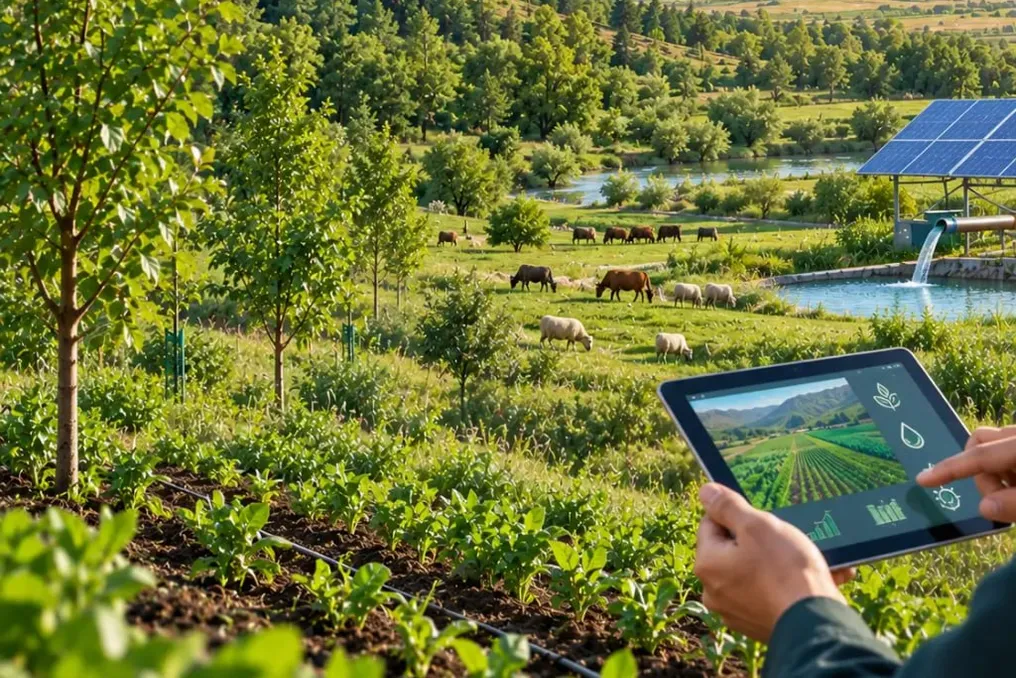
The European Bank for Reconstruction and Development (EBRD), together with the Green Climate Fund (GCF), has initiated the launch of a green financing program in Uzbekistan. The goal of this program is to expand access for enterprises and households to financing for projects related to climate and the environment.
Hamkorbank became the first financial institution in Uzbekistan to join the program. It will be provided with a financing package of up to 20 million US dollars to support private sector investments in climate change adaptation, energy efficiency improvement, and agricultural land irrigation.
The financing can be provided either through a synthetic loan pegged to the Uzbek sum or in US dollars. These funds will be directed towards supporting projects across the country, including climate technologies and more efficient resource use.
This package includes a loan from the EBRD of up to 18 million US dollars and concessional financing of up to 2 million US dollars from the Green Climate Fund. Projects supported by this program are expected to reduce carbon dioxide emissions by approximately 5,685 tons annually.
This new initiative continues the work of the Uzbekistan Green Economy Financing Program, previous stages of which started in 2018 and 2023. In total, these stages have created a mechanism for green investment financing amounting to 160 million US dollars and supported 425 projects through five participating financial institutions.
Under the program, enterprises have gained the opportunity to receive financing for implementing climate technologies such as energy-efficient equipment, electric vehicles, solar photovoltaic systems, and solutions for reducing industrial emissions. Notably, almost 10% of the supported projects were implemented by businesses owned or led by women.
According to the EBRD, previous phases of the program have resulted in an annual energy saving of about 1.1 million gigajoules and reduced carbon dioxide emissions by approximately 53,000 tons per year. Furthermore, the initiative has contributed to the installation of over 14.3 MW of renewable energy capacity and helped local financial institutions strengthen their expertise in green finance.
The 'Greening Green Finance Systems' program aims to expand climate financing and encourage the financial sector of Uzbekistan to adopt lending and investment practices aligned with climate goals. Priorities of the program include more rational water use, sustainable land management, and improving overall resource efficiency.
According to the EBRD, Hamkorbank is the third-largest lender in Uzbekistan. Overall, the EBRD has invested nearly 7.3 billion US dollars in Uzbekistan through 219 projects, a significant portion of which has been directed towards supporting private business.