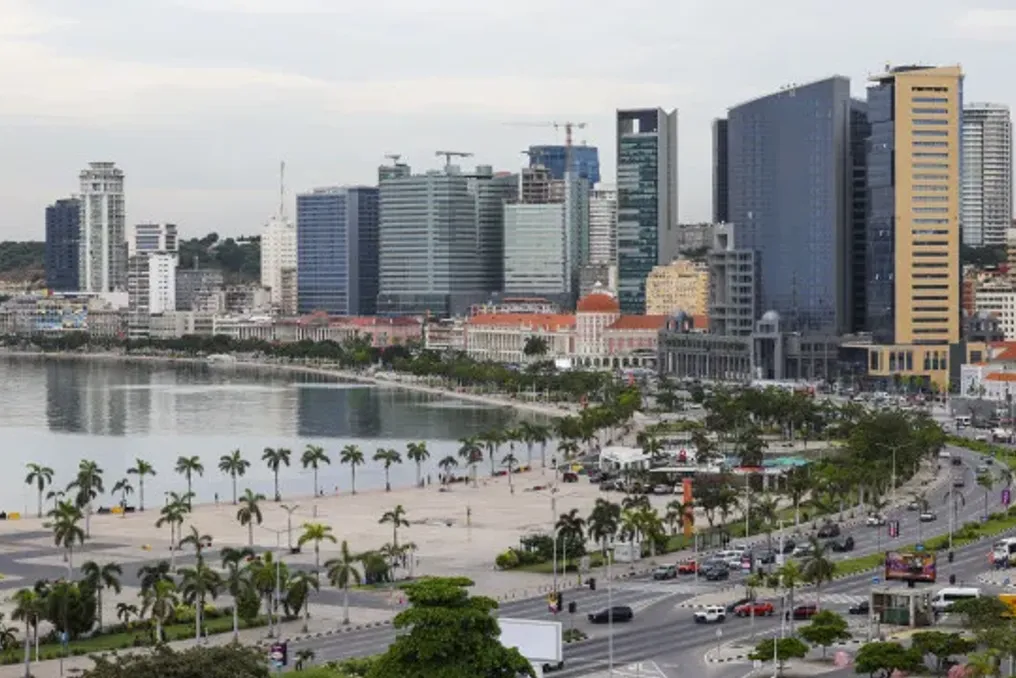
According to projections released by the World Bank, the capital of Angola, Luanda, is expected to become the most populous metropolis in Sub-Saharan Africa by the year 2050. It is estimated that Luanda will reach 20.3 million inhabitants, surpassing Lagos, Nigeria, driven by a projected growth of 78% over the next two decades.
The World Bank report, titled 'The Urban Awakening of Sub-Saharan Africa,' details that Luanda's population is set to jump from 11.4 million to 20.3 million, solidifying its position as the most populous city in the African region.
Although Lagos will lose the title of largest city, it will also show significant growth, projected at 25%, rising from 12.8 million to 16.2 million residents by 2050. In the list of the 15 most populous cities mid-century, there will be few changes compared to the current situation, except for the inclusion of the capitals of Mali and Somalia, Bamako and Mogadishu, respectively, with estimates of 7.6 and 7.2 million people.
Other cities that will feature among the most populous in Africa in 2050 include Kinshasa, in the Democratic Republic of Congo; Dar es Salaam, in Tanzania; and Addis Ababa, in Ethiopia, all of which are expected to have over 10 million inhabitants.
Regionally, the urban population of Sub-Saharan Africa has grown by 742.4 million since 1975, increasing from 170.2 million to 912.6 million. It is projected that this increase will be almost identical by 2050, totaling 748 million, raising the total urban population of the region to 1.7 billion.
Given this demographic advance, the World Bank points out that the continent will need to generate 15 million new jobs in the coming decades just to keep pace with the rapid increase in the young workforce. The institution warns that governments must implement 'decisive measures to address the main constraints on urban performance' to capitalize on a rapidly closing opportunity.
Key recommendations include directing public investment towards areas that maximize impact on employment and private investment, structuring urban expansion, and adapting strategies for smaller cities. The World Bank also emphasizes the importance of private capital for African development.
Recognizing budgetary limitations, the World Bank suggests that in scenarios of scarcity, 'the task is to make a good choice: invest where public action can stimulate private investment and job creation, plan far enough in advance to guide growth before costs rise, and concentrate resources where they can create the best economic opportunities.'