According to the draft presidential decree defining the strategy for developing the country's local passenger transport, Uzbekistan intends to increase the flow of domestic air passengers from the current 1.4 million to 2.5 million by 2030.
The document forecasts the following figures: in 2026, 1.5 million passengers are expected; in 2027, 1.7 million; in 2028, 1.9 million; and in 2029, 2.2 million, after which the number should rise to the planned 2.5 million by 2030.
The strategy also describes changes in Uzbekistan's aviation sector over recent years, including the expansion of airport infrastructure, an increase in the fleet of aircraft, and the development of route networks.
Development of the Aviation Industry
From 2023 to 2025, the number of air routes increased from 167 to 206, and the number of flights performed rose from 85,000 to 130,000. During the same period, the passenger traffic served by the country's airports grew from 10 million to 15.5 million.
In the first half of 2026, flights operated on 220 destinations, including 19 domestic and 201 international destinations.
The national fleet of aircraft in Uzbekistan has significantly expanded. In 2022, the fleet consisted of 54 aircraft; in 2023, another 24 were added, followed by eight in 2024, 21 in 2025, and seven in the first half of 2026. As a result, the total fleet reached 114 units.
Infrastructure Modernization and New Projects
Airport infrastructure has undergone massive modernization: according to the document, 11 international and domestic airports were reconstructed. Samarkand International Airport was completely renovated under a public-private partnership and transformed into a tourist center.
New passenger terminals have been built in Termez, Namangan, and Andijan. Additionally, new airports have been established in Muynak and Zomin, and a runway has been installed in the Sokh area. Airfields in Kokand, Shahrisabz, and Sariasia have been reconstructed.
Construction of the new Tashkent International Airport and a new airport in Bukhara began in the first half of 2026.
Improving Passenger Transfers
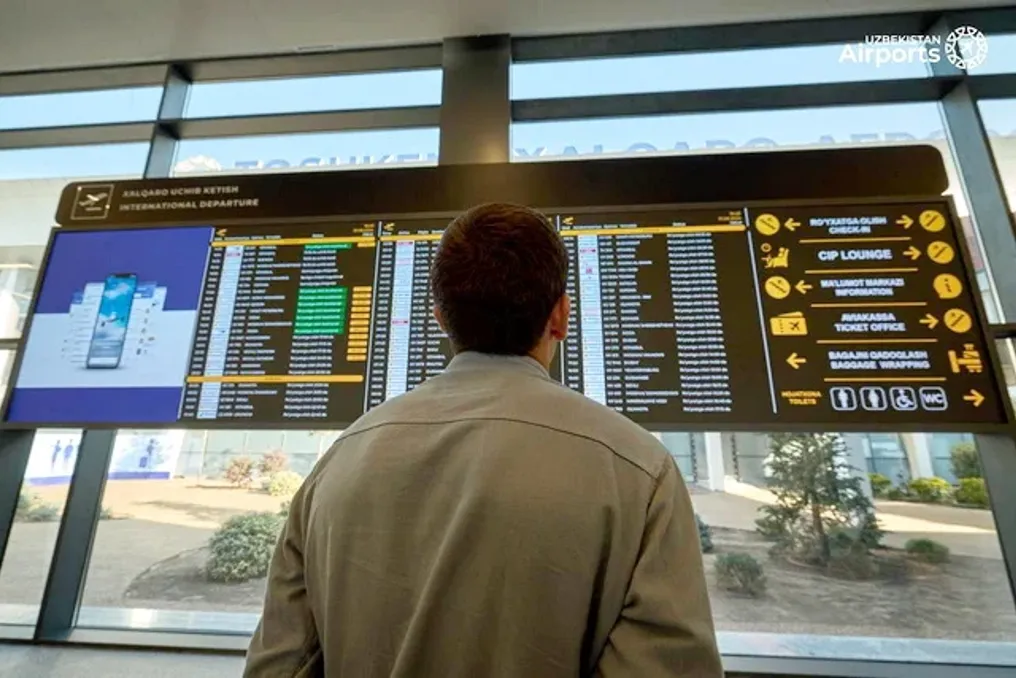
The strategy project also provides for improving connections between domestic flights for passengers traveling through Tashkent International Airport. The Ministry of Transport of Uzbekistan, together with Uzbekistan Airports JSC and local airlines, will be responsible for coordinating schedules to facilitate transfers.
For passengers making connections in Tashkent, it is proposed to introduce a unified electronic ticket that allows registration up to the final destination and baggage transfer without the need to collect it at the intermediate airport. These measures are intended to simplify connections between domestic and subsequent flights.
The document also points to limitations affecting air transport and geopolitical factors as external risks to the aviation sector. To mitigate the potential impact of these risks, the strategy proposes diversifying and expanding both domestic air services and railway routes.