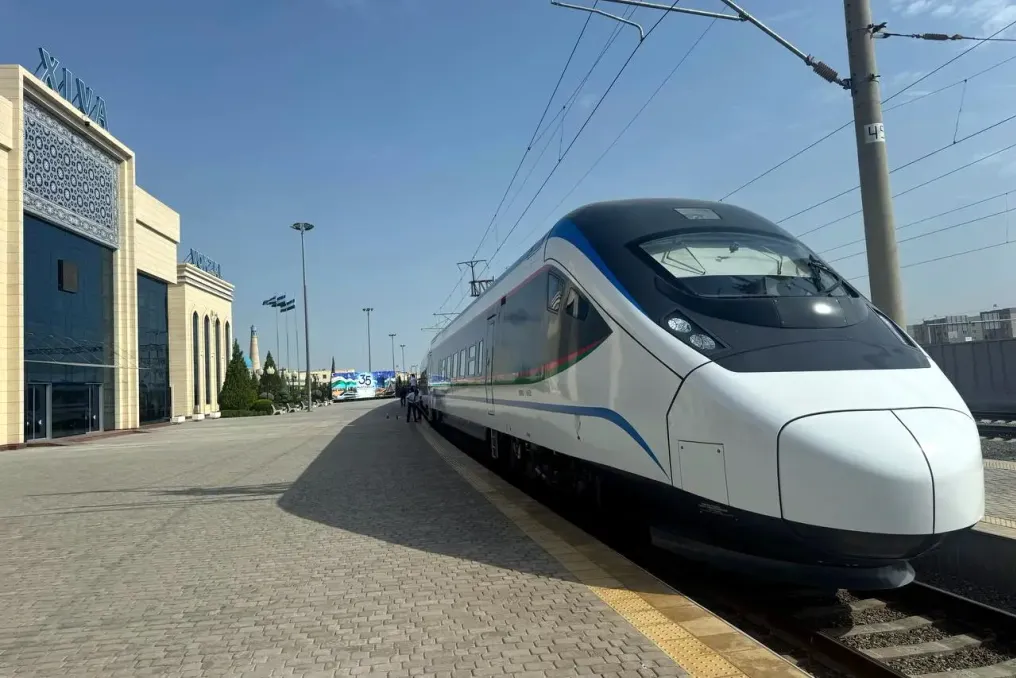
Uzbekistan plans to expand its electric train fleet to 30 units by 2030
Read more
UzDaily
uzdaily.uz

Uzbekistan plans to expand its electric train fleet to 30 units by 2030

According to the local passenger transport development strategy project, Uzbekistan intends to significantly increase its passenger transport fleet. It is planned to commission 30 electric trains, 650 railway passenger carriages, 5000 buses, and 2000 electric buses by 2030.

Planned Increase in Train Fleet

The document states that the number of electric trains operating on domestic routes should increase from the current seven to 16 in 2026, then rise to 17 in 2027, 22 in 2028, and reach 27 in 2029, concluding the period with reaching the mark of 30 by 2030.

The proposed purchases will be financed through loans and other funding from international financial organizations. Furthermore, Uzbekistan plans to increase its passenger railway carriage fleet from 537 in 2025 to 560 in 2026, 580 in 2027, 605 in 2028, and 620 in 2029, aiming for a total of 650 by 2030.

The strategy provides for the allocation of 143 million US dollars from the Reconstruction and Development Fund to update the passenger carriage fleet. In the first half of 2026, three of the six high-speed electric trains manufactured by Hyundai Rotem began operating on the Tashkent–Urgench–Khiva route. Uzbekistan has also signed a contract with the Czech company Škoda Transportation to supply 10 electric trains for suburban passenger transport.

Expansion of Bus Fleet

The strategy project also provides for a significant expansion of the country's public bus fleet. It is planned that the number of regular buses will grow from the current 2005 to 5000 by 2030, while the electric bus fleet should increase from 646 to 2000 units.

Intermediate targets set the need for 2453 buses and 746 electric buses in 2026, followed by 3053 buses and 1046 electric buses in 2027. By 2028, a figure of 3653 buses and 1346 electric buses is expected, and in 2029—4300 buses and 1646 electric buses.

The proposed procurement program will be financed by funds provided by participating enterprises and international financial institutions. The coordination of the document's implementation will be carried out by the Ministry of Transport of Uzbekistan and JSC 'Toshshahartranskhizmat'.

The document also contains data on previous transport acquisitions. Between 2023 and 2025, Uzbekistan acquired 2005 buses, 646 electric buses, and minivans for regional public transport systems. In the first half of 2026, an additional 345 buses, 65 electric buses, and 231 minivans were purchased.

In addition, the strategy project proposes introducing a zero rate for the environmental levy when importing new M3 class III buses and electric buses meeting Euro 5 standards or higher. This exemption from the levy will apply to qualified vehicles imported before December 31, 2027.

Similar stories

Uzbekistan seeks to expand textile exports to Italy to strengthen business ties
Read more
uzdaily.uz

Uzbekistan seeks to expand textile exports to Italy to strengthen business ties

Uzbekistan and Italy intend to strengthen their business ties in the textile industry and explore opportunities to increase the supply of Uzbek products to European markets.

A webinar titled 'Uzbekistan's Textile Industry: Opportunities for European Supply Chains' was held with the support of the Embassy of Uzbekistan and the Italian office of the international consulting firm EY, according to the news agency Dunyo.

The meeting gathered representatives of major Italian and international companies from the fashion and textile sectors, such as Alviero Martini, Benetton, Bertolo Cashmere, Frette, Ralph Lauren, and Gabel Group.

The webinar was opened by the Ambassador of Uzbekistan, Abat Faizullaev, and Ruxullo Zikrillayev, Deputy Director of the country's Light Industry Development Agency. Participants were provided with information on reforms in Uzbekistan's textile sector, manufacturers' production capabilities, and the industry's export potential.

The prospects for supplying finished goods to Europe and developing industrial cooperation were also discussed. EY experts highlighted the legal requirements governing textile supply chains in Europe, including environmental and social standards, rules for determining the origin of goods, and the possibility of using the GSP+ preferential trade regime available to Uzbekistan.

Participants reviewed various cooperation models, including manufacturing textiles according to the specifications of Italian companies and direct purchases of finished products from Uzbek producers. When assessing potential contracts, particular attention was paid to product quality, international certification, contract terms, production process control, and supply chain transparency.

Following the webinar, the parties agreed to organize direct bilateral (B2B) negotiations between interested Italian companies and textile producers from Uzbekistan. These meetings are intended to help participants move from exchanging information to considering specific opportunities for collaboration.

Uzbekistan plans to expand deep processing of natural gas to produce higher value products
Read more
uzdaily.uz

Uzbekistan plans to expand deep processing of natural gas to produce higher value products

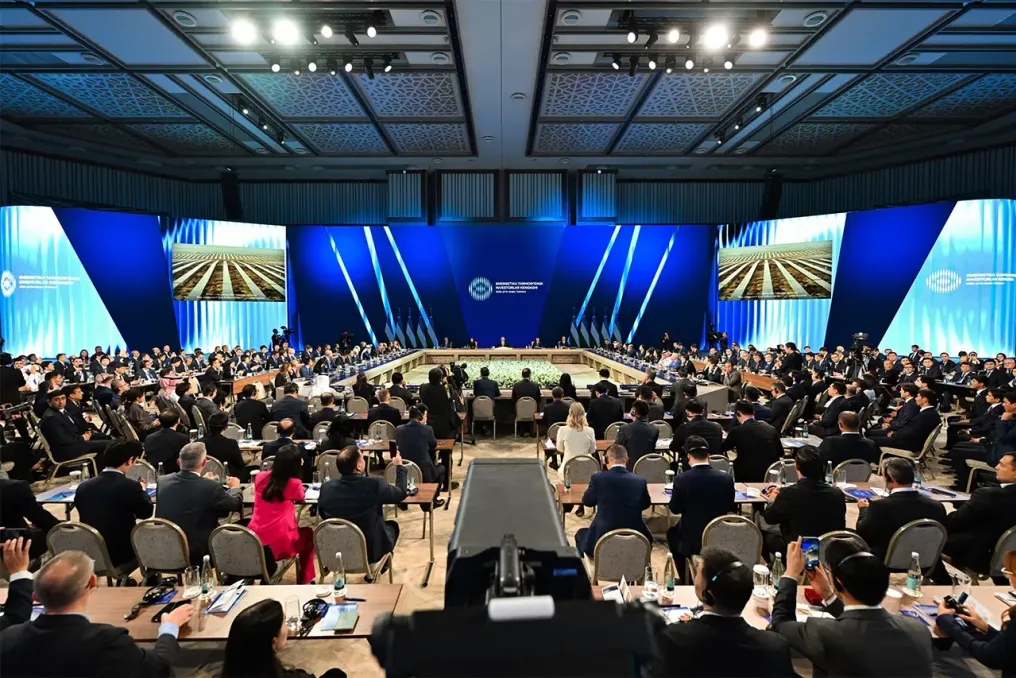
Uzbekistan intends to increase the depth of natural gas processing to obtain products with higher added value, instead of using the fuel solely for electricity generation. President Shavkat Mirziyoyev announced these plans on October 16 during an open dialogue with investors in the fuel and energy sector.

The President emphasized that the main criterion is not only the volume of electricity produced from natural gas but also the additional economic value that can be created through its processing.

As an example of existing production, Mirziyoyev mentioned the synthetic liquid fuel complex in the Kashkadarya region, which annually produces up to 1.5 million tons of fuel and other products.

The implementation of the MTO (methanol-to-olefins) project is planned in the Bukhara region. This project will produce polyethylene, polypropylene, and polyethylene terephthalate (PET). Additionally, Uzbekistan plans to modernize oil refineries in Bukhara and Fergana.

Mirziyoyev stated that the government expects investors to present proposals based on modern technologies that meet environmental requirements and are economically viable. Key criteria for selecting projects will be competition, transparency, economic efficiency, and mutual benefit.

In parallel, Uzbekistan is strengthening international cooperation in geological exploration and increasing the efficiency of field development. Exploration work is underway on six investment blocks in the Ustyurt Plateau in partnership with SOCAR from Azerbaijan and BP from the UK.

Another 128 blocks have been prepared to attract foreign partners. Their resources are estimated to include 5.8 trillion cubic meters of natural gas and 560 million tons of liquid hydrocarbons.

Popular