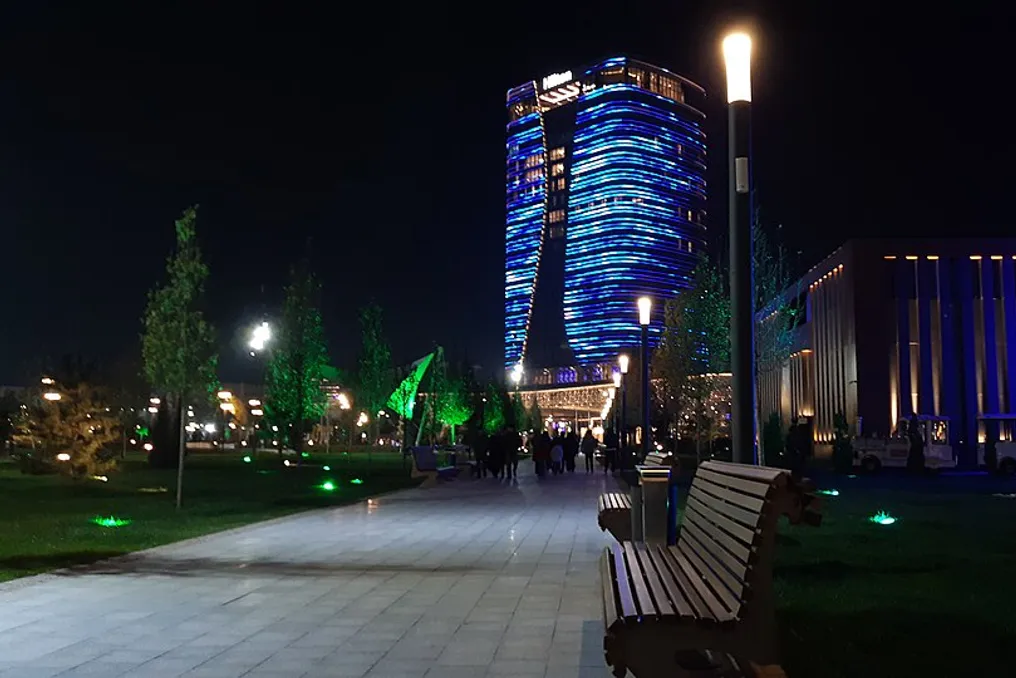
Deterioration of atmospheric air quality expected in Tashkent on the night of October 30
Read more
Podrobno.uz [uz]
podrobno.uz

Deterioration of atmospheric air quality expected in Tashkent on the night of October 30

A decrease in atmospheric air quality is forecasted for the city of Tashkent from October 29 to October 30. According to information received from the Special Commission that monitors the state of the air basin continuously, in the evening hours, the indicators according to the international Air Quality Index (AQI) will initially be classified as 'Harmful to sensitive groups.'

After 21:00, an increase in the concentration of fine PM particles is expected. During the night and morning hours, the air quality according to the international AQI scale will drop to the 'Unhealthy for health' level, which is equivalent to the 'orange' danger level according to the national index.

Experts attribute the accumulation of harmful compounds to several meteorological factors: nighttime temperature drop, weak wind movement, and the presence of pronounced temperature inversion. These conditions hinder normal air exchange in the lower layers of the atmosphere.

Under these conditions, the process of dispersing both local emissions and pollutants arriving from neighboring regions slows down, contributing to their accumulation in the ground layer. The situation is exacerbated by the prolonged stagnation of air masses over the urban area.

However, during the daytime, as the air warms up and vertical air exchange recovers, the temperature inversion will begin to weaken, which should lead to a gradual improvement in the ecological situation.
Similar stories

Deterioration of atmospheric air quality expected in Tashkent on the night of October 24
Read more
podrobno.uz

Deterioration of atmospheric air quality expected in Tashkent on the night of October 24

The National Committee for Ecology and Climate Change warned about a probable temporary decrease in the quality of atmospheric air in Tashkent on the night of October 24.

According to the agency, an increase in the concentration of fine particles PM2.5 and PM10 is forecast during the evening and night. This may lead to the air reaching a 'unfavorable' level according to the international Air Quality Index (AQI). Meanwhile, according to the national air quality index, indicators are likely to remain within the 'yellow' zone.

The main factors contributing to the accumulation of pollutants are cited as the drop in temperature at night, weak wind movement, and strong temperature inversion. In such meteorological conditions, the exchange of air in the lower layers of the atmosphere is restricted, causing a concentration of fine dust particles directly near the Earth's surface.

It is expected that after sunrise and as the temperature inversion weakens, air quality will begin to slowly recover. However, in the morning hours in some parts of the capital, values on the international AQI scale may remain at a level considered 'unfavorable for sensitive groups.' A special commission is continuously monitoring the air quality in the city.

Popular