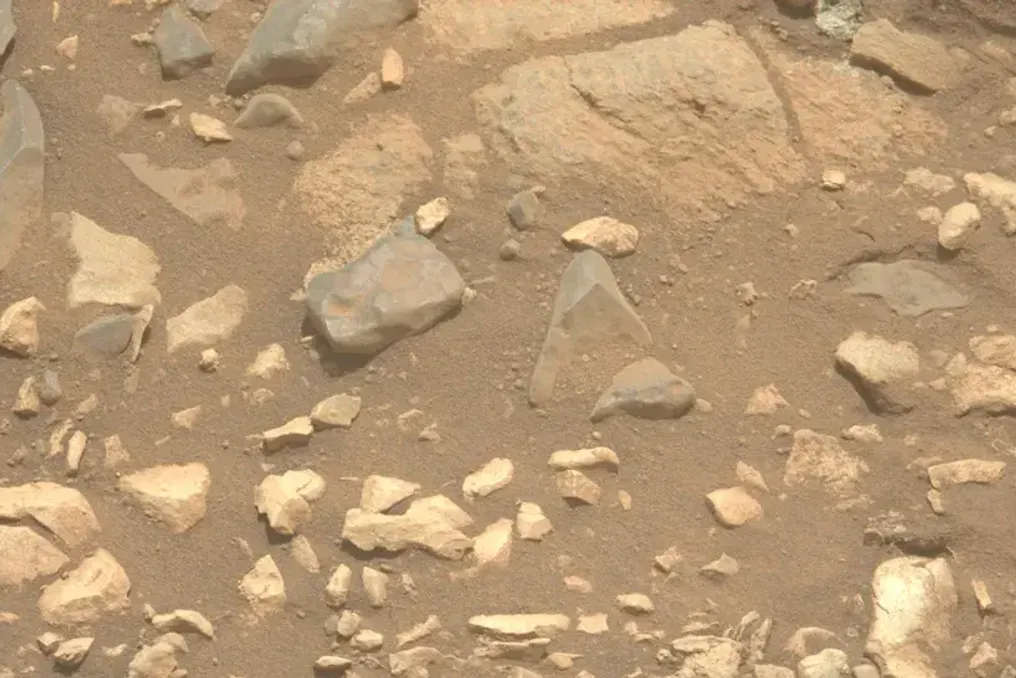
The Perseverance rover, operated by NASA, identified dust particles on the surface of Mars with dimensions of approximately 100 nanometers, making them about 500 times finer than a human hair. This finding raises concerns about the risks this material poses to the health of future astronauts and to the preservation of habitats and spacesuits during crewed missions to the planet.
The detection was made using the PIXL instrument, which analyzed particles accumulated on the rover's equipment and in samples of transported materials. In addition to the ultrafine 100-nanometer particles, the instrument also detected particles with a diameter smaller than 2.5 micrometers.
Such minuscule particles have the ability to penetrate deep into the lungs and reach the bloodstream, potentially causing damage to vital organs. However, according to Scott VanBommel, a planetary scientist at the University of Washington in St. Louis and lead author of the study published in the Proceedings of the National Academy of Sciences, the level of risk is directly linked to the quantity and duration of exposure.
The chemical composition of the Martian dust is also a point of concern, as it contains silica, iron compounds, and chlorine compounds, such as perchlorate, substances that can be harmful in high concentrations.
To investigate how the dust adheres to potential materials for spacesuits, Perseverance carries samples of two types of material: the synthetic fiber Vectran and a protective Teflon coating, both measuring about 20 millimeters on a side. The results of these tests indicated different behaviors; VanBommel emphasized that the tests did not show damage caused by the dust to these materials, suggesting that the observed variations may stem from the physical-electrostatic characteristics of each, affecting particle adhesion.
Additionally, the dust has the potential to deteriorate habitat and spacesuit materials over time. The data collected by the rover are crucial for guiding the selection of appropriate materials and for developing efficient cleaning procedures capable of removing particles smaller than one micrometer.
NASA already has knowledge about the effects of dust on space missions, dating back to the Apollo lunar landings between 1969 and 1972. On the Moon, the material caused wear on the outer layers of suits, damaged seals, and scratched visors, and could also contribute to symptoms similar to hay fever in some astronauts. Lunar dust is primarily formed by surface impacts and remains angular and sharp due to the absence of an atmosphere or wind to wear it down. In contrast, on Mars, the biggest concerns lie in the chemical composition and the reduced size of the particles.
With NASA planning to send astronauts to the Red Planet as early as the 2030s, VanBommel stated that the findings will serve as a basis for guiding the planning of life support systems, the selection of materials for suits and habitats, and the creation of protocols to manage toxicological risks. The researcher concluded that such findings will aid in designing future human support systems for Martian missions, covering material selection and the establishment of effective cleaning methods for sub-micrometer particles.